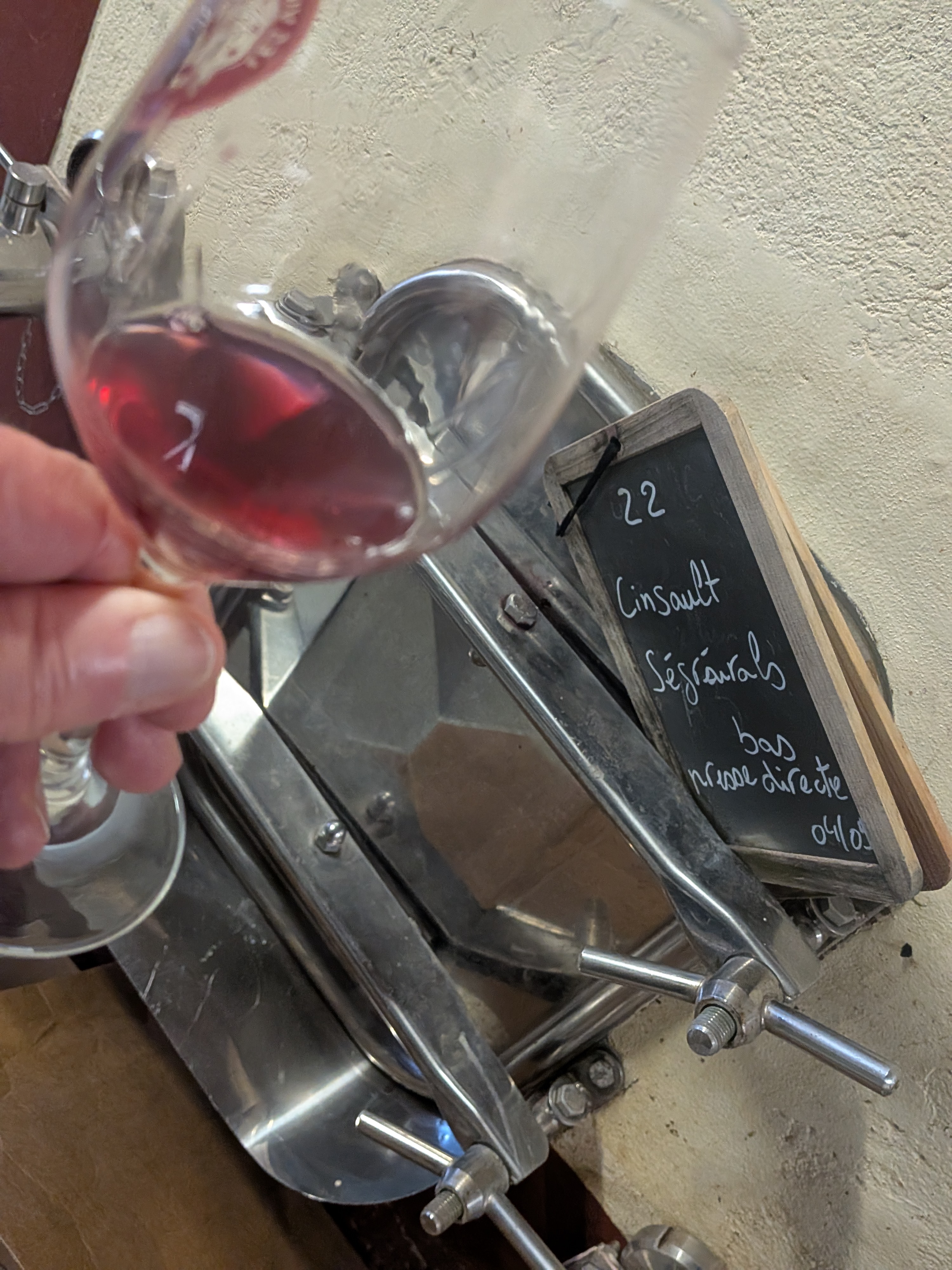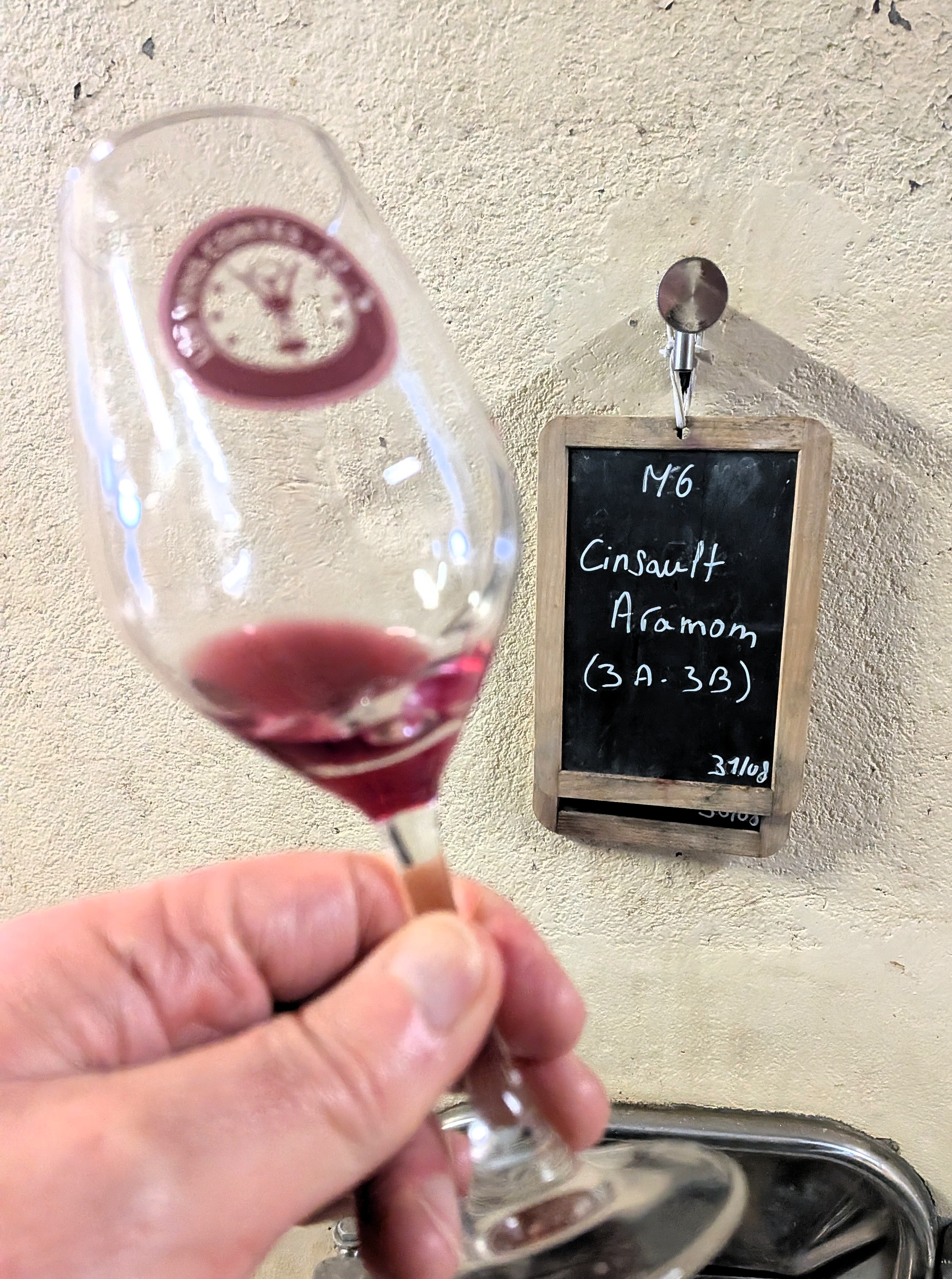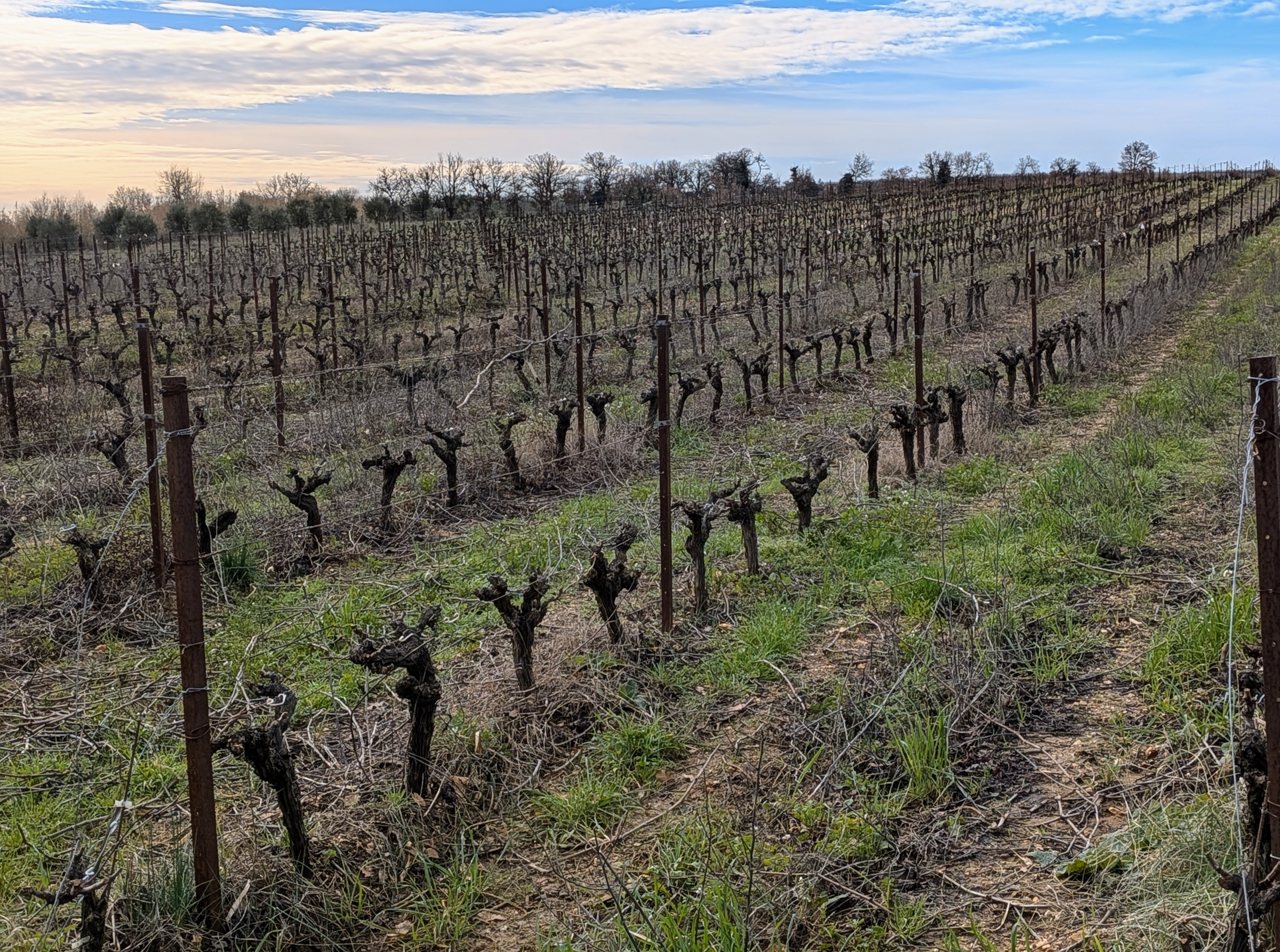
amarchinthevines

Learning about wine, vines and vignerons whilst living in the Languedoc


4 Comments

500

En francais ci-dessous

It is 15 years since I first visited Jeff Coutelou in Puimisson, 12 years since we moved to the area and I began to spend much of my time at the domaine. On August 19th 2014 I wrote the first, brief article for this blog. This article is the 500th, time to reflect, celebrate and look forward too.

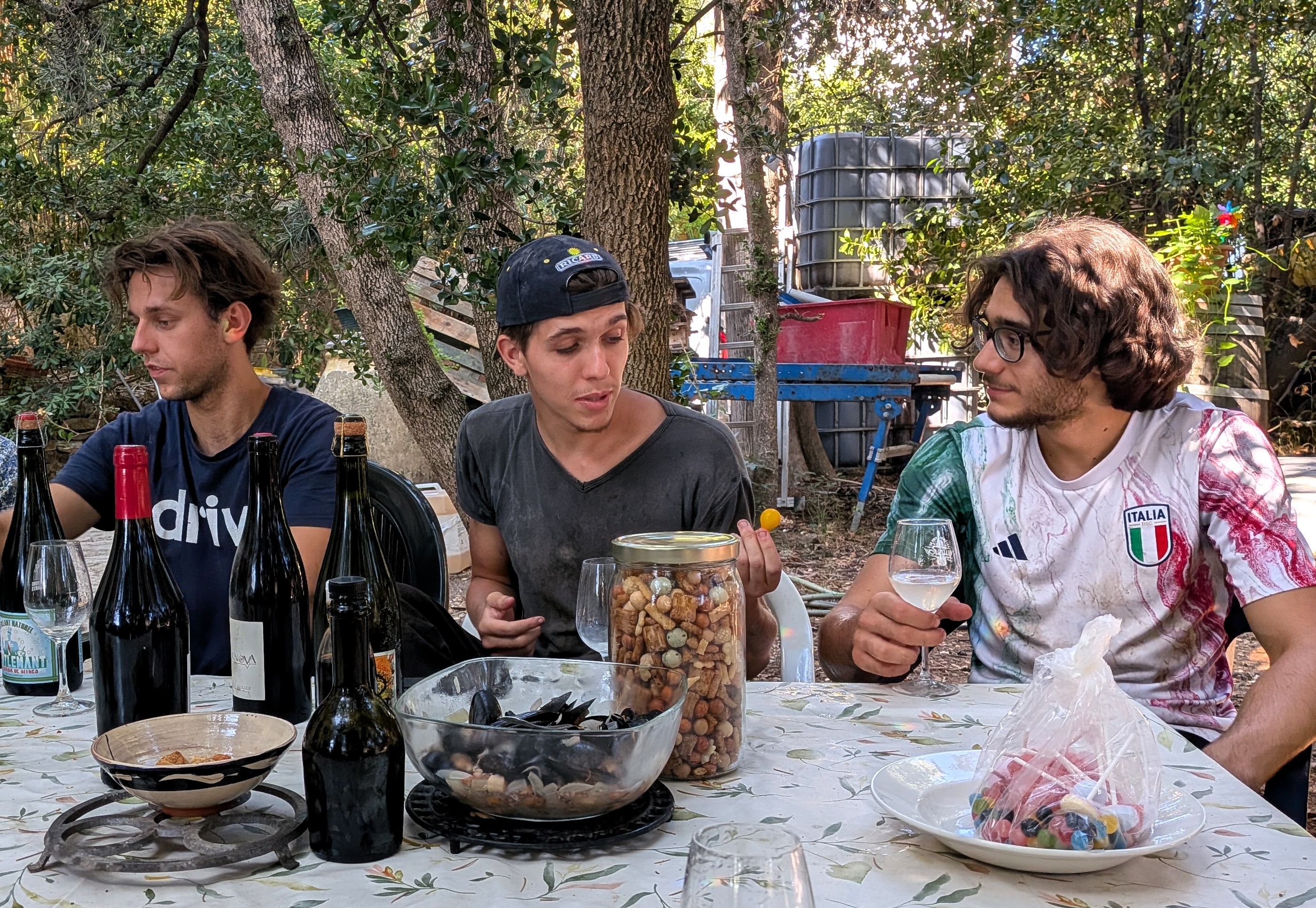
When I told Jeff that the 500 was approaching he asked me to think about what we could do to celebrate it. I suggested an interview and, as vendanges began to wind down, he took me out to lunch and we carried out a fascinating chat. It contained so much information that I will report most of what he said in the 501st article!

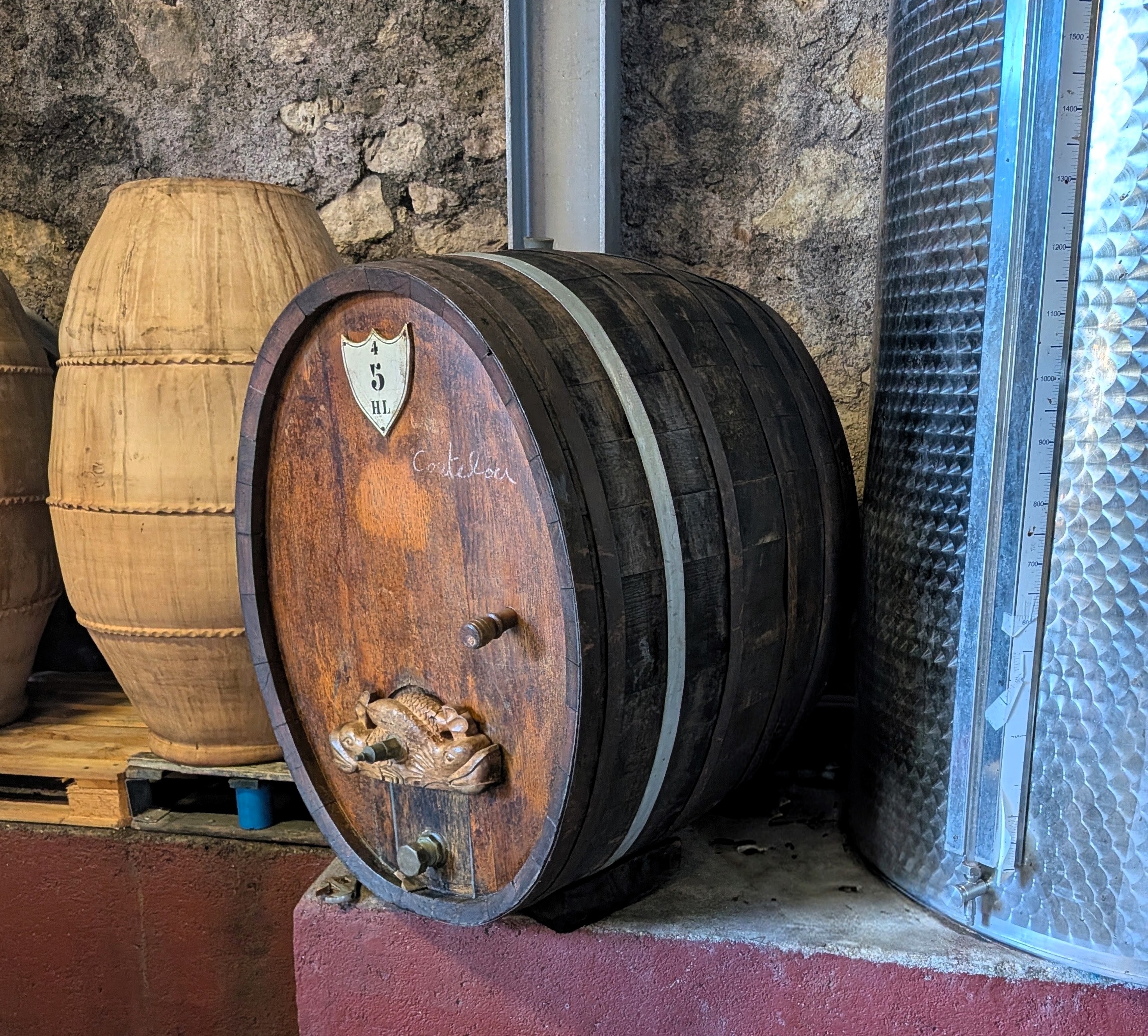
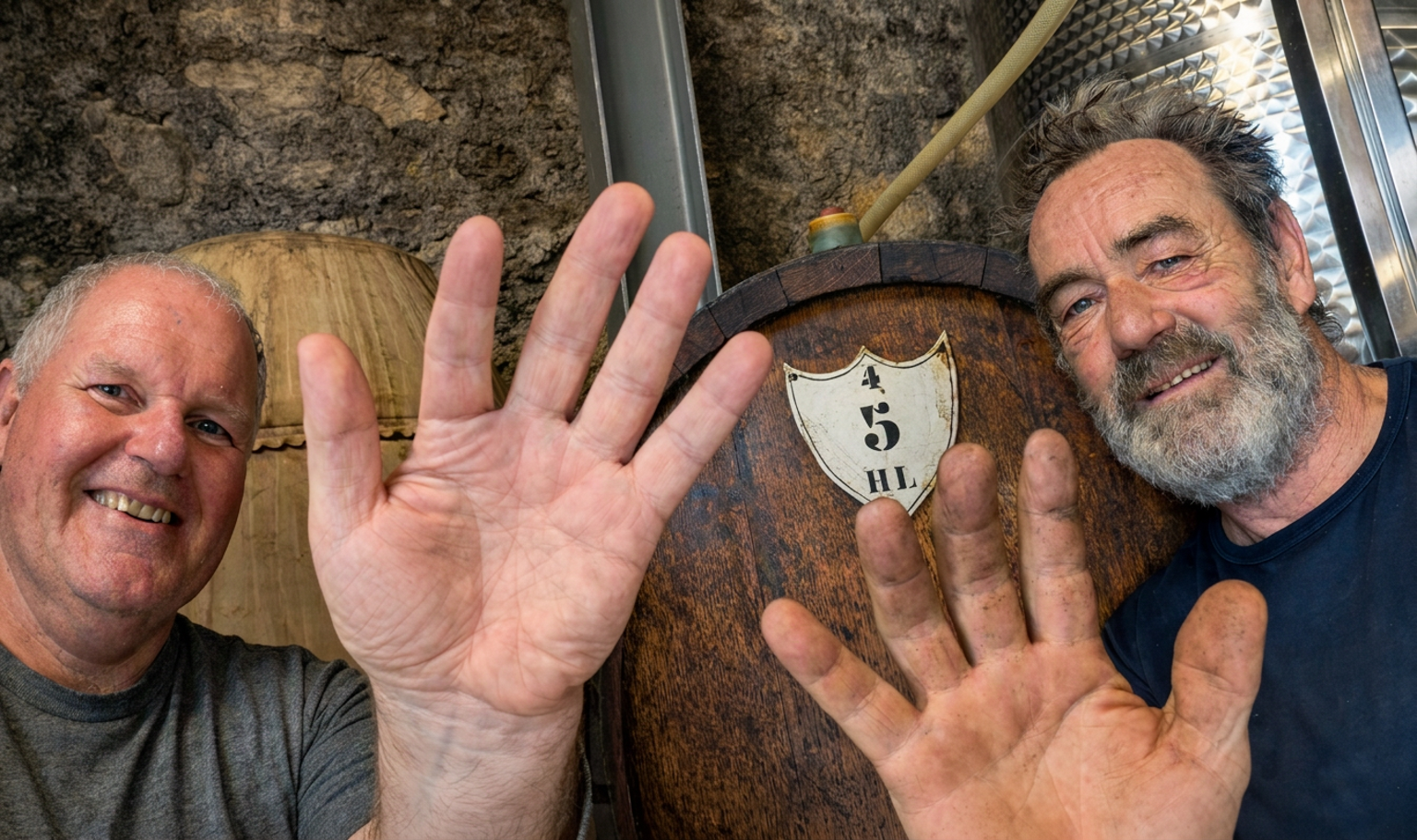
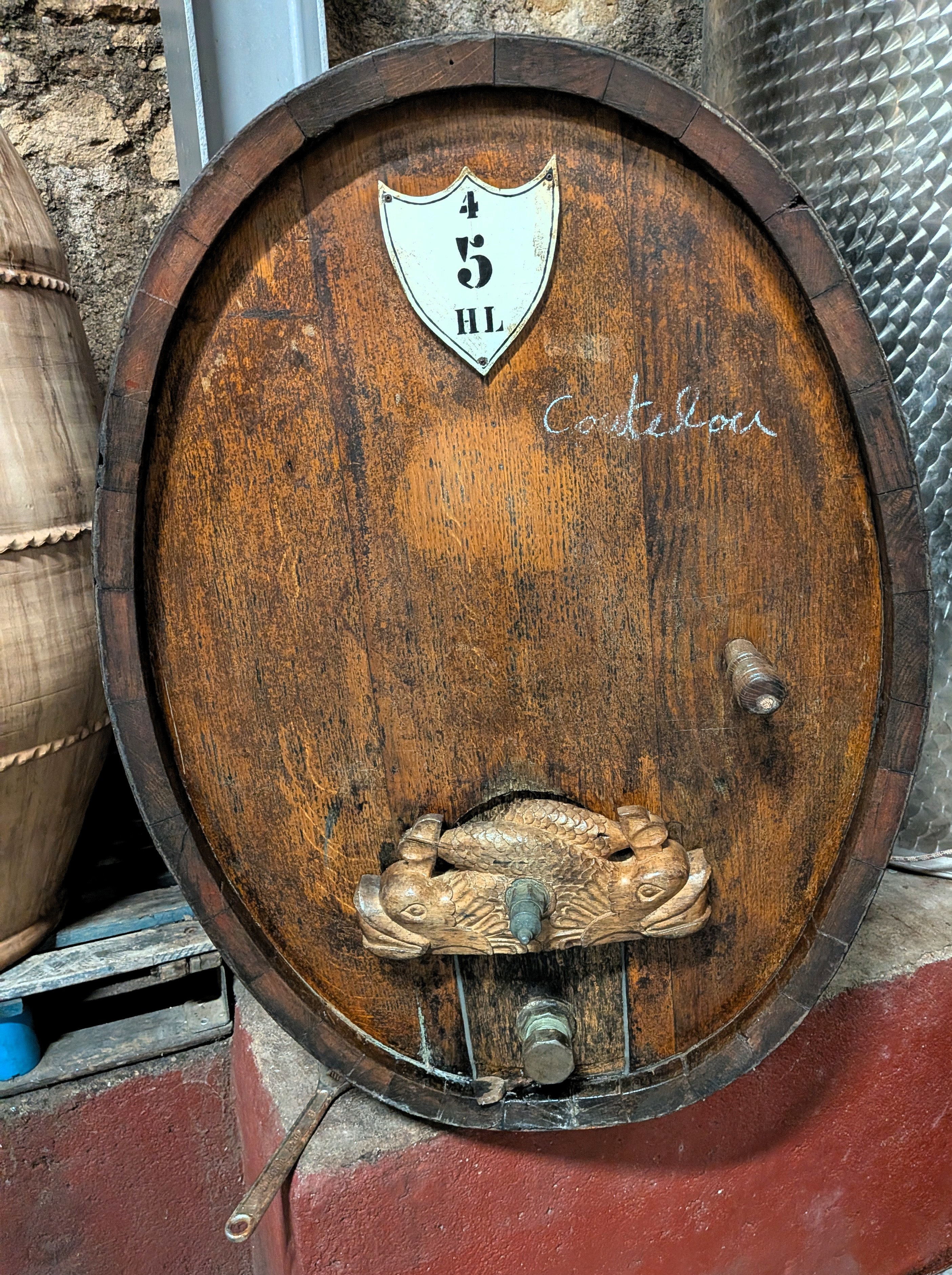
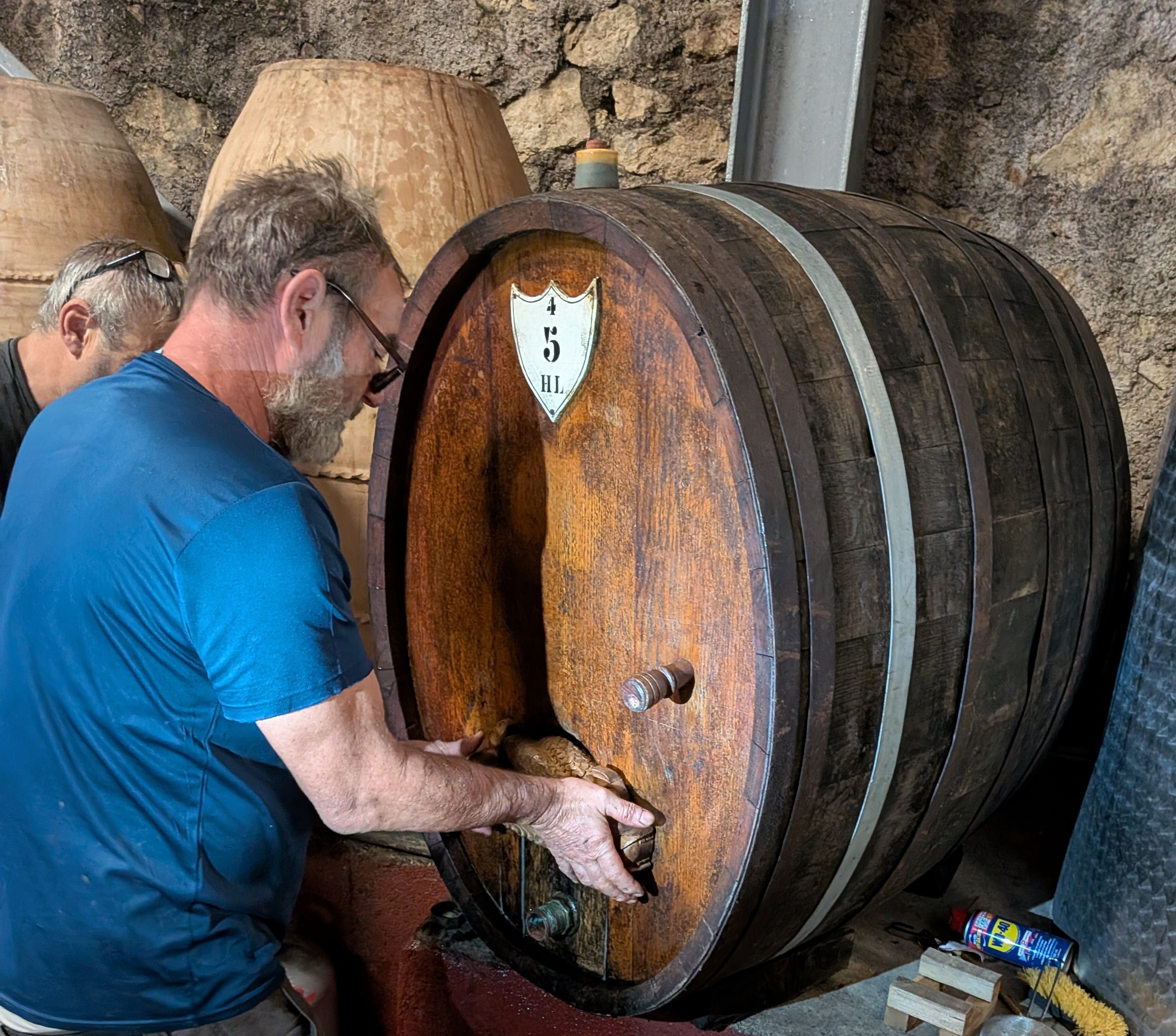
In the meantime Jeff had another idea. A few months ago he purchased a foudre, a big wooden container to age wine. Jeff became convinced by the potential of a foudre when he tasted wines made in them by the likes of Michel Gahier in the Jura and Tessa Laroche at Domaine Aux Moines in Savennières. Nothing unusual you might say but this one is over a hundred years old. It came from Alsace where a winemaker was selling up. His family had used the foudre all that time and so the wood carries the memory of so many wines and so much history. After the 1870-71 Franco – Prussian War Alsace was seized by Prussia to be part of the new country of Germany. The tonnellerie (barrel maker) did not want to be German so moved to Nancy but when Alsace returned to France following World War 1 the business returned to its origins. The foudre they produced remained in the region until its move to Puimisson when its story convinced Jeff to buy it.

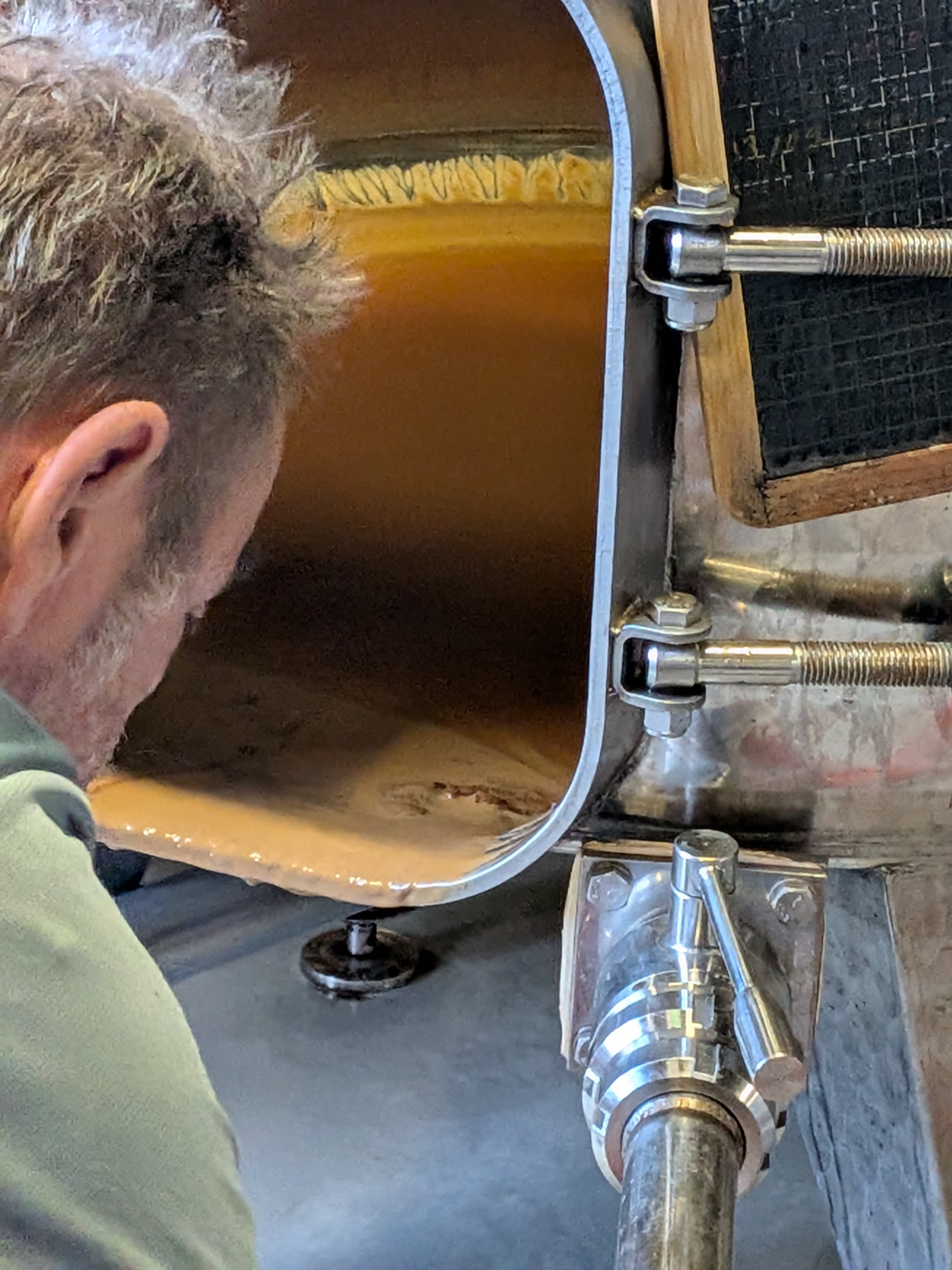
By coincidence this particular foudre holds 500 litres of wine, the perfect match for my landmark article. Its size means that the wine has lighter contact with the wood than the standard 250 litre barrel. He first tried it out on a 2024 Grenache Gris which had not finished its fermentation. Moved to the foudre the sugars finally relented.

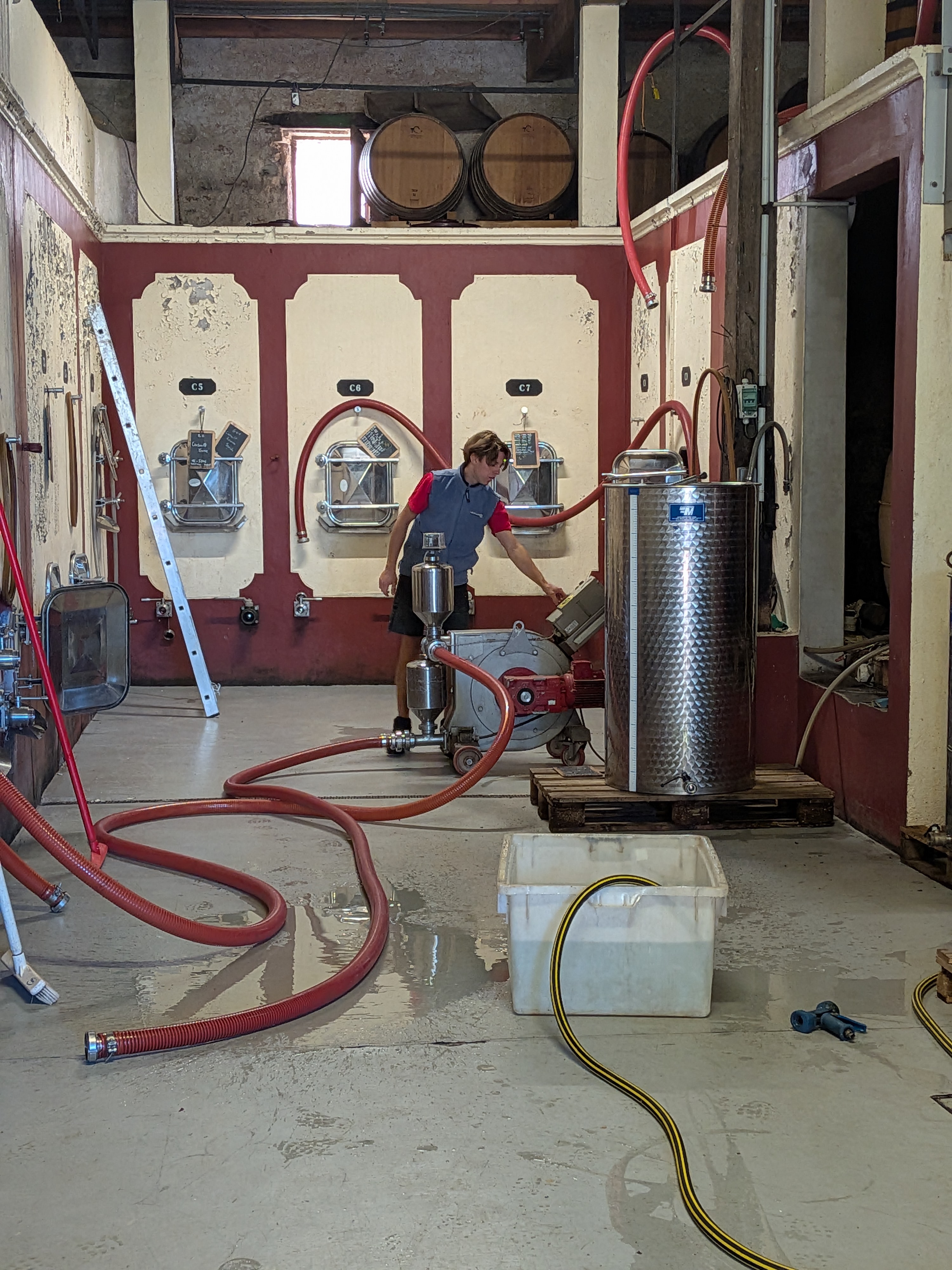
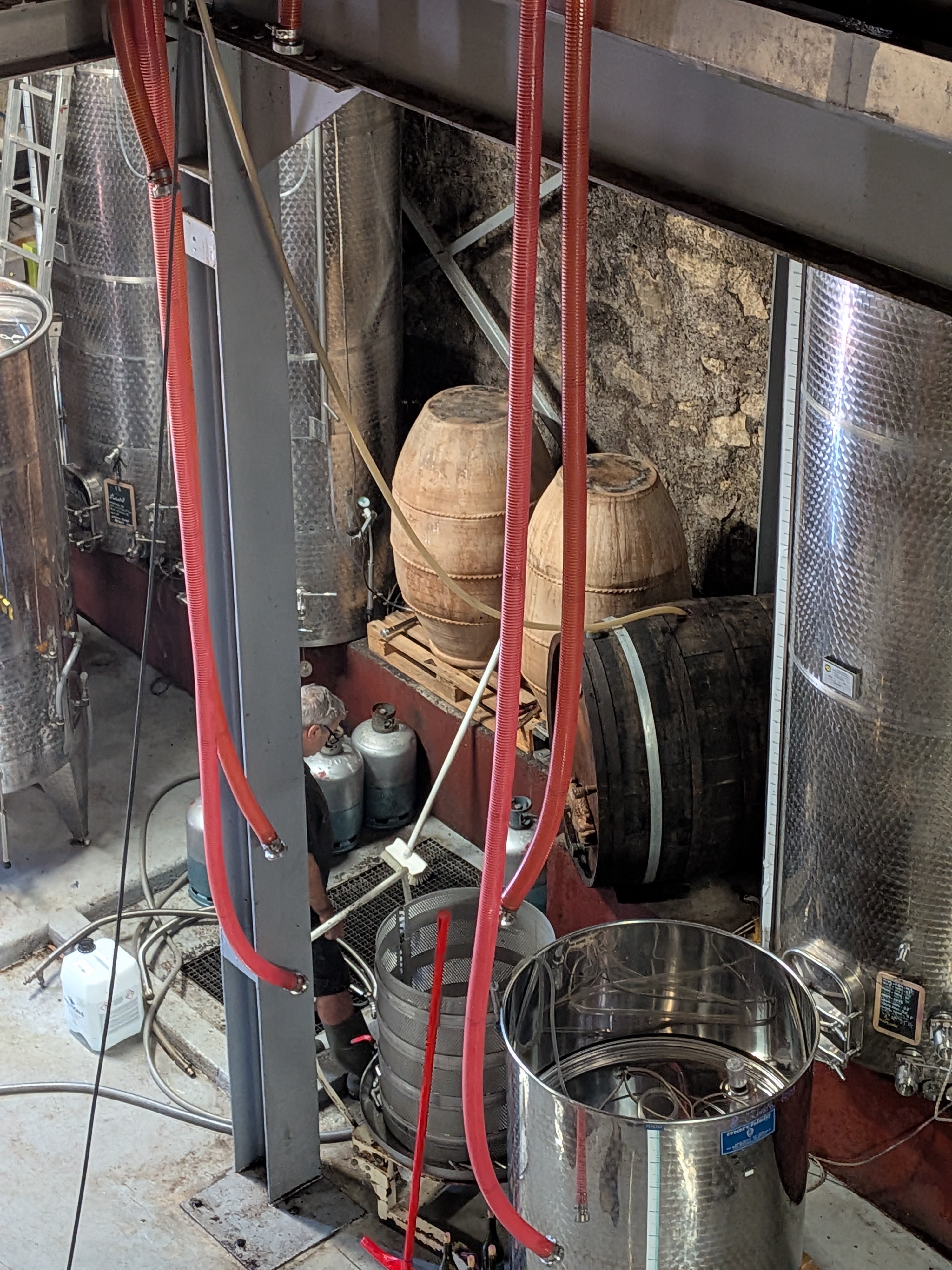
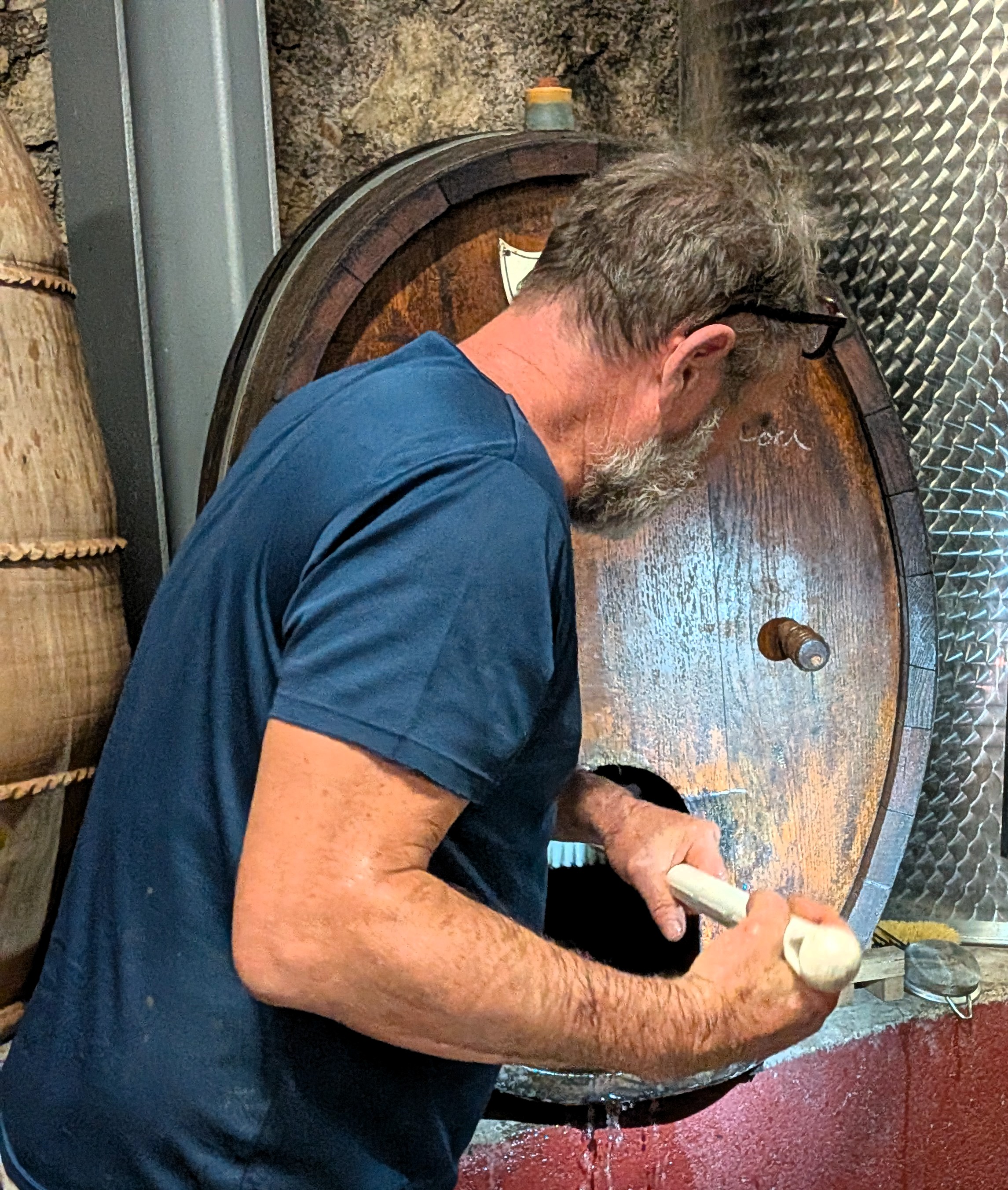
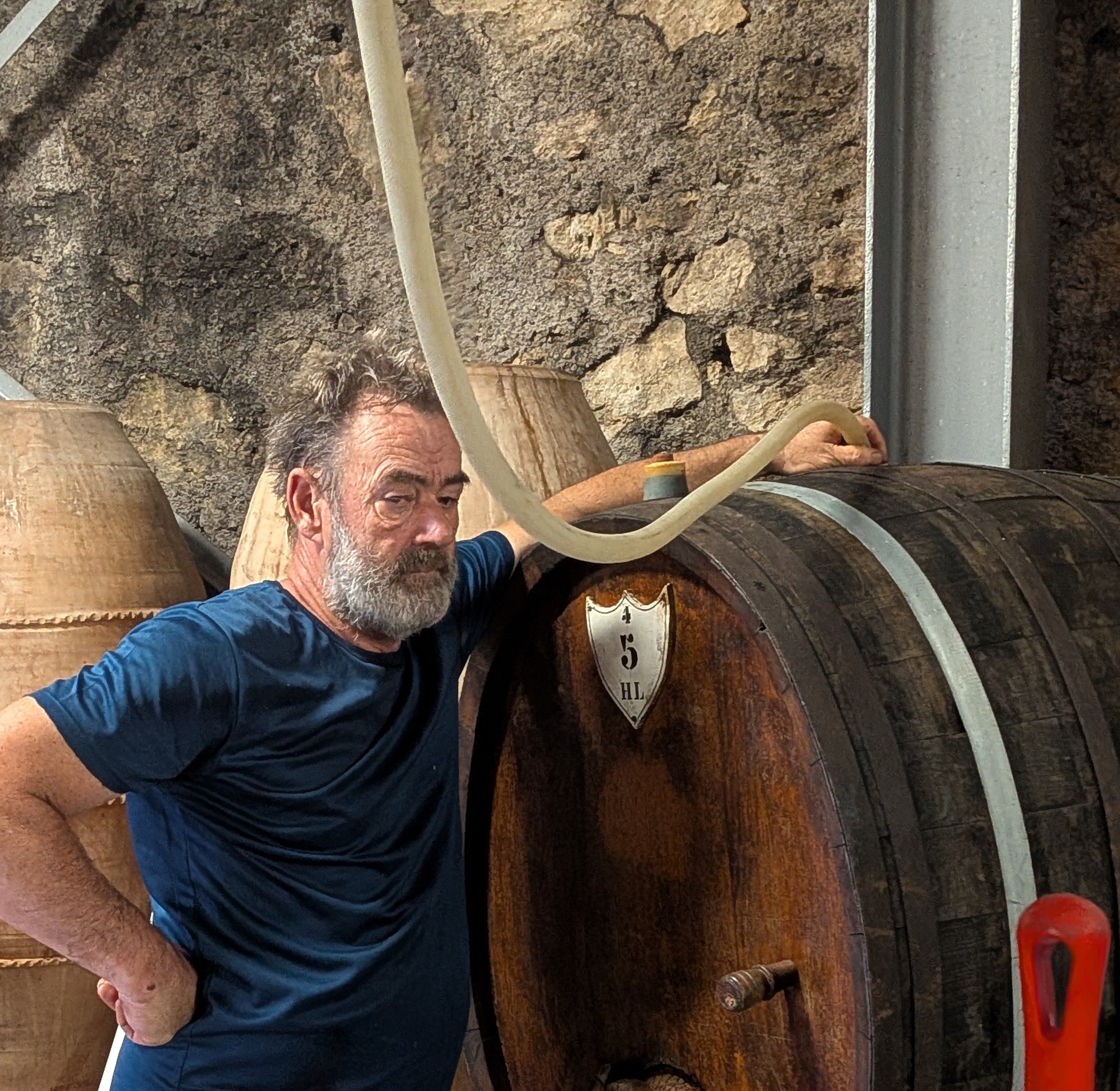
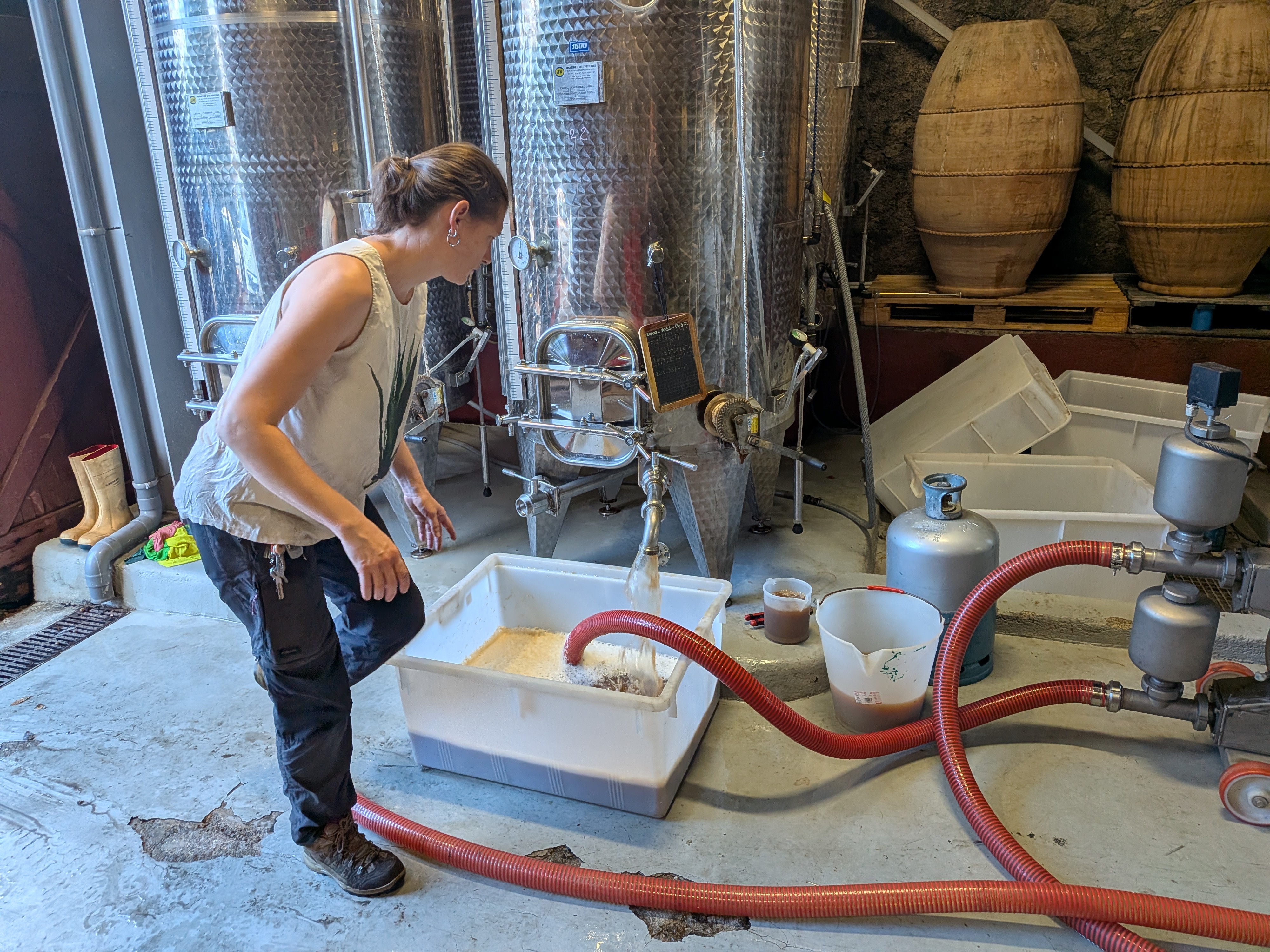
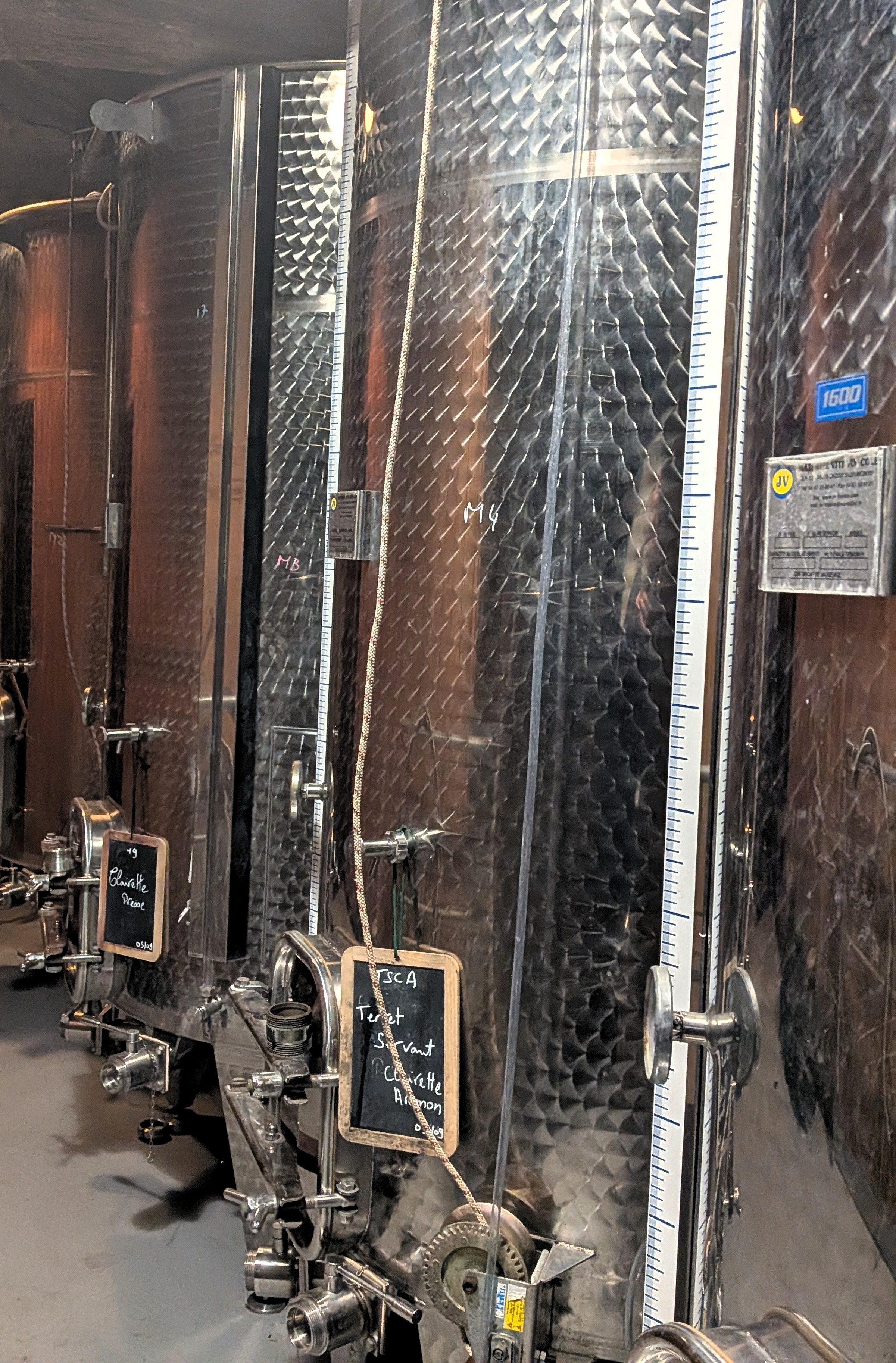
 After some of the white wines completed fermentation in stainless steel tanks Jeff asked me to choose between two of them. The Aramon Gris, Carignan Blanc blend sounded more interesting than the Macabeu of Sainte Suzanne but on tasting them I, and everyone else, agreed that the Macabeu had the structure and body which would most benefit from wood ageing. So, using suction and a simple tube, Jeff filled the foudre with the Macabeu where it will be influenced not just by the old wood but by all that history of wines and times past.

A young wine combining with old wood to create something new for the future, the analogies to my 500th article are obvious. Let’s hope that the final wine will join the canon of memorable Coutelou wines.

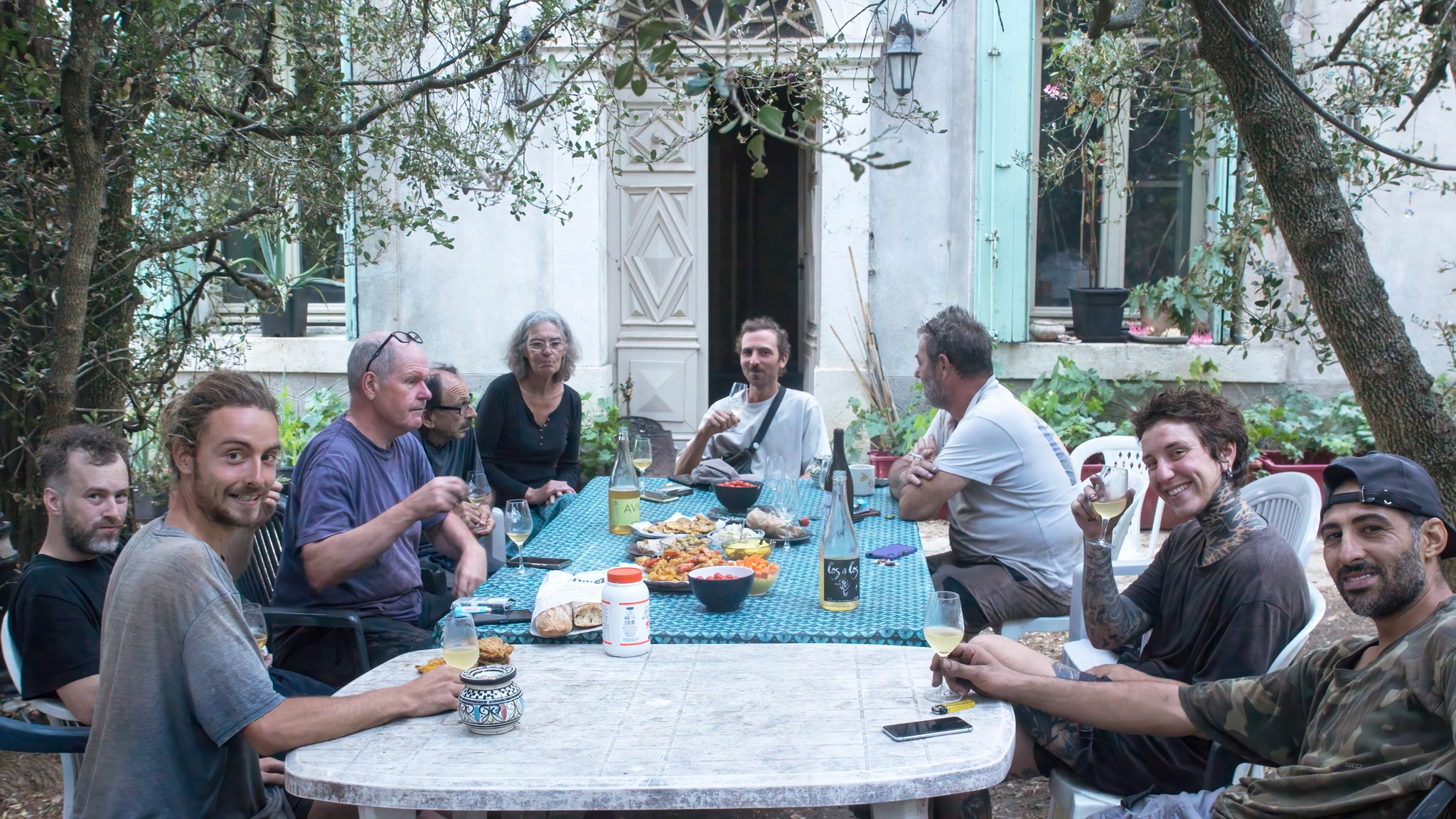
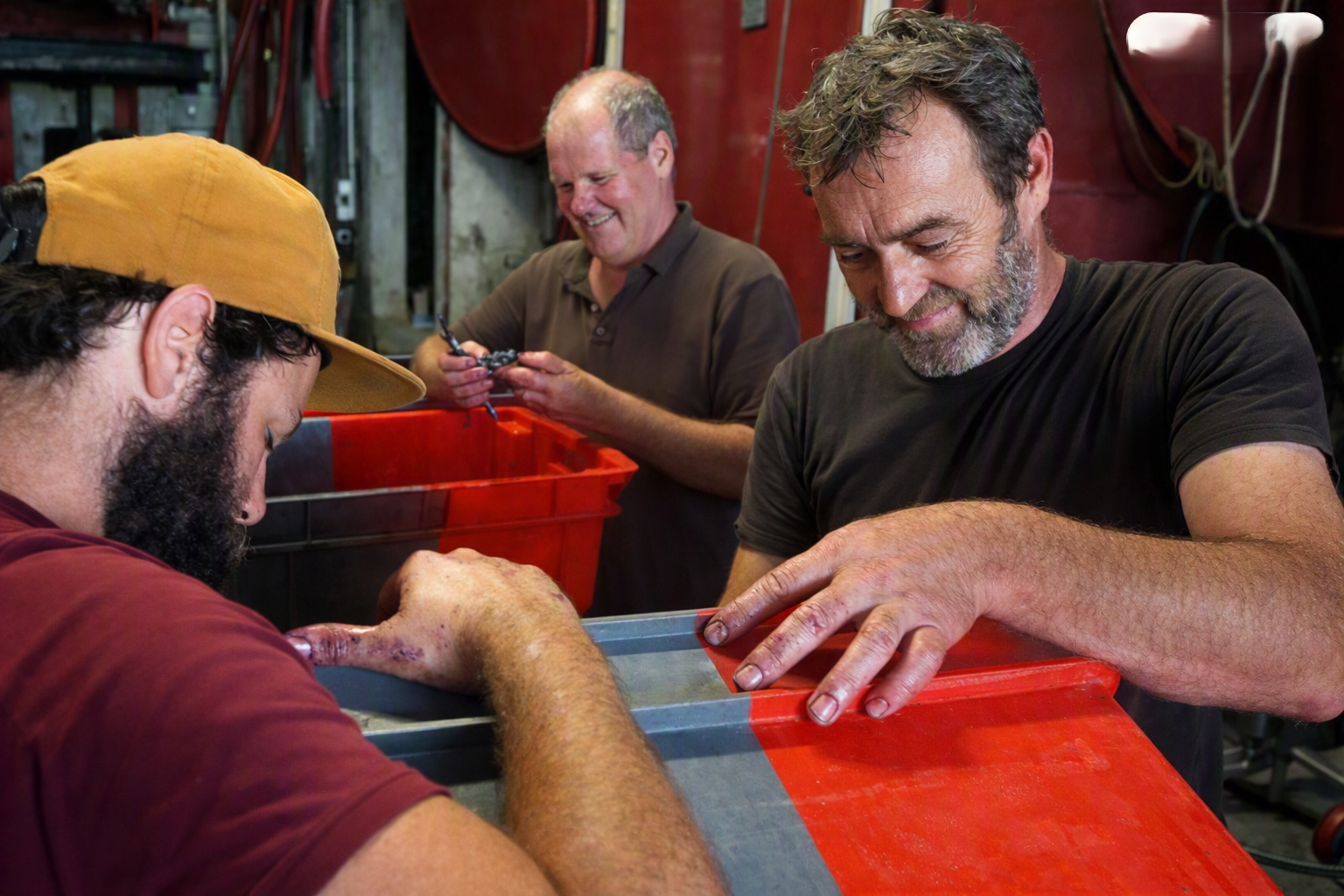
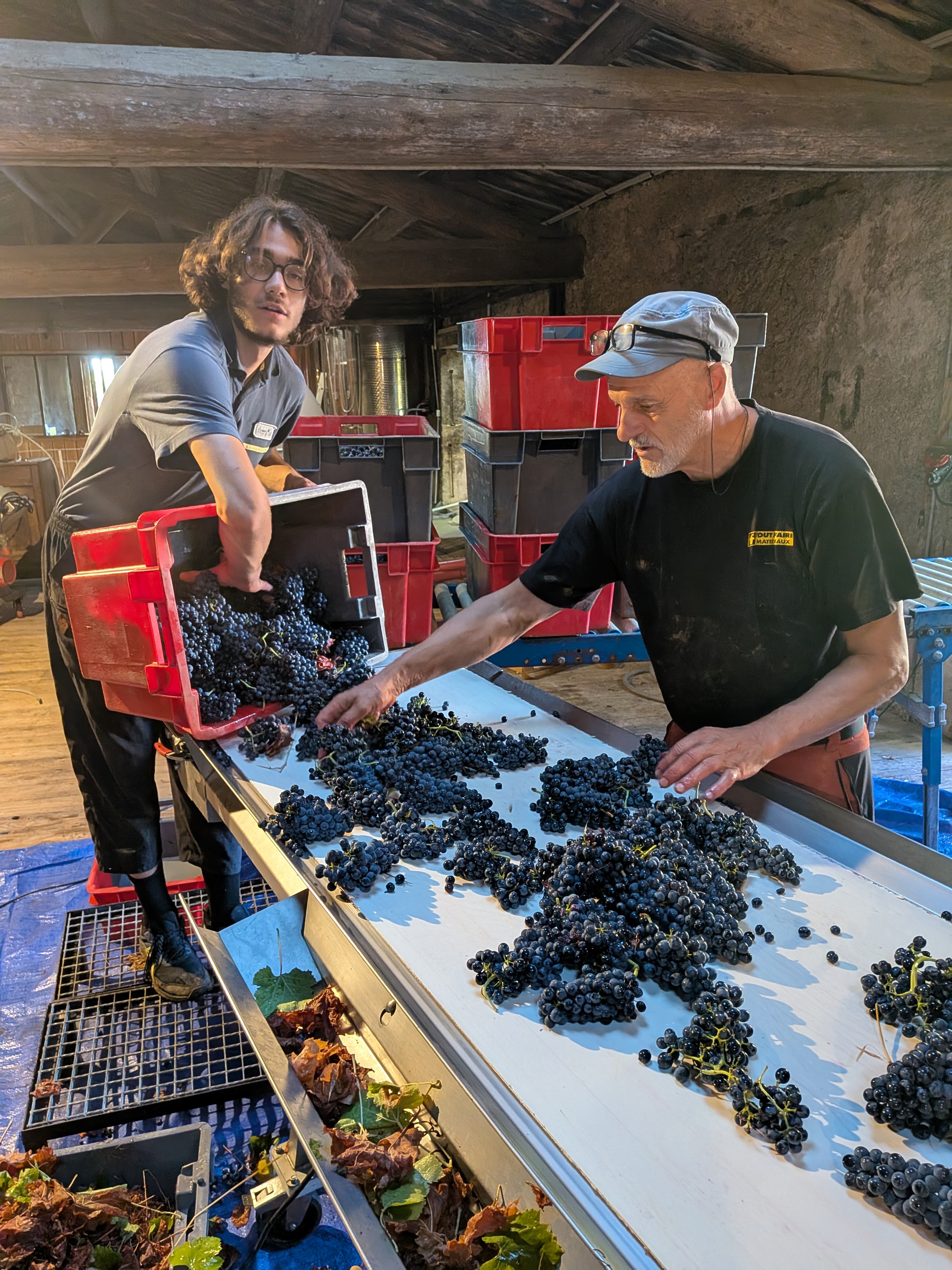
In our interview Jeff and I talked much about the great changes at the winery since I first visited, the vines themselves, the cellar and equipment. What has not changed are the principles behind the winemaking. When I sat at the harvest table with Jeff, his father Jean-Claude and everyone in 2014 he told me that three things make great wine; grapes, work and love. No matter what else has changed those three underpin everything at Mas Coutelou.

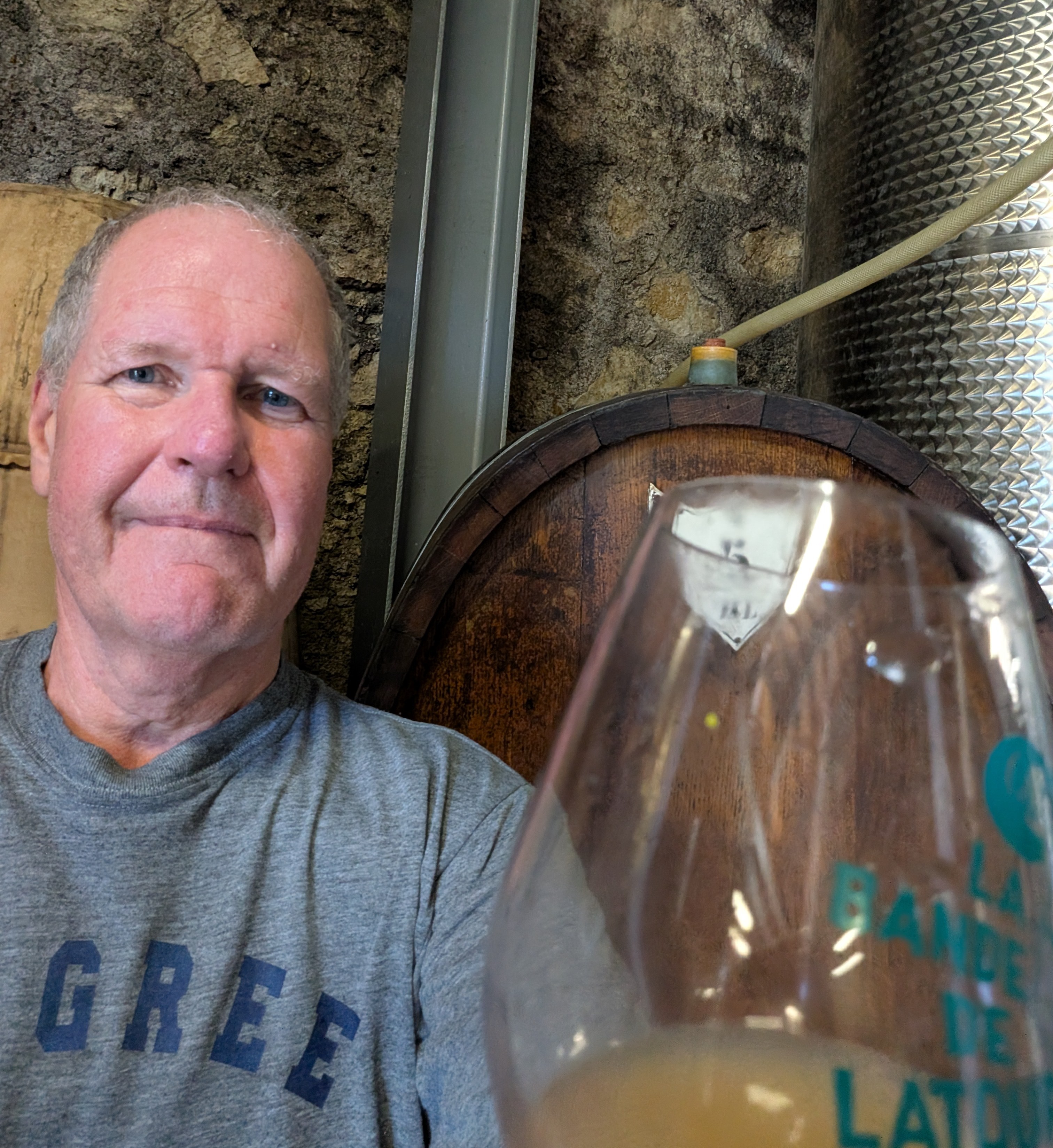
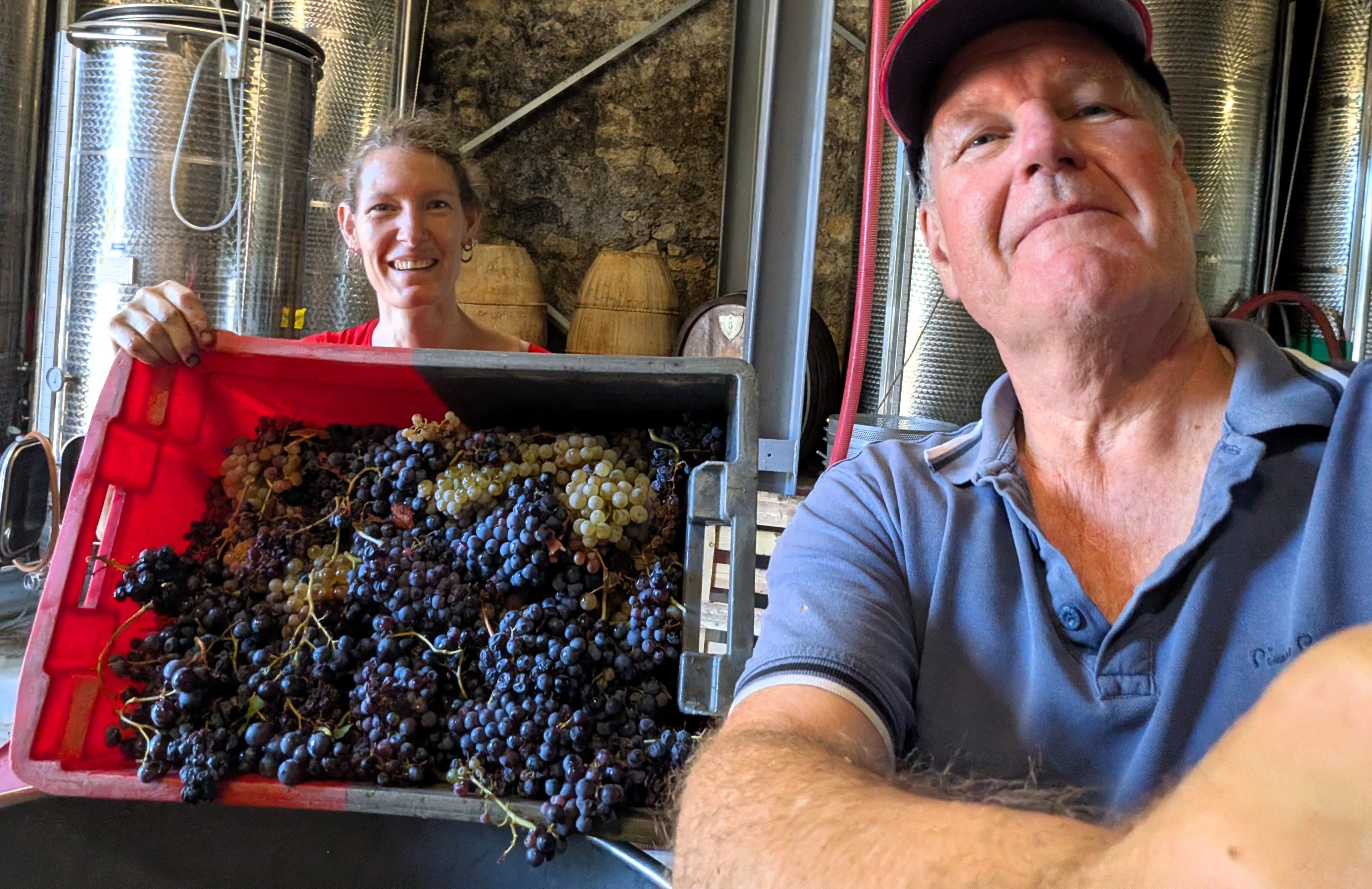
With the Macabeu

I have been so fortunate to be a tiny part of what has happened at the domaine and to record its story over these last years. Great wines and ever fascinating vineyards are important to that story but our friendship and those forged with so many people who have passed through are most important of all.

Thank you for reading, I hope that you will continue to do so. Our interview will, I am sure, reward you for reading #501 as Jeff touches on the story of Mas Coutelou, the changes of the last few years, the threat of climate change, old vines and much more.

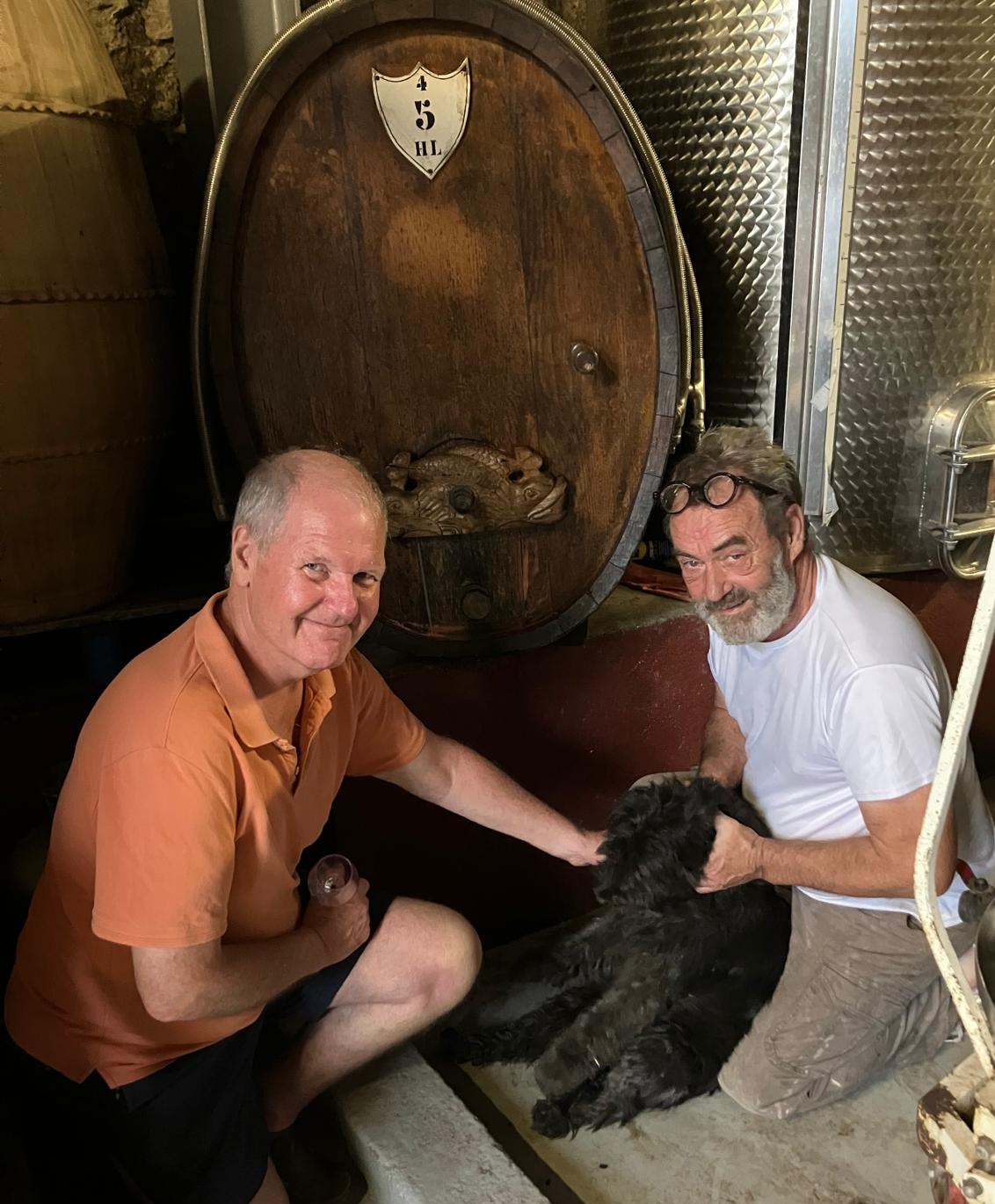
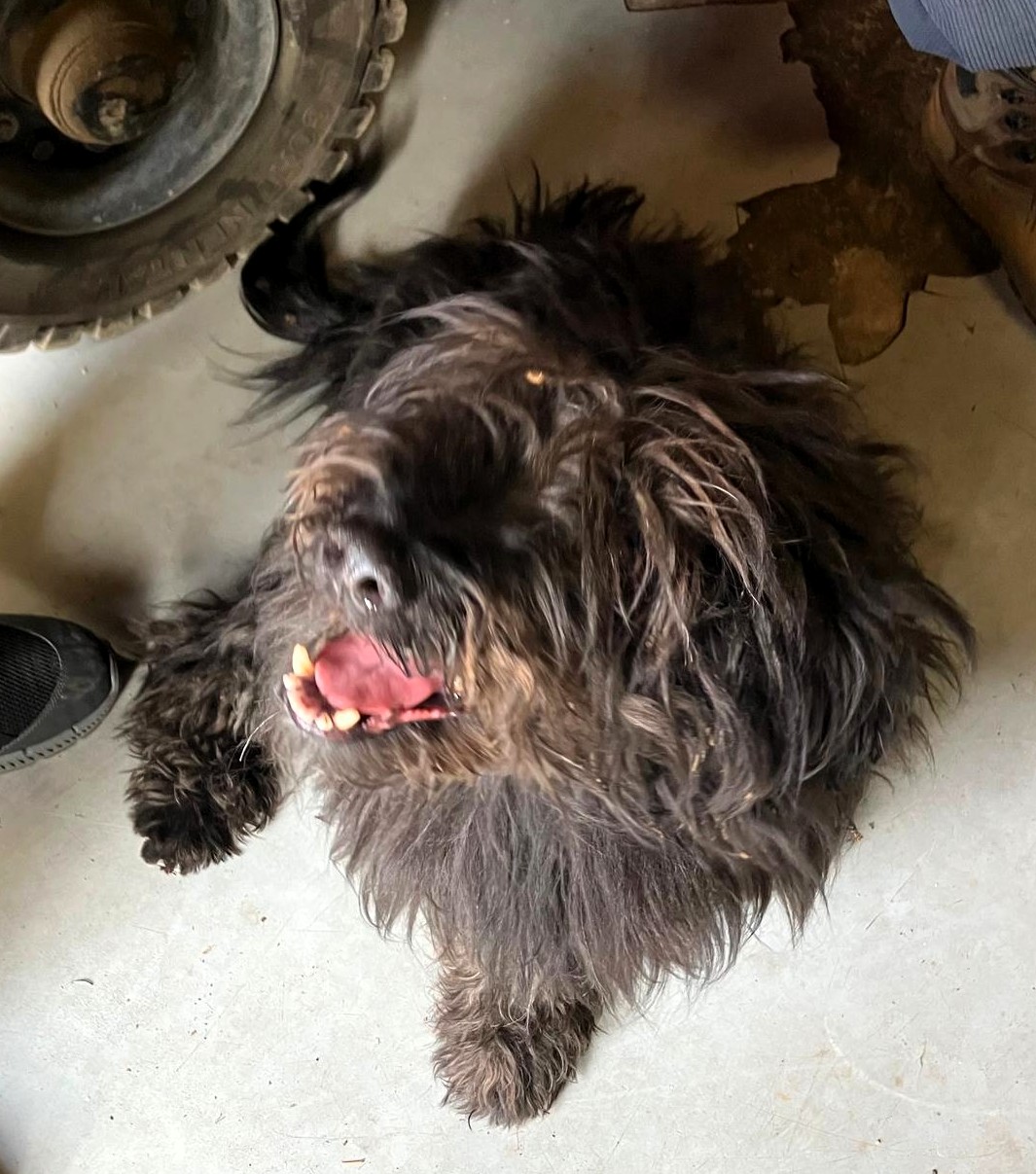
With the main star of these last years, Icare

En Francais

Cela fait 15 ans que j’ai rendu visite pour la première fois chez Jeff Coutelou à Puimisson, et 12 ans que nous nous sommes installés dans la région, époque à laquelle j’ai commencé à passer une grande partie de mon temps au domaine. Le 19 août 2014, j’ai rédigé le premier, petit article de ce blog. Voici le 500e article : l’occasion de faire le point, de célébrer l’événement et de se tourner vers l’avenir.

Lorsque j’ai annoncé à Jeff que nous approchions du cap des 500 articles, il m’a demandé de réfléchir à une façon de marquer le coup. J’ai suggéré une interview ; alors que les vendanges touchaient à leur fin, il m’a invité à déjeuner et nous avons partagé une conversation passionnante. Elle était si riche en informations que je rapporterai l’essentiel de ses propos dans le 501e article !

Entre-temps, Jeff a formé une autre idée. Il y a quelques mois, il a fait l’acquisition d’un foudre. Jeff est convaincu du potentiel de ce type de récipient après avoir goûté des vins élevés en foudre par des vignerons tels que Michel Gahier, dans le Jura, et Tessa Laroche, du Domaine Aux Moines à Savennières. Rien d’insolite, direz-vous, sauf que celui-ci est centenaire. Il provenait d’Alsace, où un vigneron cessait son activité. Sa famille l’avait utilisé pendant tout ce temps ; le bois porte donc en la mémoire de tant de vins et d’une longue histoire. Après la guerre franco-prussienne de 1870-1871, le tonnelier, refusant de devenir allemand, s’installa à Nancy ; toutefois, lorsque l’Alsace revint à la France après la Première Guerre mondiale, l’entreprise retrouva ses terres d’origine. Le foudre qu’ils avaient fabriqué reste dans la région jusqu’à son transfert à Puimisson, son histoire ayant fini par convaincre Jeff de l’acheter.
Par hasard, ce foudre a une capacité de 500 litres : une coïncidence qui se marie parfaite avec mon 500e article. Sa taille implique que le vin est moins en contact avec le bois que dans une barrique classique de 250 litres. Il a d’abord fait l’essai avec un Grenache Gris 2024 dont la fermentation n’était pas encore achevée. Une fois transféré dans le foudre, la fermentation terminée. Regardez la vidéo.

Une fois la fermentation de certains vins blancs soit terminée en cuves inox, Jeff m’a demandé de choisir entre deux d’entre eux. L’assemblage Aramon Gris et Carignan Blanc semblait plus intéressant que le Macabeu de Sainte Suzanne, mais après dégustation, nous sommes tous en accord que le Macabeu possédait la structure et le corps qui profiterait le mieux d’un élevage sous bois. Ainsi, à l’aide d’un simple tuyau et par aspiration, Jeff a rempli le foudre de Macabeu ; le vin y sera façonné non seulement par le vieux bois, mais aussi par toute l’histoire des vins et des époques passées.

Un vin jeune qui s’allie au vieux bois pour créer quelque chose de nouveau pour l’avenir : le parallèle avec mon 500e article est évident. Espérons que ce vin rejoindra le panthéon des cuvées mémorables de Coutelou.

Lors de notre entretien, Jeff et moi avons beaucoup discuté des grands changements survenus au domaine depuis ma première visite : les vignes elles-mêmes, la cave et le matériel. Ce qui n’a pas changé, ce sont les principes qui régissent la vinification. En 2014, alors que j’étais assis à la table des vendanges avec Jeff, son père Jean-Claude et toute l’équipe, il m’avait confié que trois éléments font un grand vin : le raisin, le travail et l’amour. Quels que soient les autres changements, ces trois piliers restent le fondement de tout ce qui se fait au Mas Coutelou.

J’ai eu la chance de prendre une modeste part à l’aventure du domaine et d’en relater l’histoire au fil des années. Si les grands vins et les vignobles toujours fascinants y jouent un rôle essentiel, notre amitié — ainsi que celles nouées avec tant de personnes de passage — reste ce qu’il y a de plus précieux.

Merci de m’avoir lu ; j’espère que vous continuerez à le faire. Notre entretien récompensera, j’en suis sûr, votre lecture de cet article n° 501 : Jeff y évoque l’histoire du Mas Coutelou, les évolutions de ces dernières années, la menace du changement climatique, les vieilles vignes et bien plus encore.


Leave a comment

Vendanges 26 – From Vineyard To Cellar

Article #499

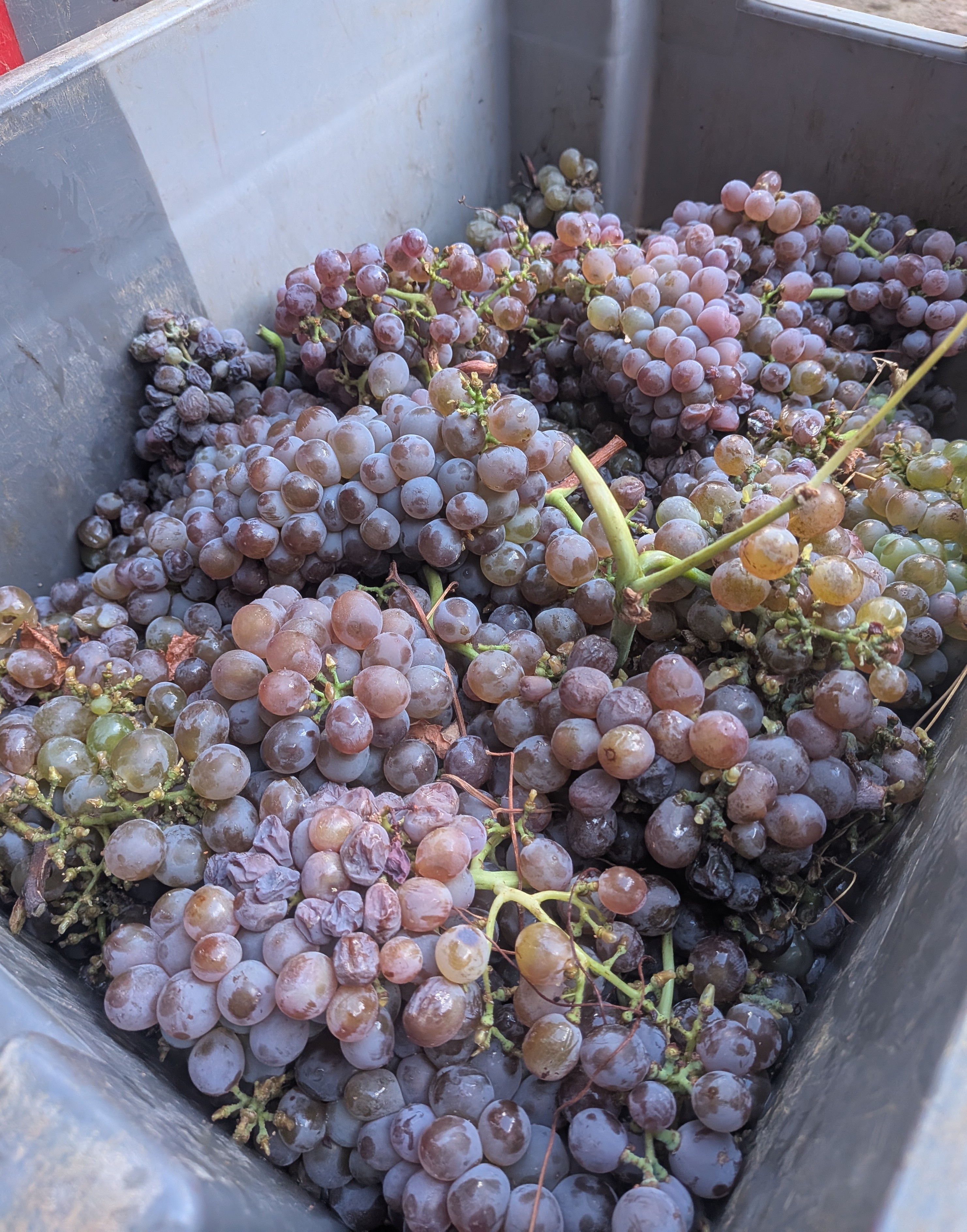
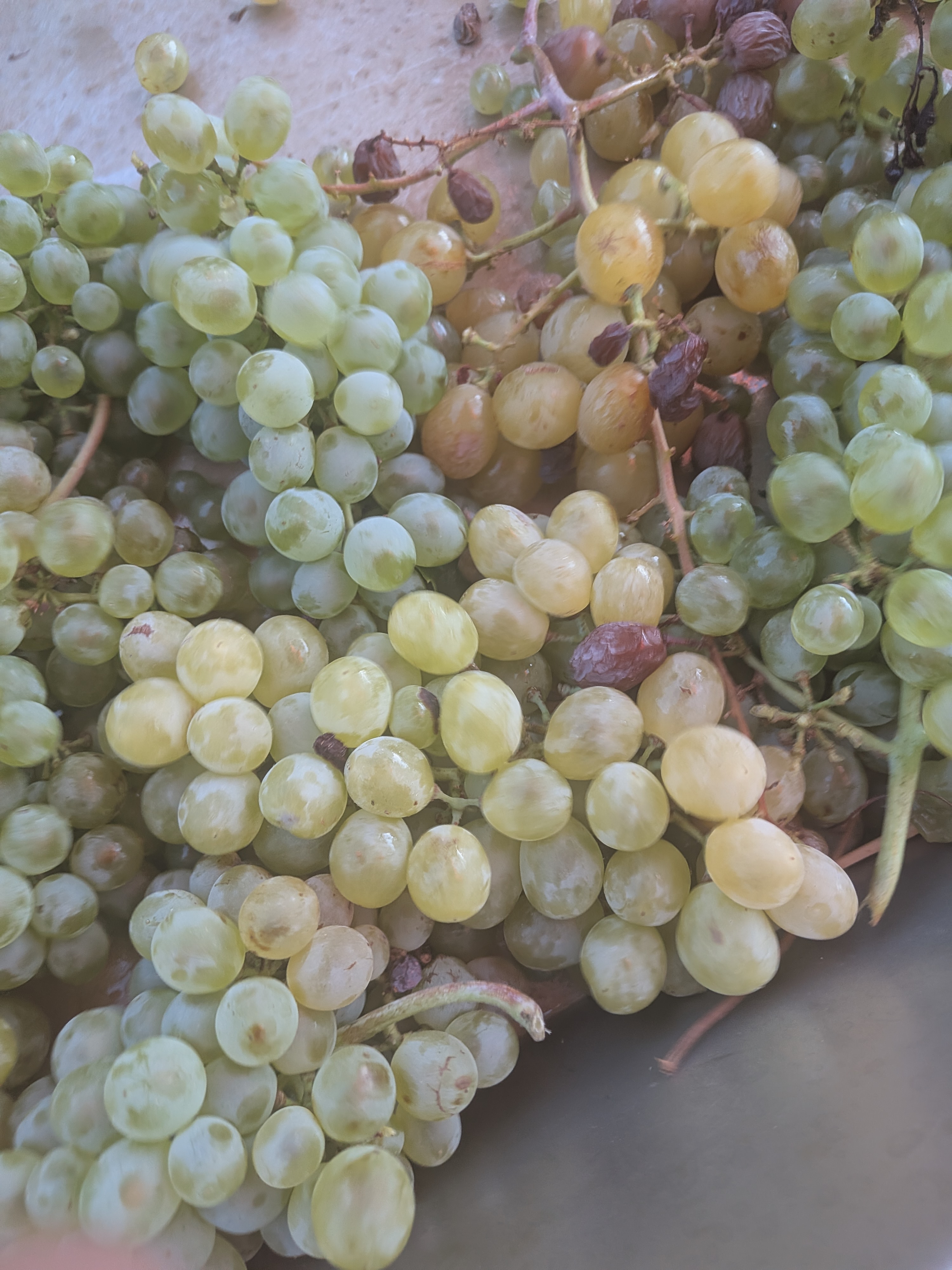
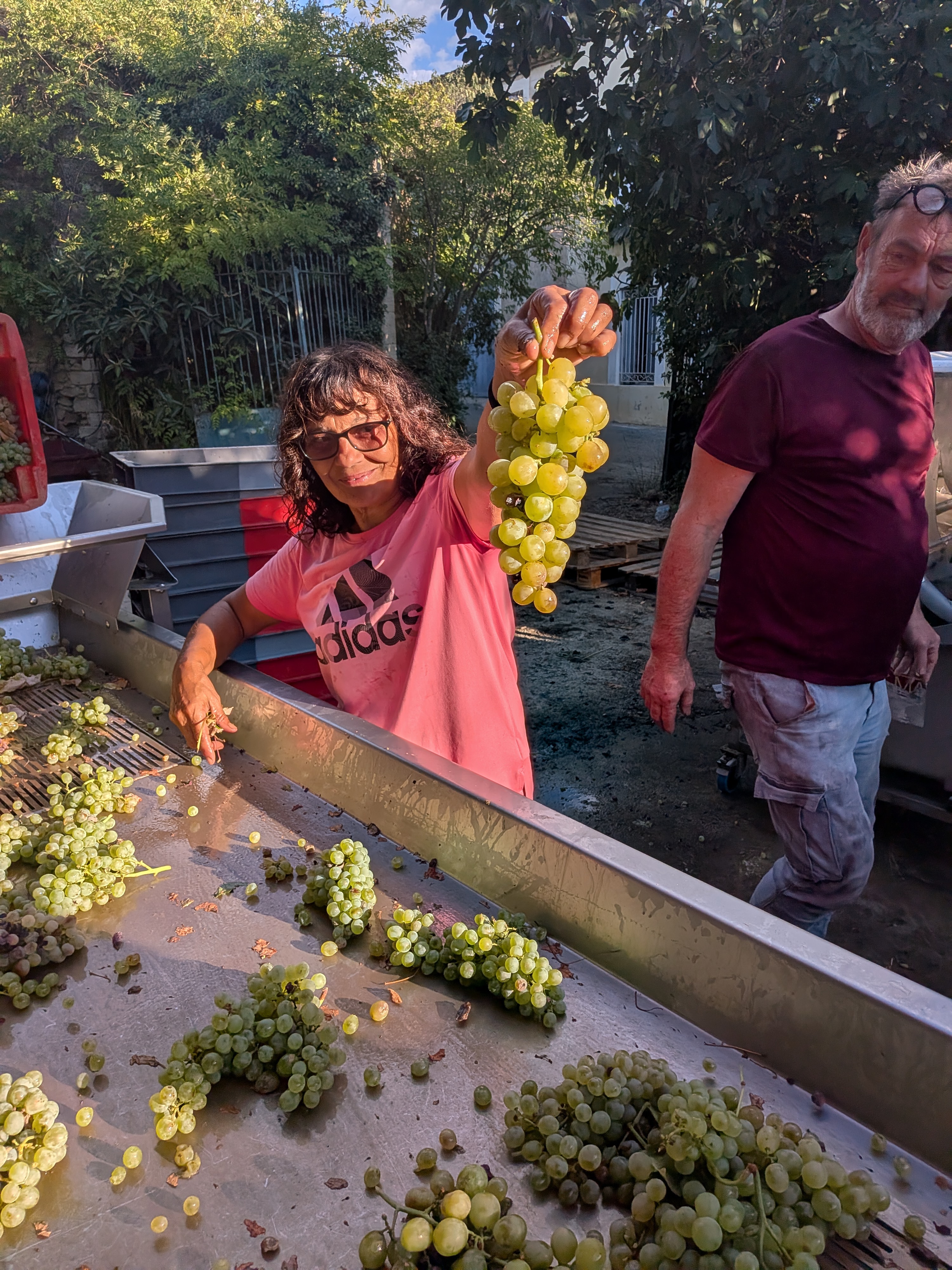
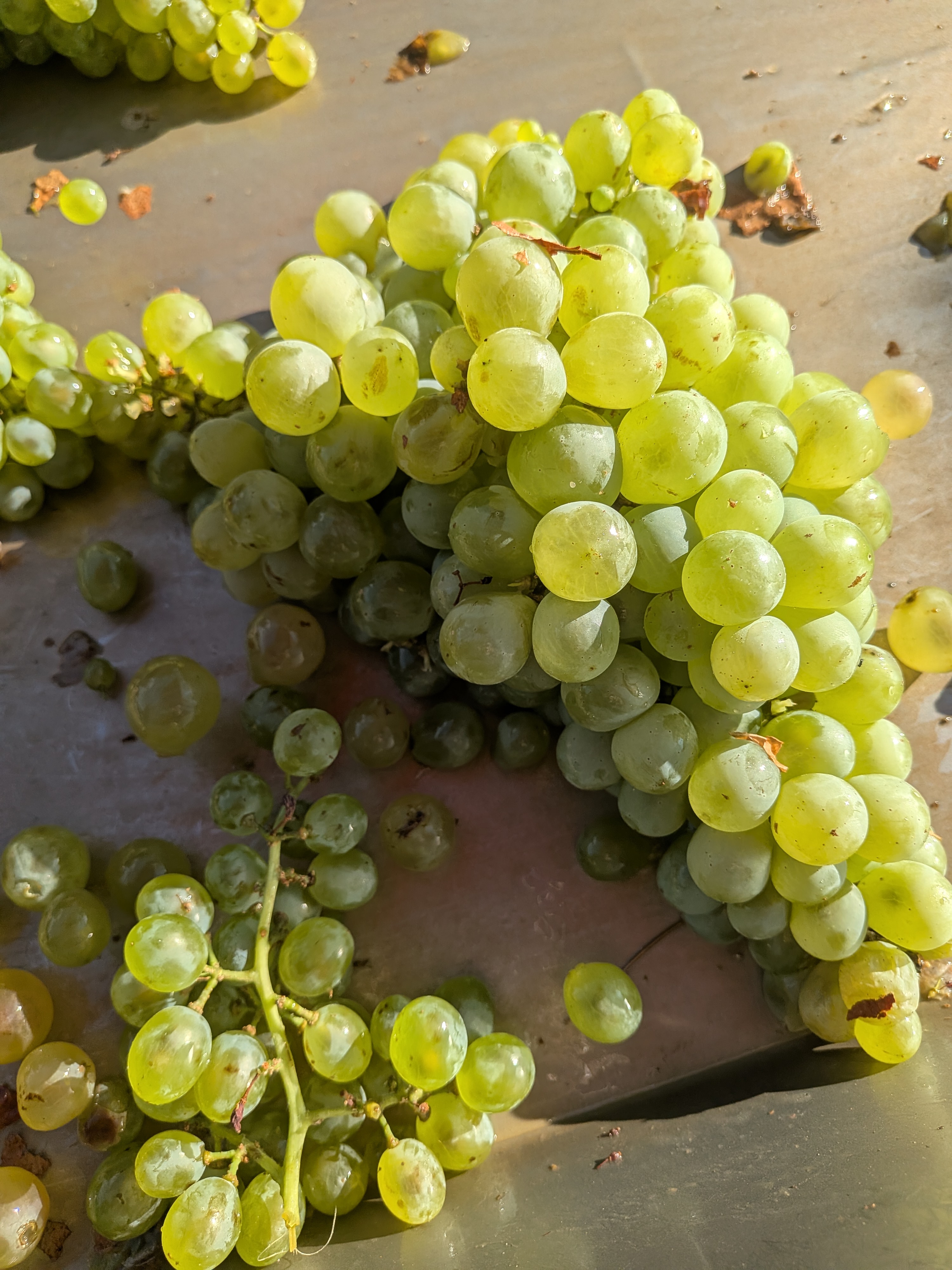
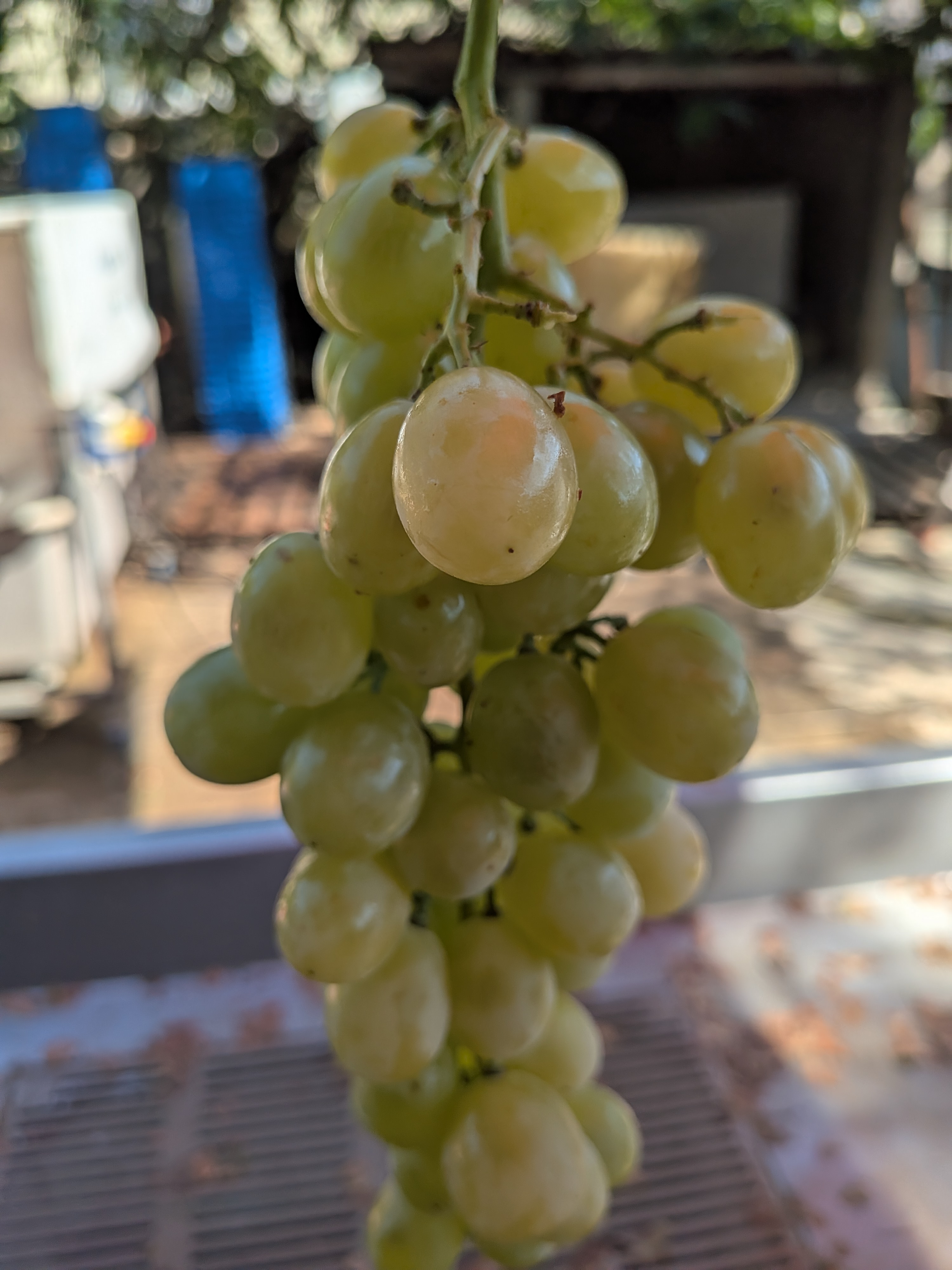
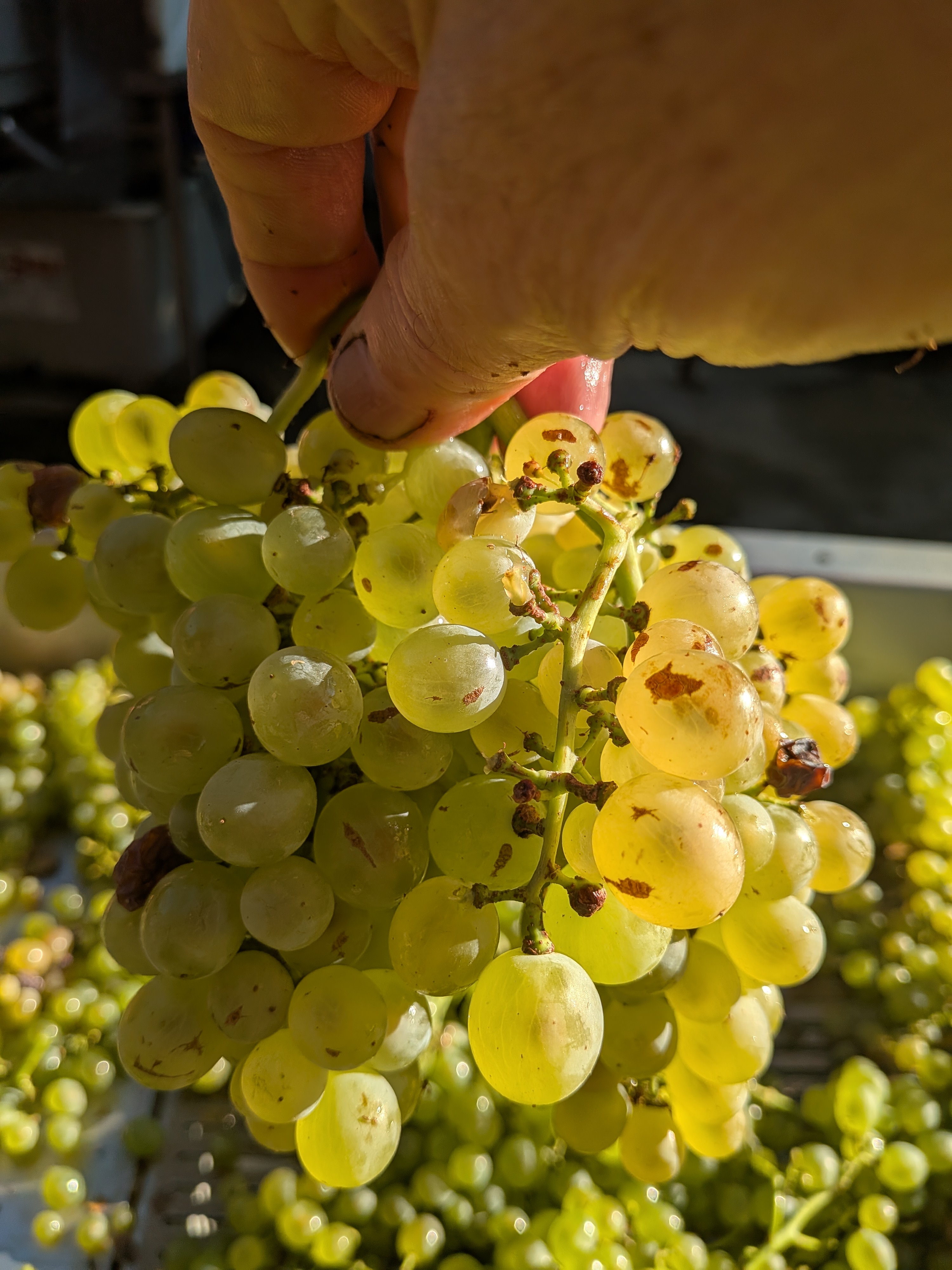
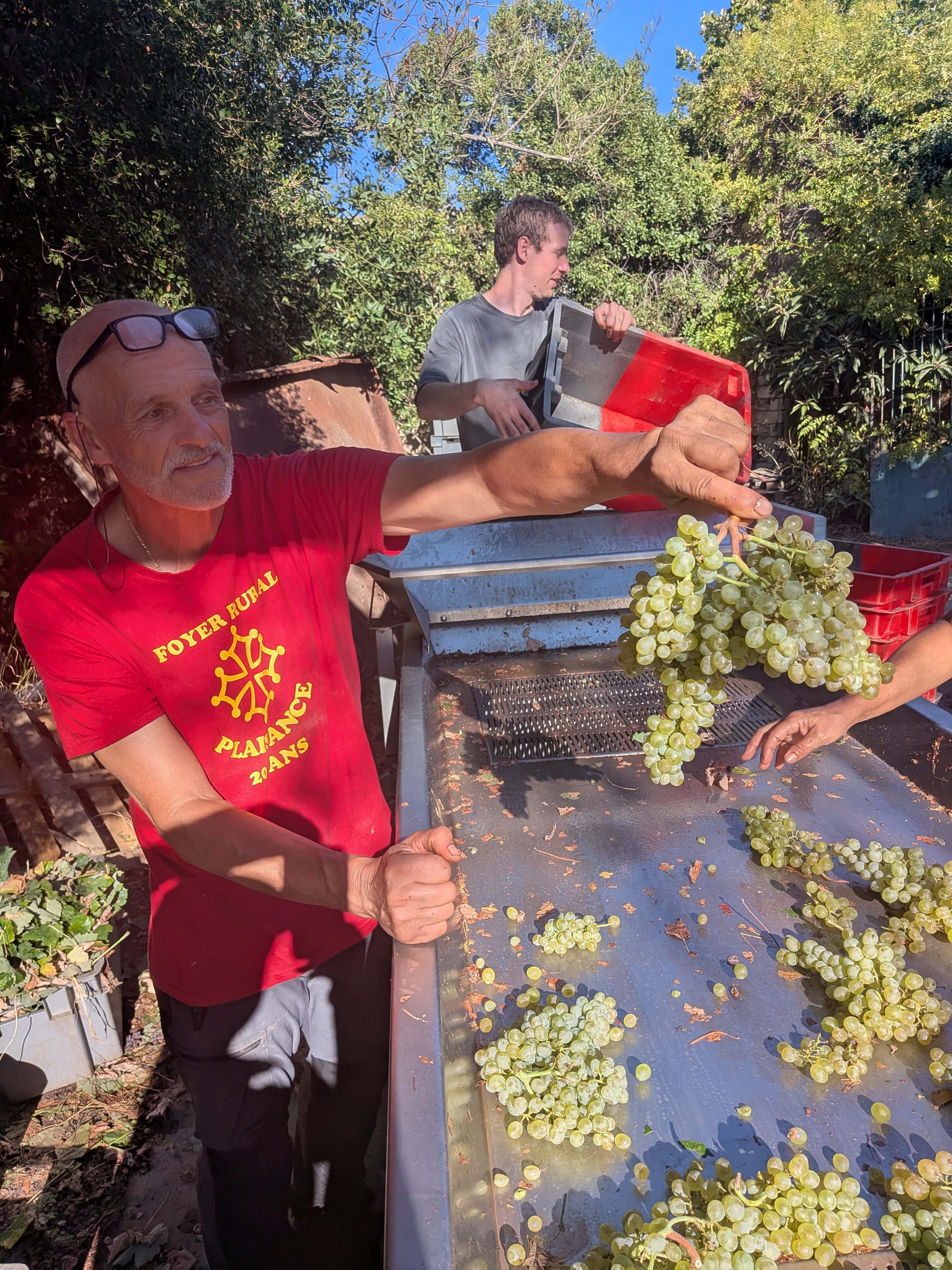
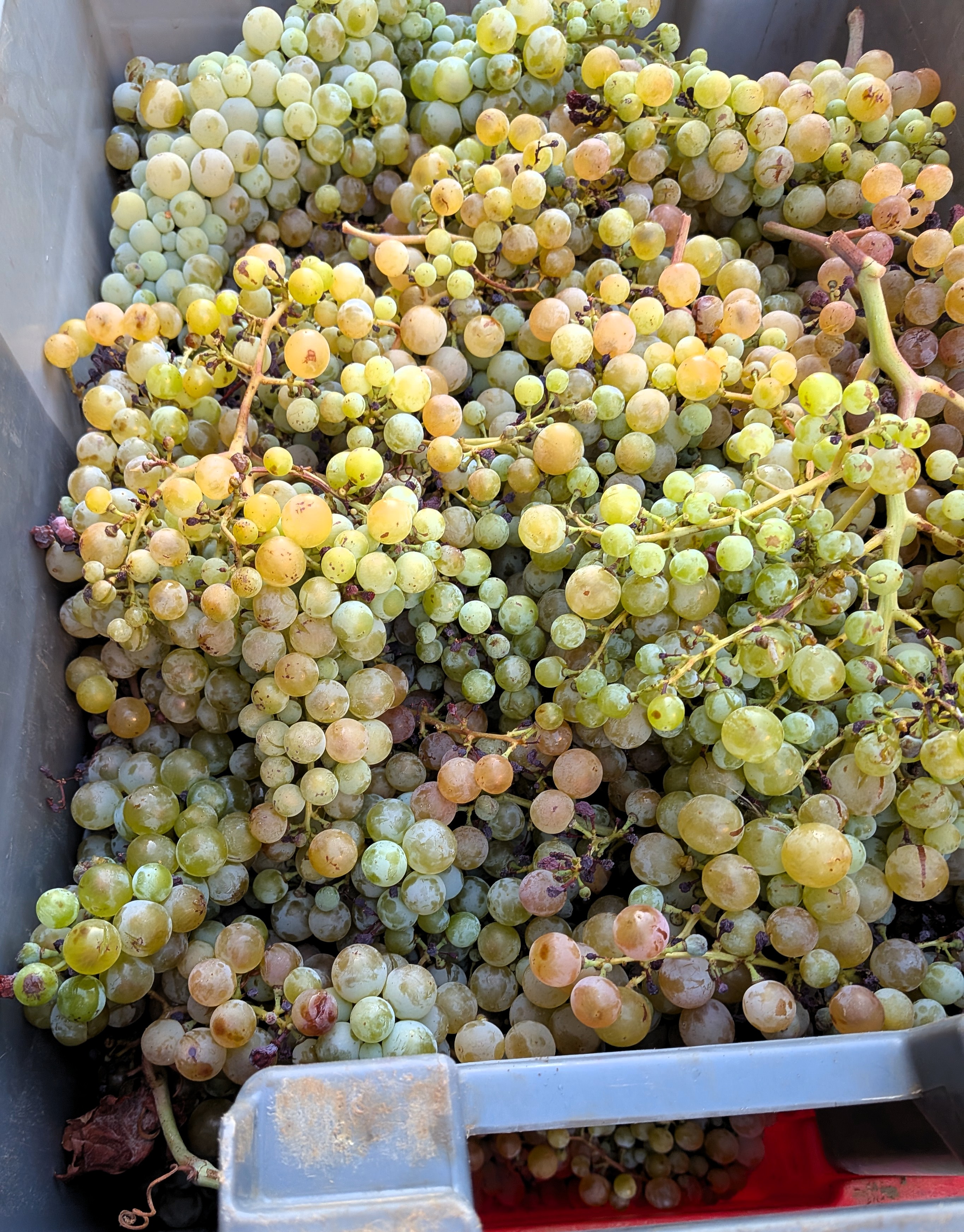
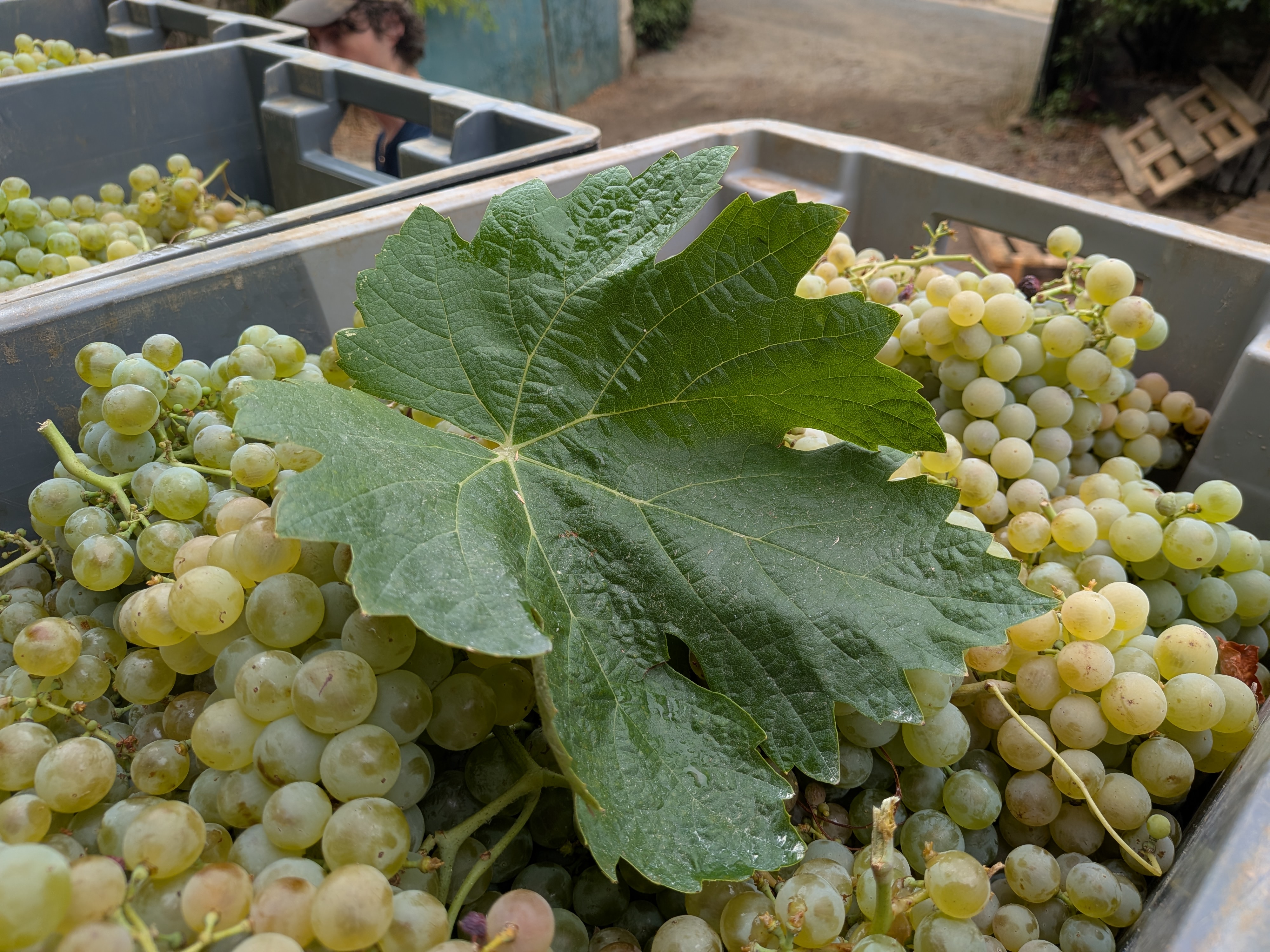
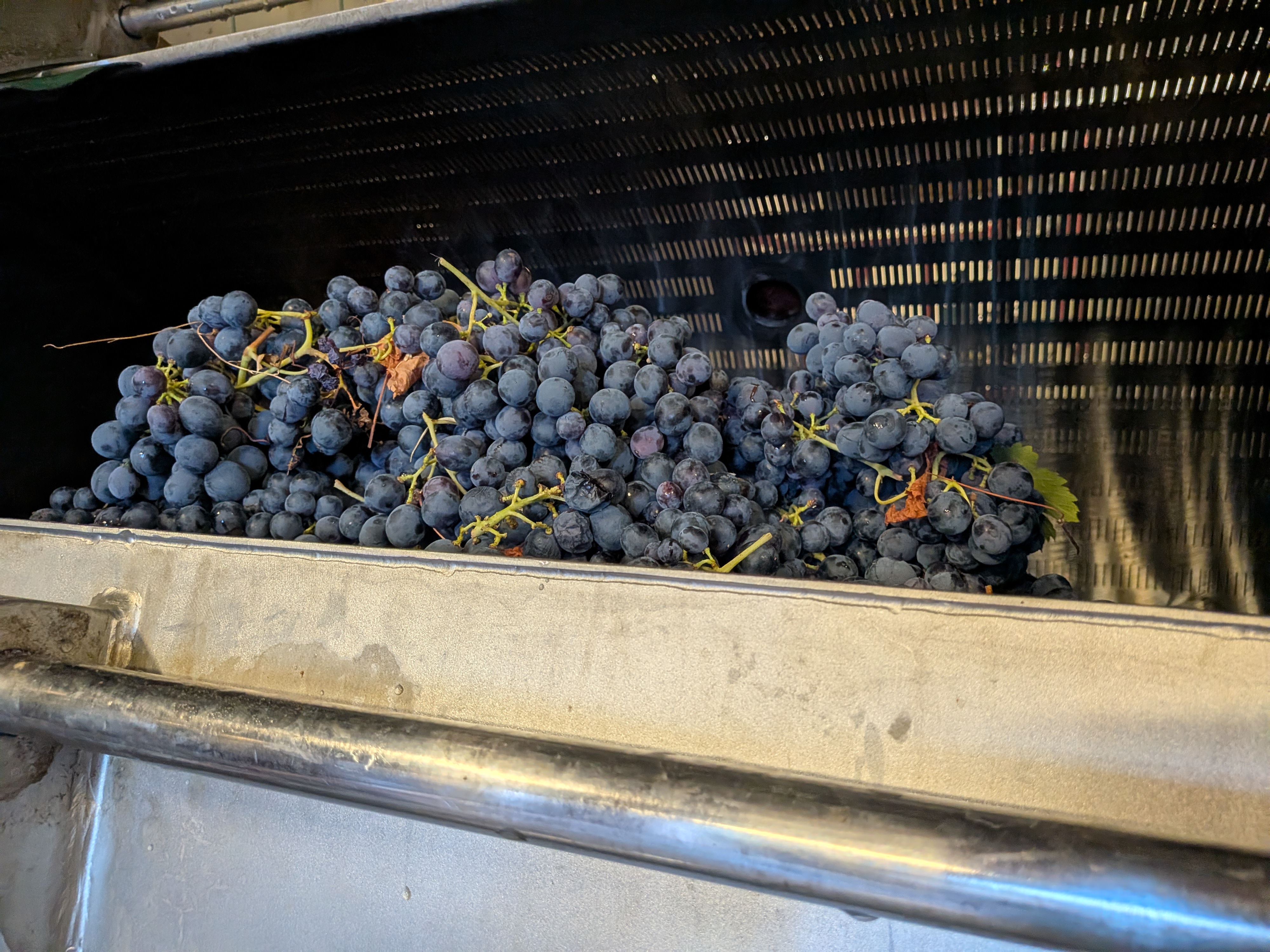
And so, just like that, the picking is done, vendanges over. Thursday 3rd brought another good mix of grape varieties and from different vineyards. It started with Macabeu, perhaps the most planted of the white grapes now along with Clairette. This was from the Sainte Suzanne extra vineyard given to those 2 varieties. The Clairette we picked on Monday. As I said then the Macabeu had suffered a bit after a wet winter did not allow pruning and treatments until May. It was headed straight to the direct press yet there will be good wine from it no doubt.

Macabeu

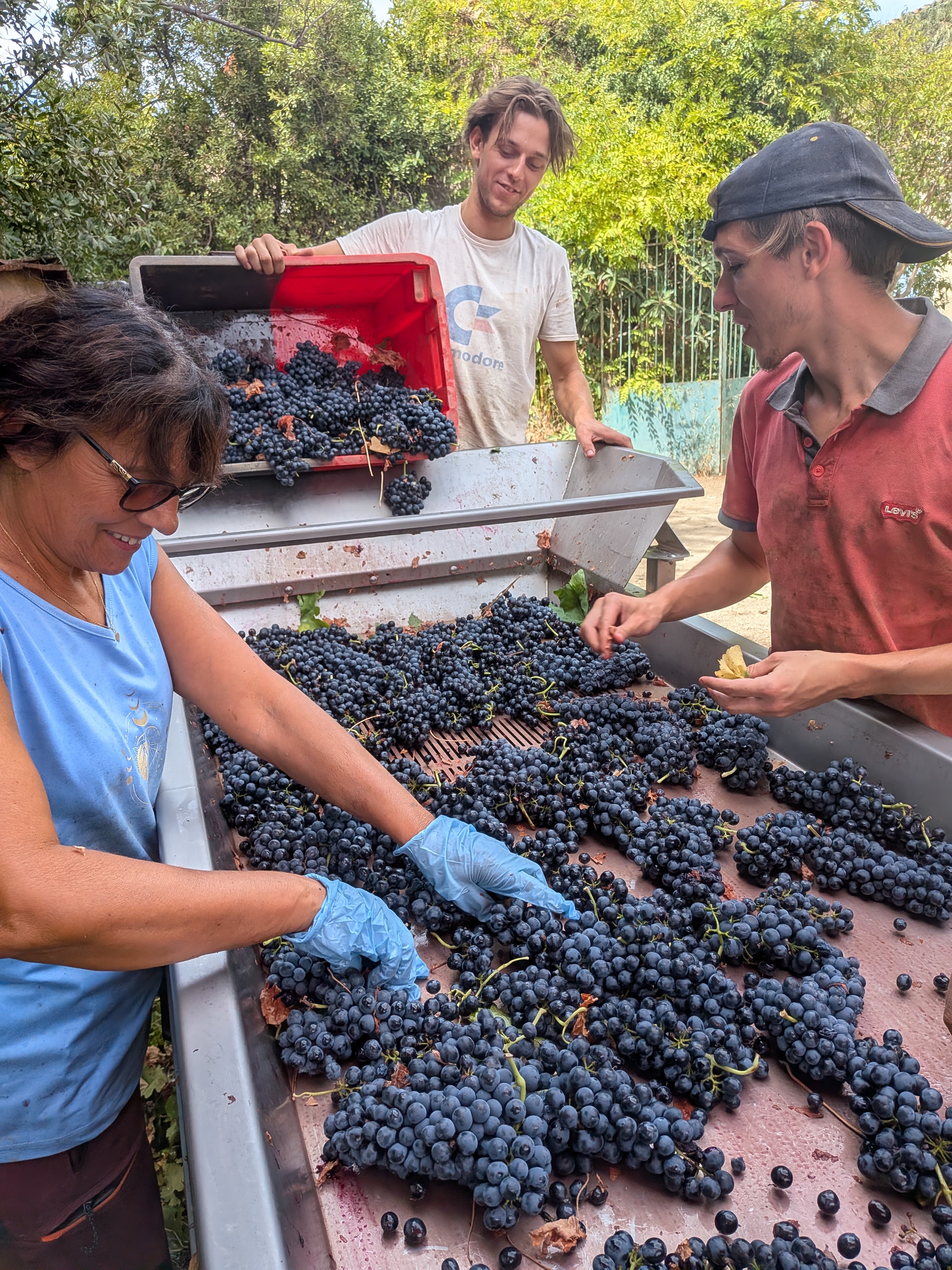
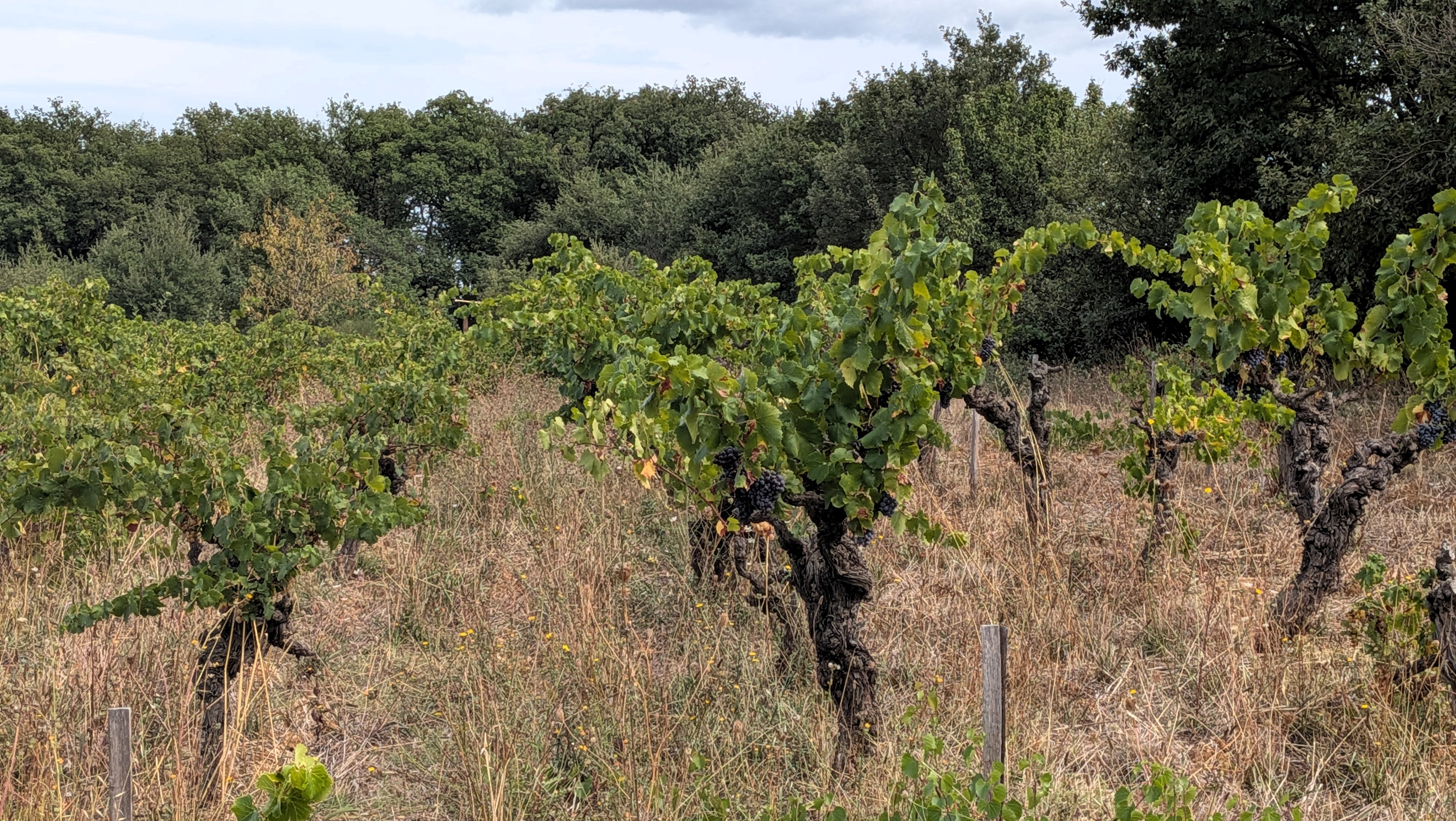
The pickers then moved a short distance to my favourite vineyard, Rome. Rome is planted with 40 year old Cinsault along with all three colours of Grenache and different types of Muscat. The Cinsault was excellent, the older vines producing smaller bunches and berries but with more flavour and concentration. The white grapes were mixed in, a complantation or field blend, a wine of place rather than grape variety.

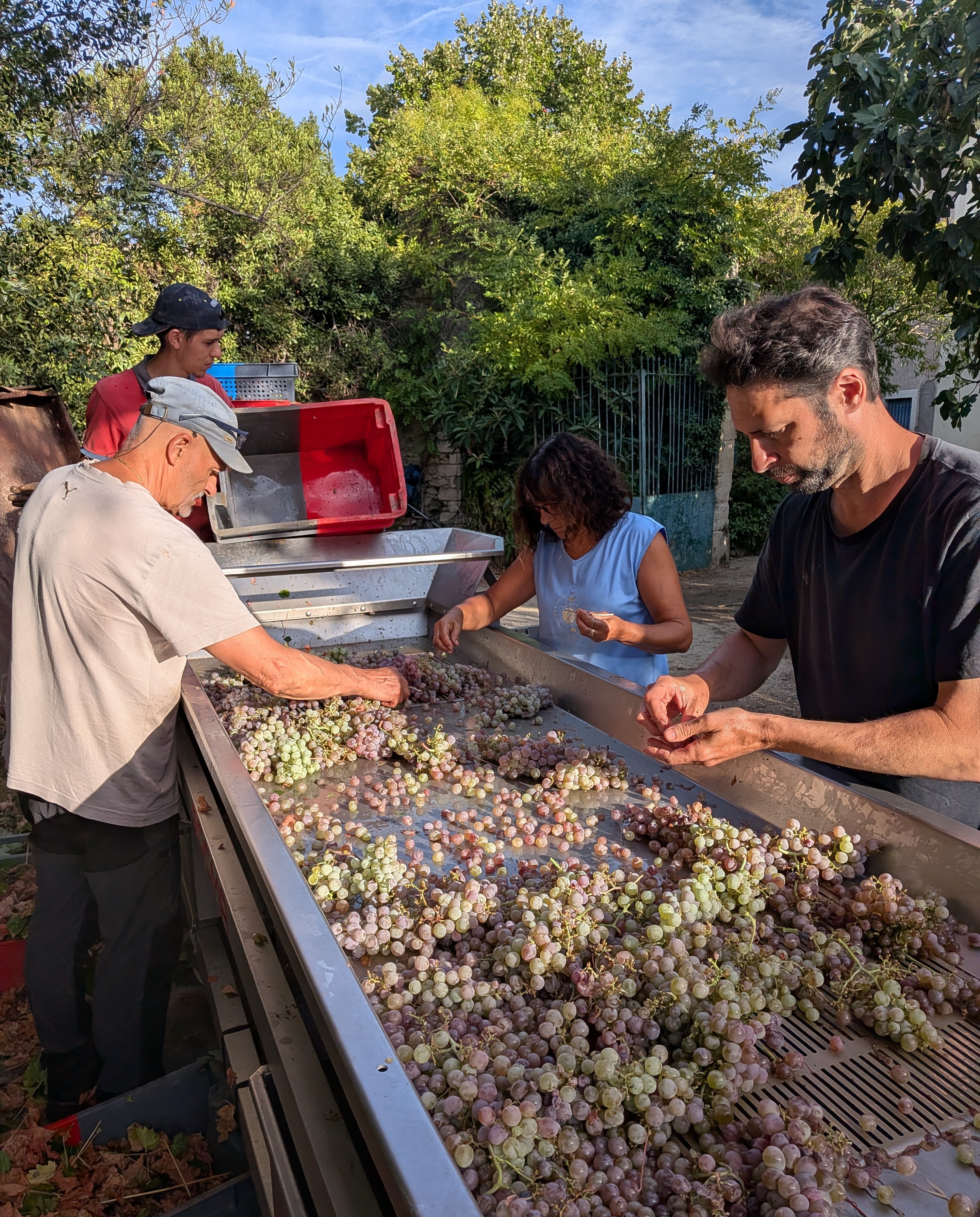
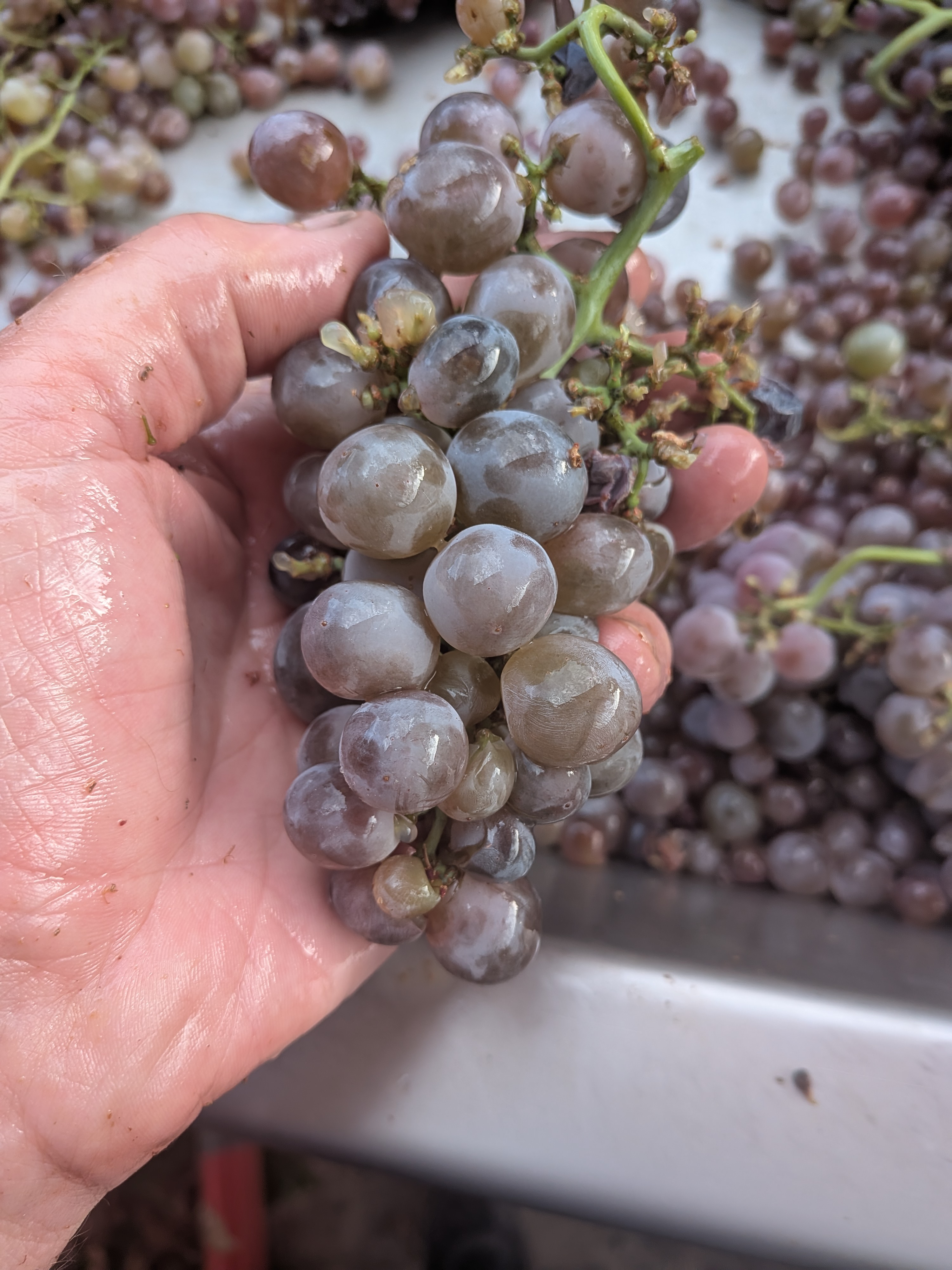
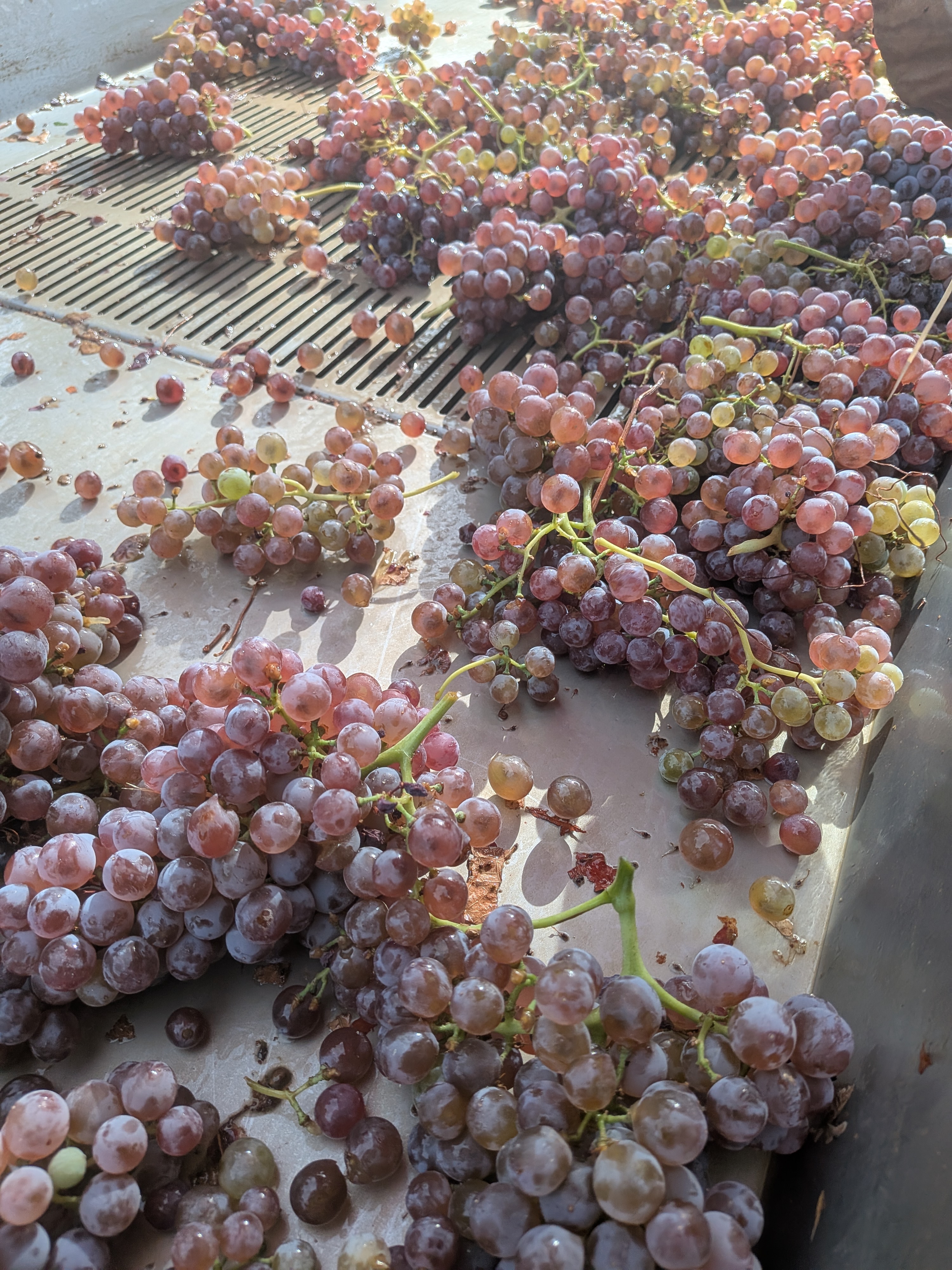
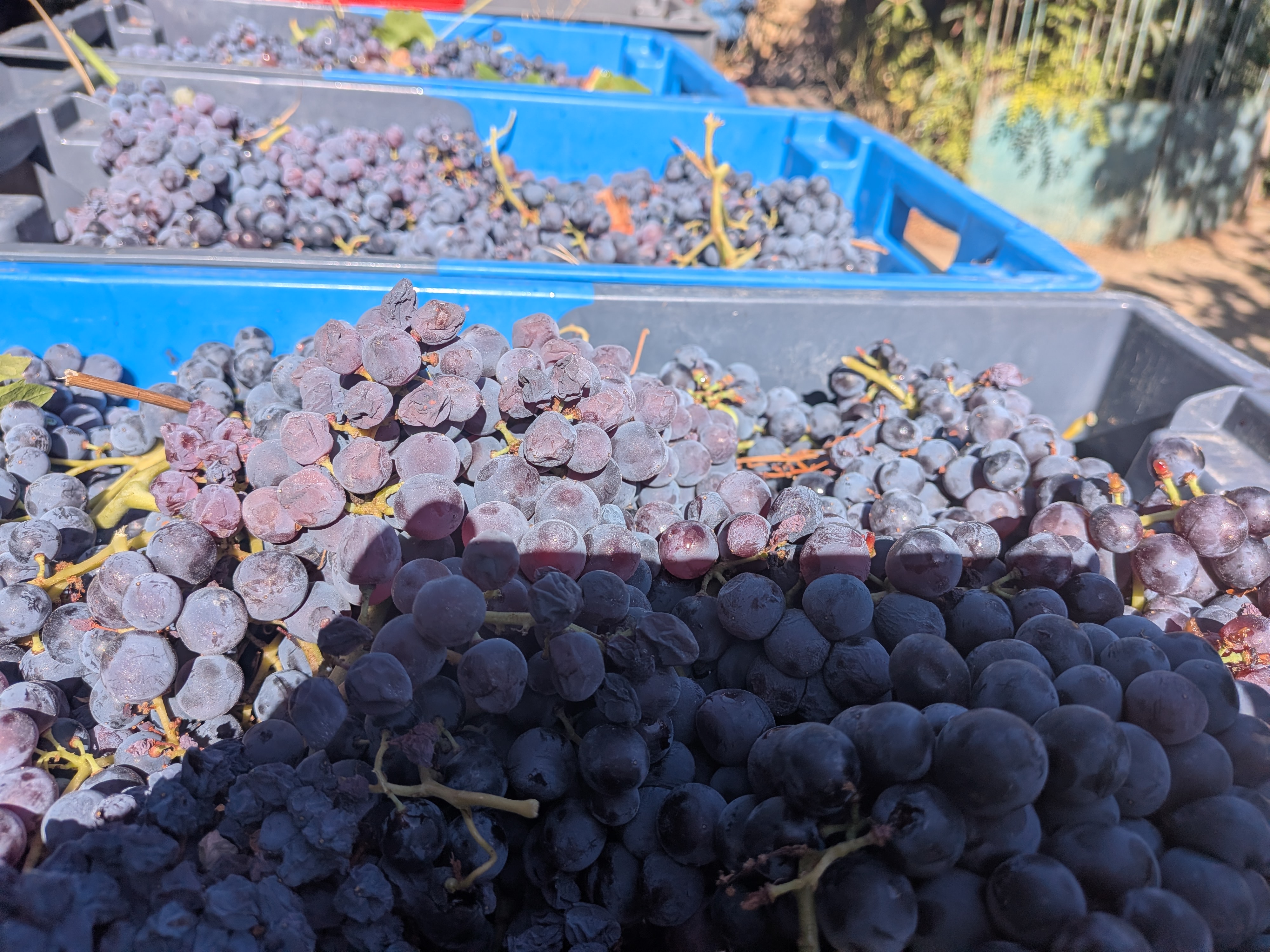
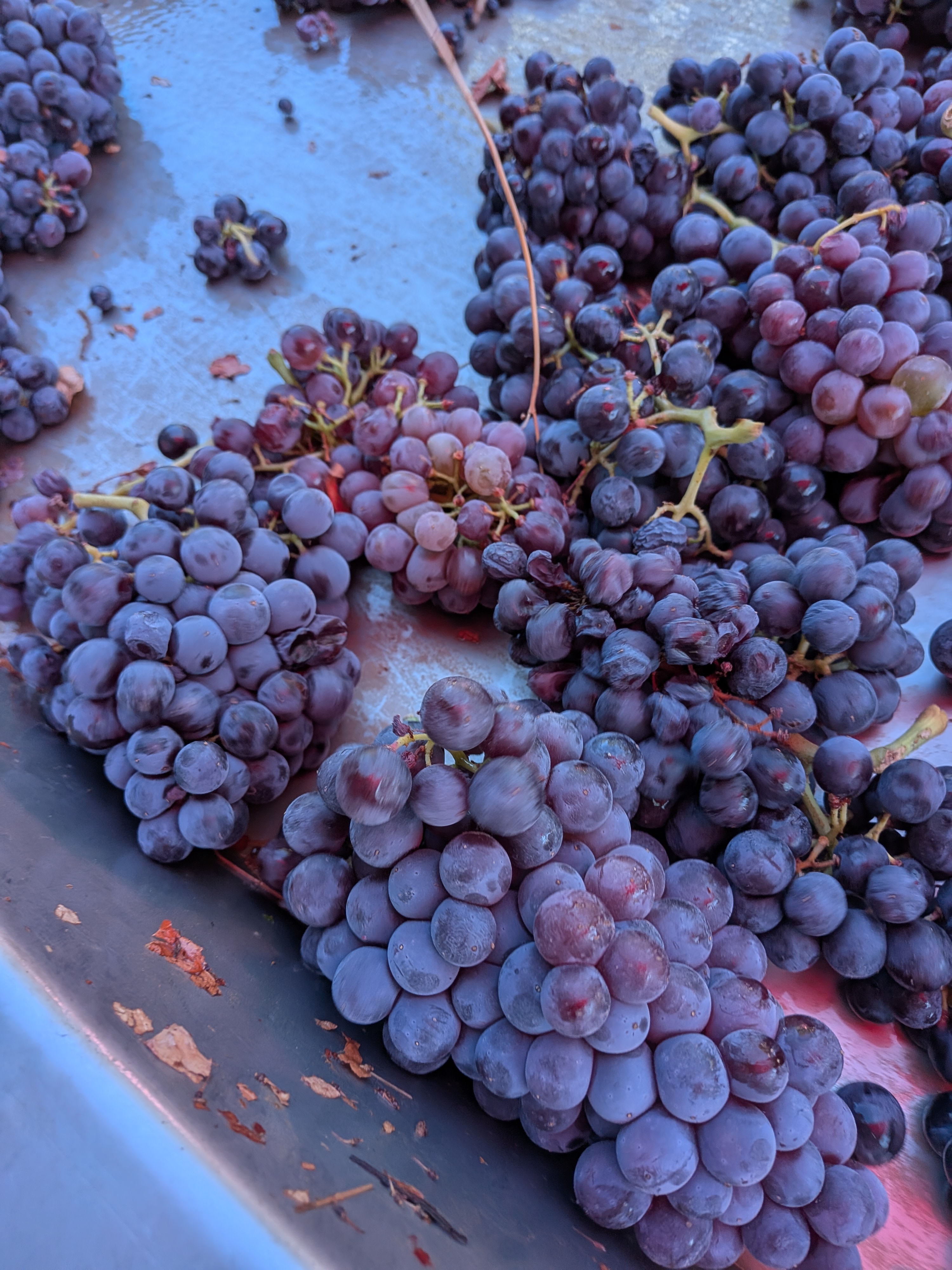
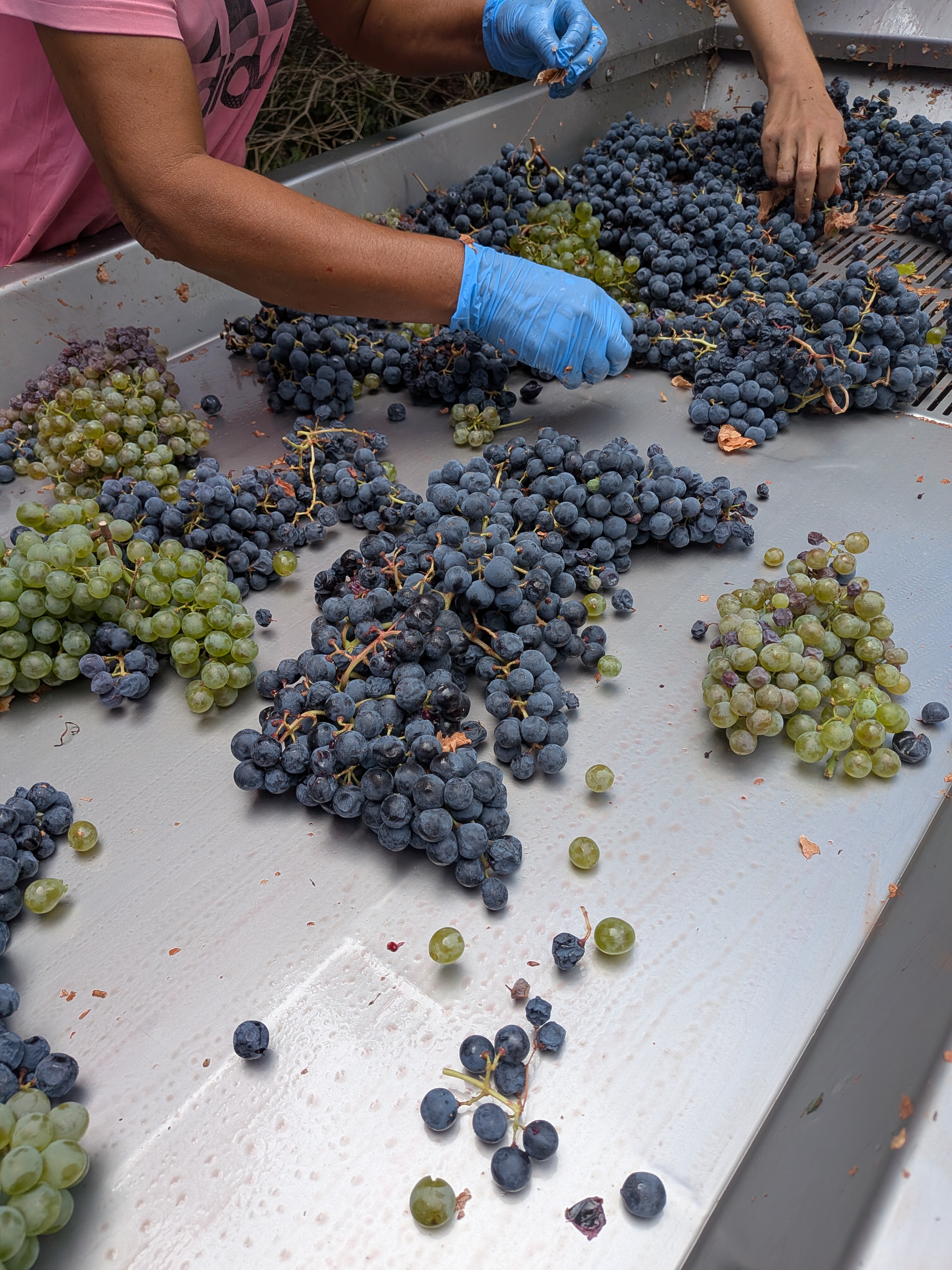
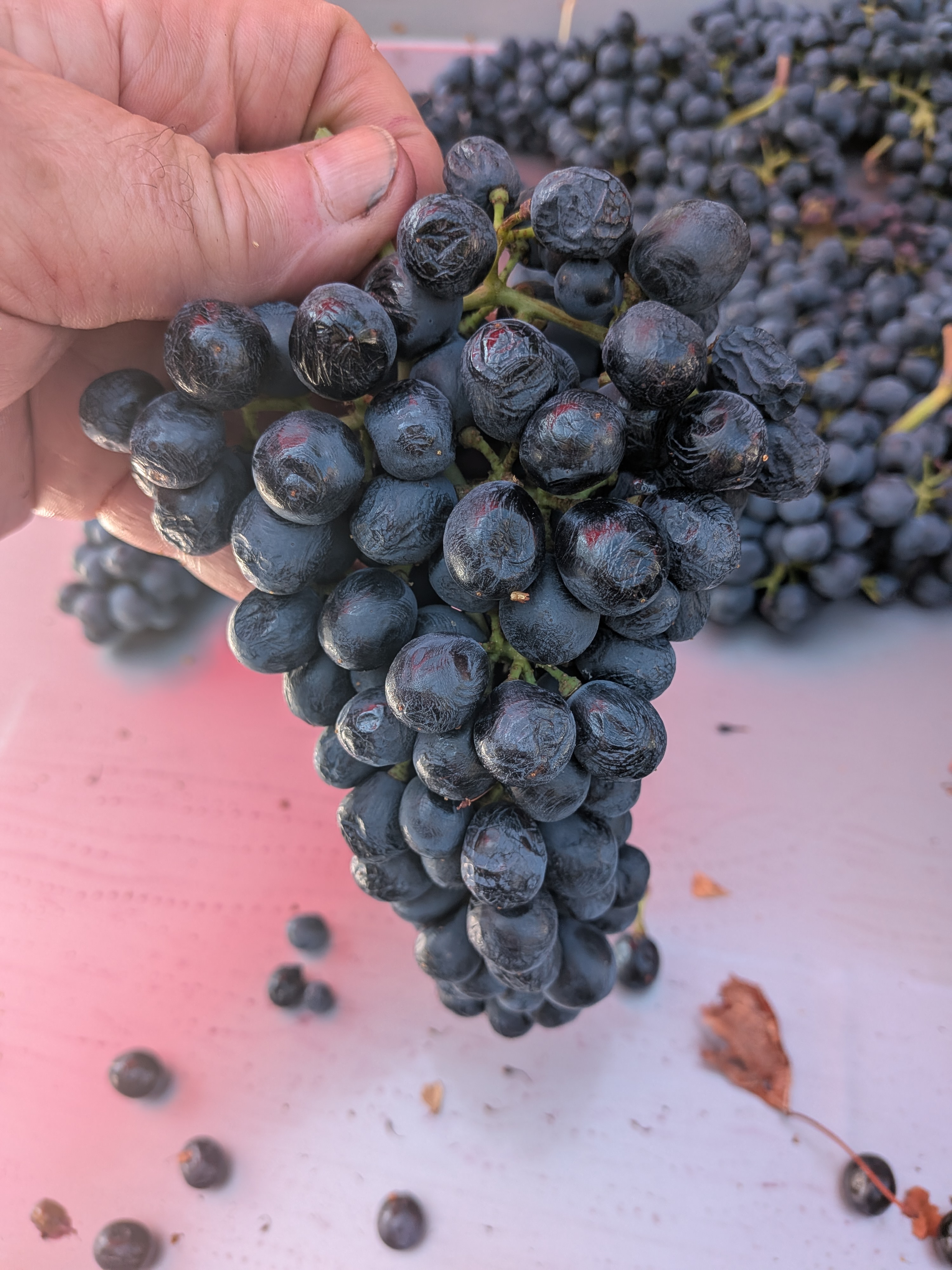
In the afternoon the pickers moved to Rec D’Oulette and the Carignan Noir. Last year this was, in my opinion, the best of the bunch so to speak, lovely fruit which came as a surprise to Jeff Coutelou who had been thinking of grubbing up the parcel. Unfortunately this year the Carignan showed that 2025 was not to be repeated. This used to be a success story, producing the excellent Flambadou wine which I love as it ages. In recent years though mildew in both forms has damaged the vineyard more than most and that is why Jeff may well now get rid of the vines. The grapes were small and there were a few bunches showing oidium (powdery mildew). This was the pick which had to be sorted most carefully through the vendanges.

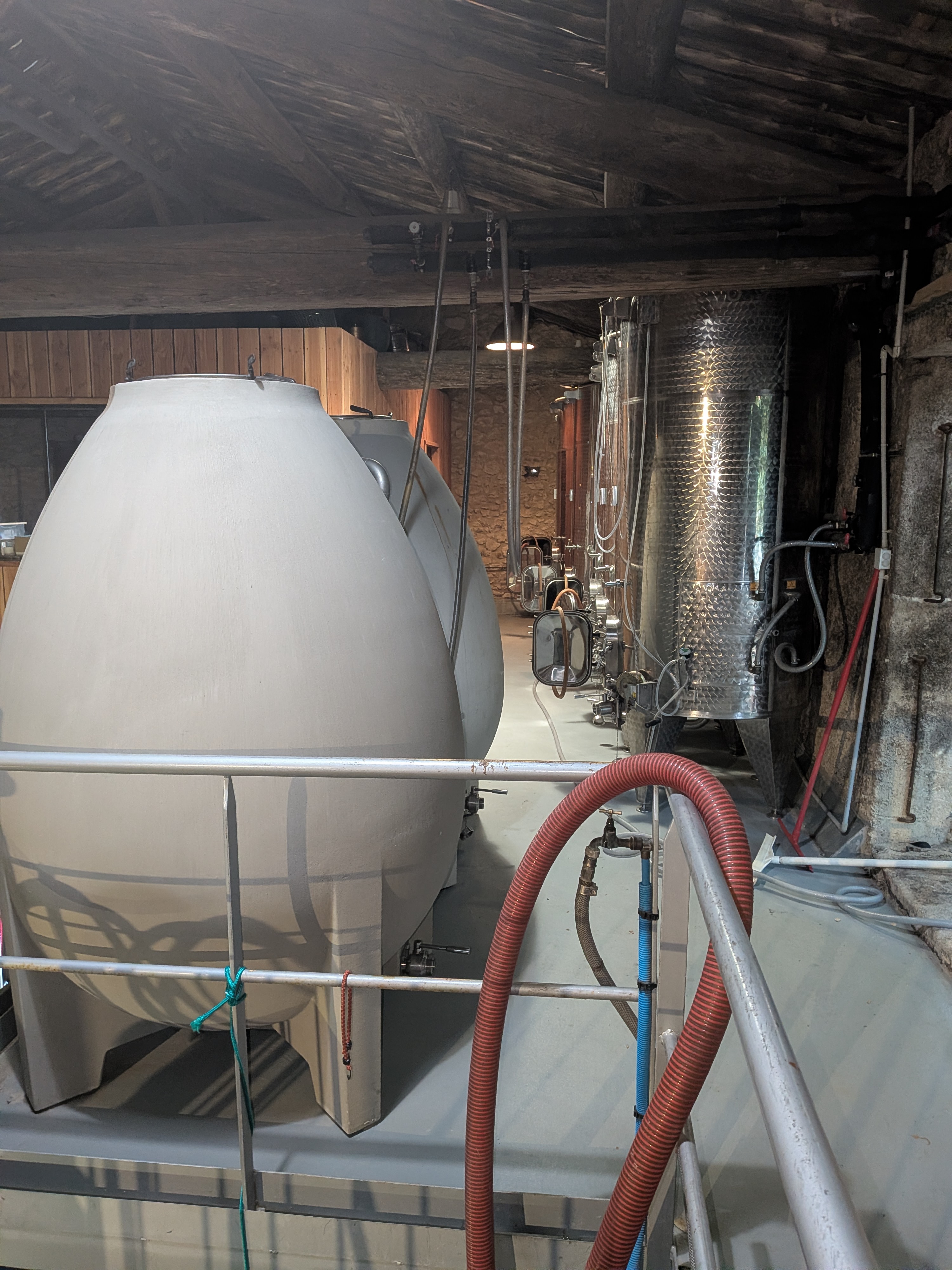
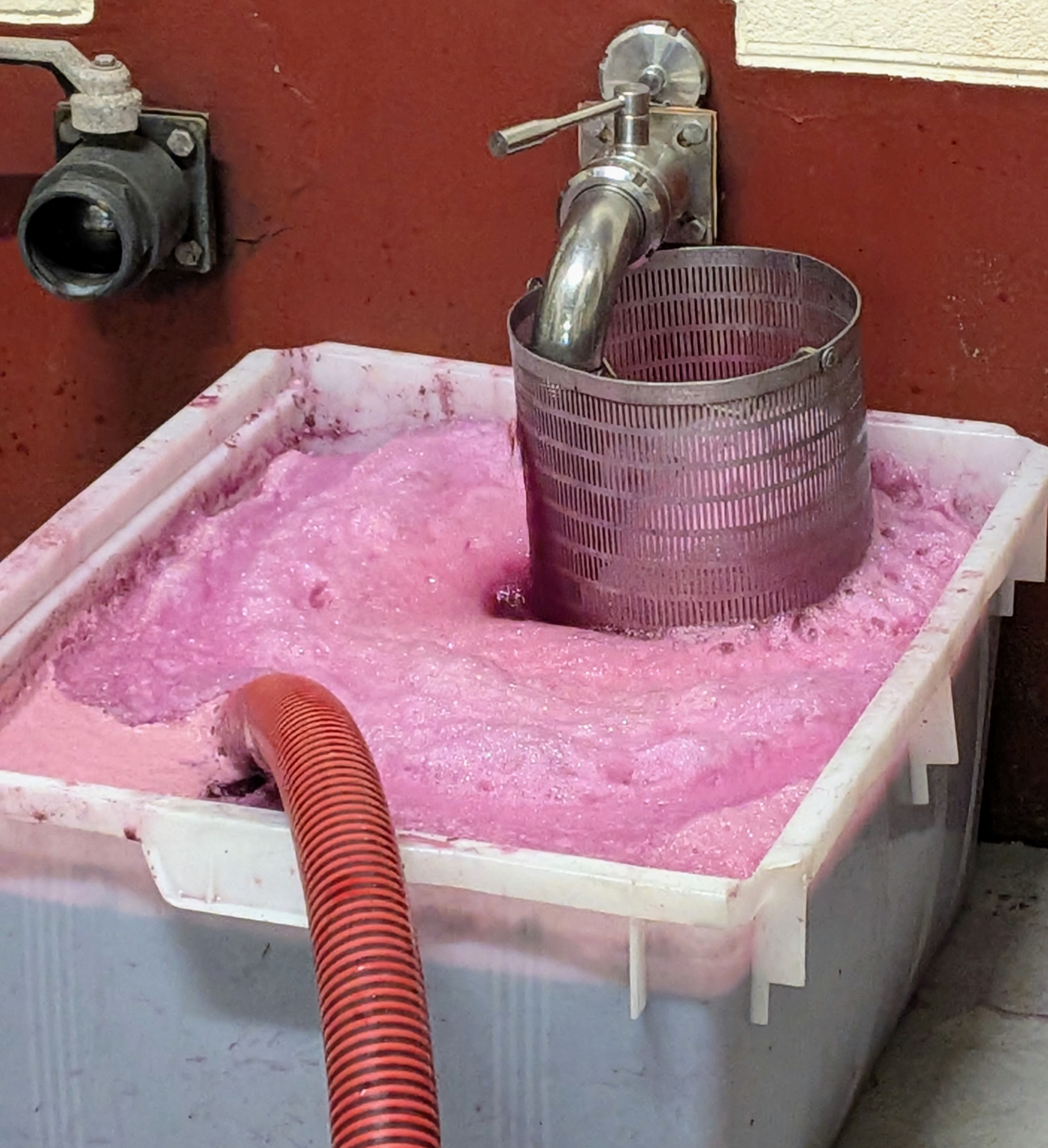
About a thousand vines remained, Muscat, Grenache Gris and various whites. However, the work was now based in the cellars. The grape juice is in tanks. The whites head to stainless steel, the reds to cement tanks and on to stainless steel. Fermentations follow and the wine is moved to be aged in various vessels, amphorae, concrete eggs, barrels or remaining in steel. Watching the yeasts at work is always fascinating, transforming grape juice into delicious wine.

So, Jeff, Flora, Gils will be hard at work with pigeages and soutirages, making sure the wine is getting full benefit from the skins and grape must. They will be moving wines from one tank to another, making sure that dead yeast cells and the leftover skins and stalks are left behind and removed. The glamorous work of picking is over, the hard work of vinification will be longer and harder in many ways.

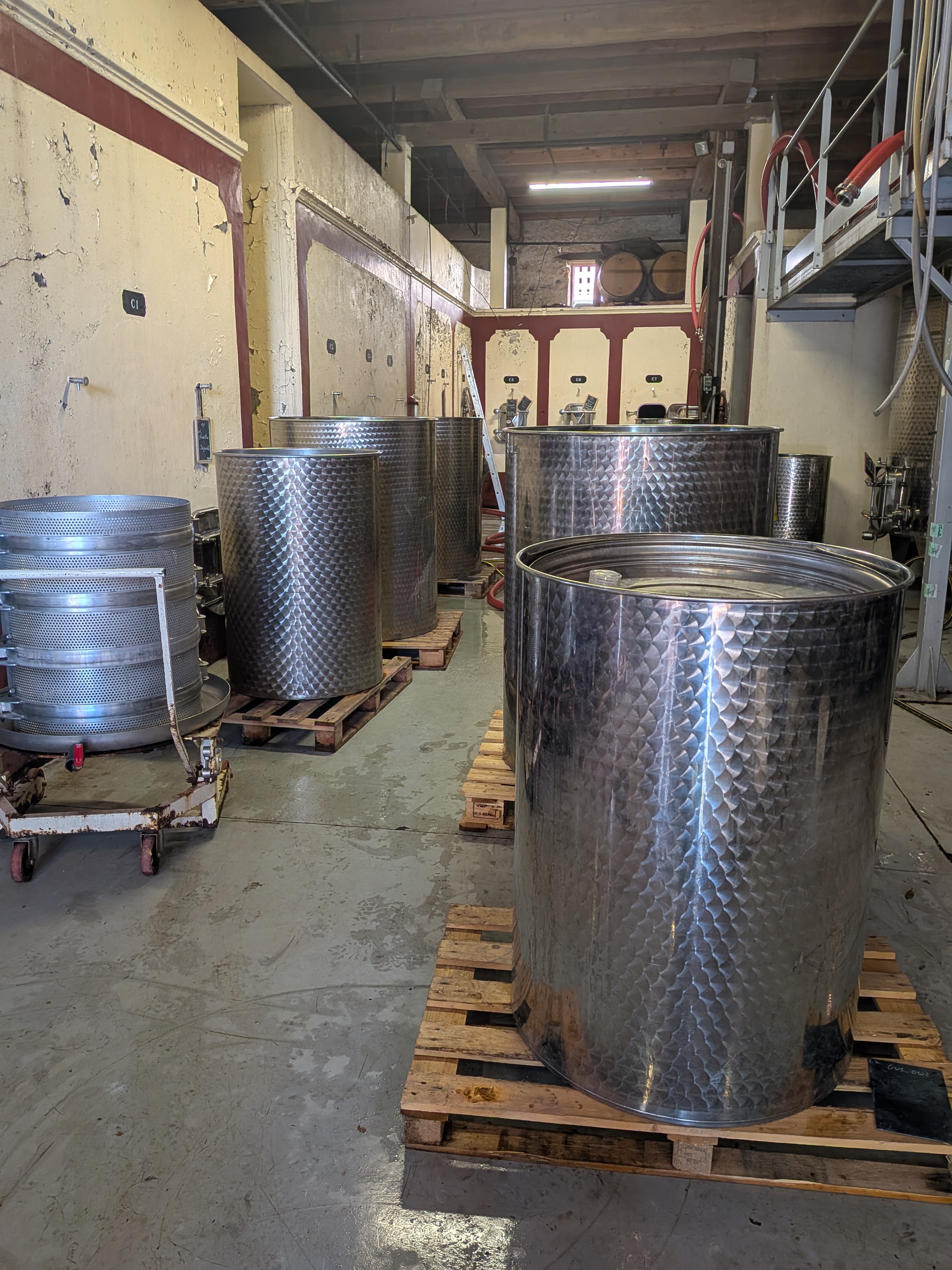
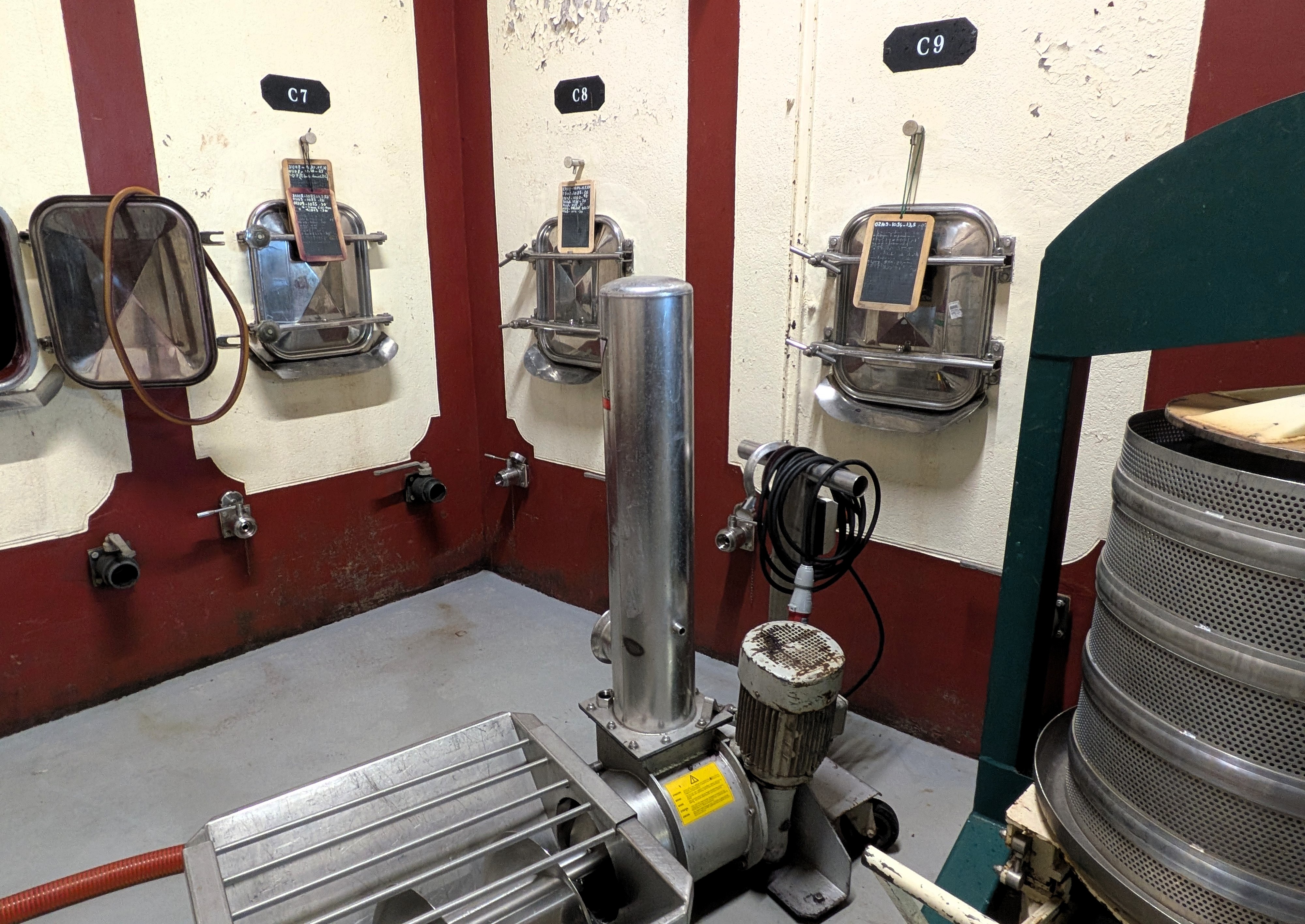
An empty concrete tank to the left whilst the chalk boards show the development of the wines and their fermentations in the others. To the right is a basket press for smaller quantity wines. In the foreground a marc pump, very forceful and noisy which shifts not just juice but the skins and stalks too.

With Flora who is taking an increasing role in the work of Mas Coutelou, her family’s heritage.


4 Comments

Vendanges 26 – BIG days

This is the 498th article on here so forgive me if posts are fewer at present as I am trying to save #500 for something special, plans are afoot with Jeff so please look out for that.

Riveyrenc Gris

Three days of really big crops coming into the cellar, Friday 28th, Monday 31st and September 1st. When I arrived in the Languedoc I was worried that Jeff Coutelou would be facing smallish crops due to the prolonged extreme heat of summer 2026. He told me that vines were struggling to cope and that it would impact upon the size and quality of harvest. Well, these three days allayed fears about quantities. When Flora is instructed to change the tank because the original tank is full, then it is good news. Whether the quality is there remains to be seen. Acidity levels are low, the wines won’t be peak Coutelou. With the juice that is in and fermentations kicking off nicely there should be plenty of good quality wine. As I said to Jeff, vins de plaisir (wines to enjoy soon). No doubt, being the gifted winemaker that he is, Jeff will find a way of confounding the odds and produce some special wines. My money is on the Xarel-lo so far but we shall see.

Friday was Grey Day, a harvest of grapes with Gris in their name, Piquepoul Gris, Terret Gris, Aramon Gris, Riveyrenc Gris, Grenache Gris. Bottled as Le Gris De Coeur in 2022 this could be making a comeback. The grapes were colourful and in good condition, fleshed out with some juicy Macabeu too. The Terret Gris was a little prone to rot for some reason but that was soon sorted at the table.

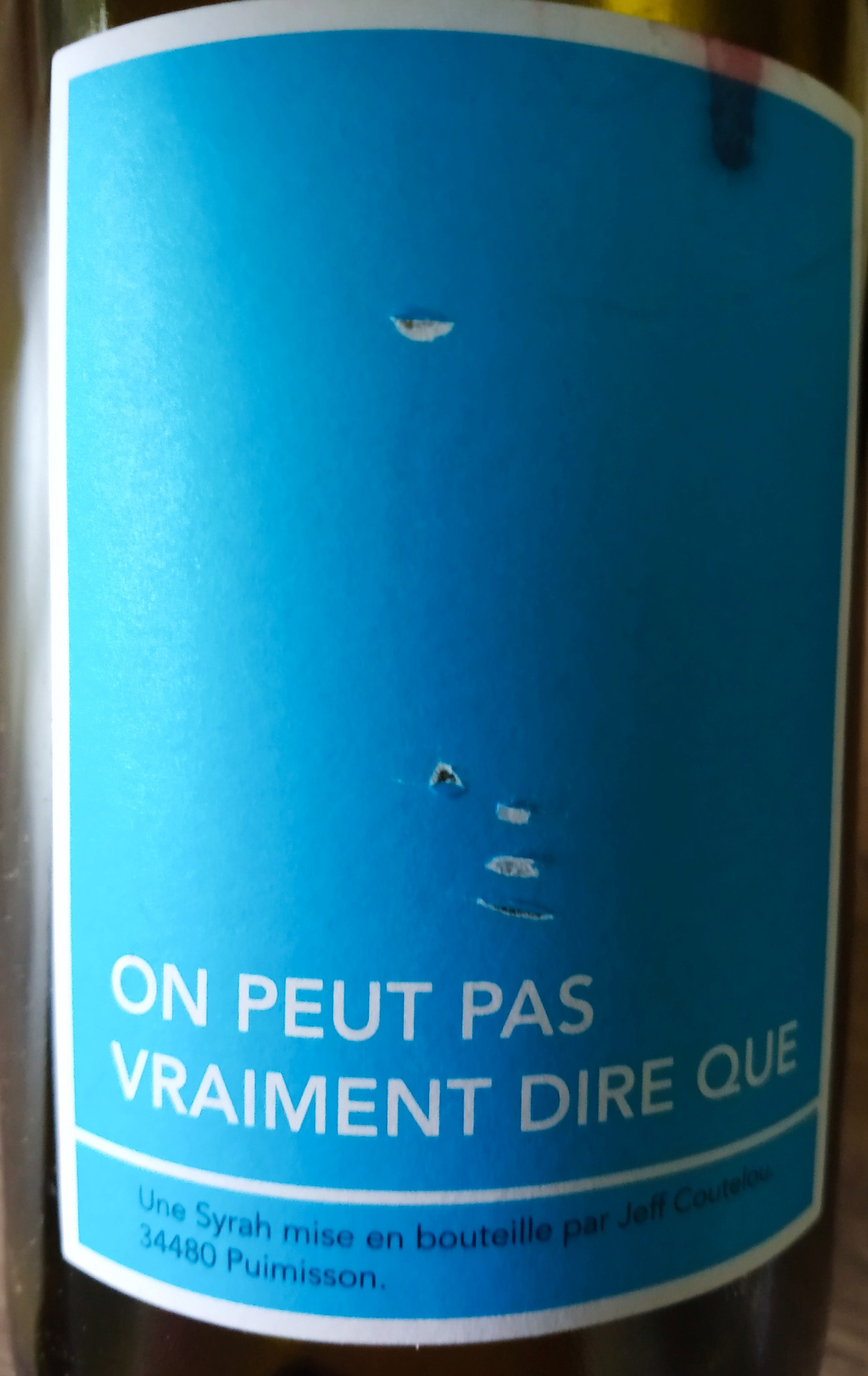
The afternoon saw the pickers move from Peilhan along the road to La Garrigue vineyard. Time to pick the Syrah from the older vines. Sadly the vintage issues means that this will be another year without La Vigne Haute but the Syrah is always good whether bottled under its own name or On Peut Pas Vraiment Dire Que. The grapes were in excellent condition, Syrah bunches are usually compact, conical and firm. They took little sorting but with a double team of pickers we were under pressure to sort and send to tank.

Monday was centred at Segrairals vineyard, closest to the village and cellars. It kicked off with that most generous of grapes, Cinsault. Big bunches, big juicy grapes but with thin, fine skins which means that it has to be picked at the right moment or it will soon turn rotten. This first crop of the day went to direct press, possibly for rosé? Then onto a really interesting collection of white grapes. Terret Blanc, Olivette, Servant, Picardan, Mauzac, Aramon Gris, Clairette, Clairette Rose. Bottled as TSCA (the 2025 tastes fabulous, can’t wait for its release) these were a joy to work with, variety keeping us guessing whilst Jeff confirmed or denied our guesses as to which grapes were which.

The afternoon brought more Cinsault, this time from the better parcel and ready to be destemmed. It was plump and ready, a few more days and it would have been spoiled. Lovely fruit and it should be an ingredient in blends such as Le Vin Des Amis or in its own 5SO format.

After all that variety on Monday it was just two grapes that featured on Tuesday. The morning saw the pickers head to Sainte Suzanne vineyard and the Clairette grapes. This vineyard was affected by the heavy rains of winter, it has an underground stream beneath and so the ground remained wet for months. It was May before Jeff and the team could get in there to prune, tidy and protect the vines. The Macabeu vines have suffered as a result but the Clairette has thrived, no doubt to make its own eponymous cuvée.

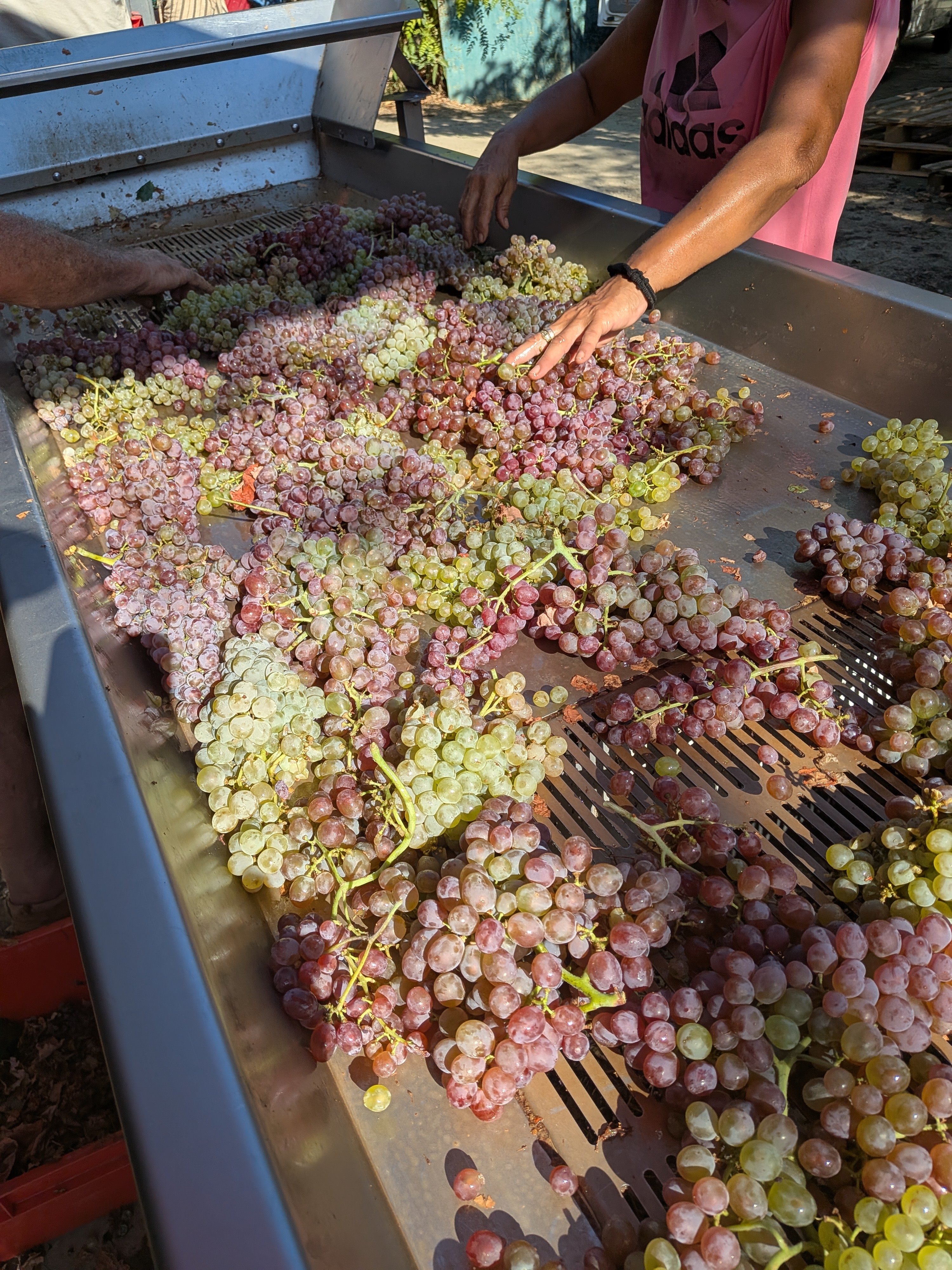
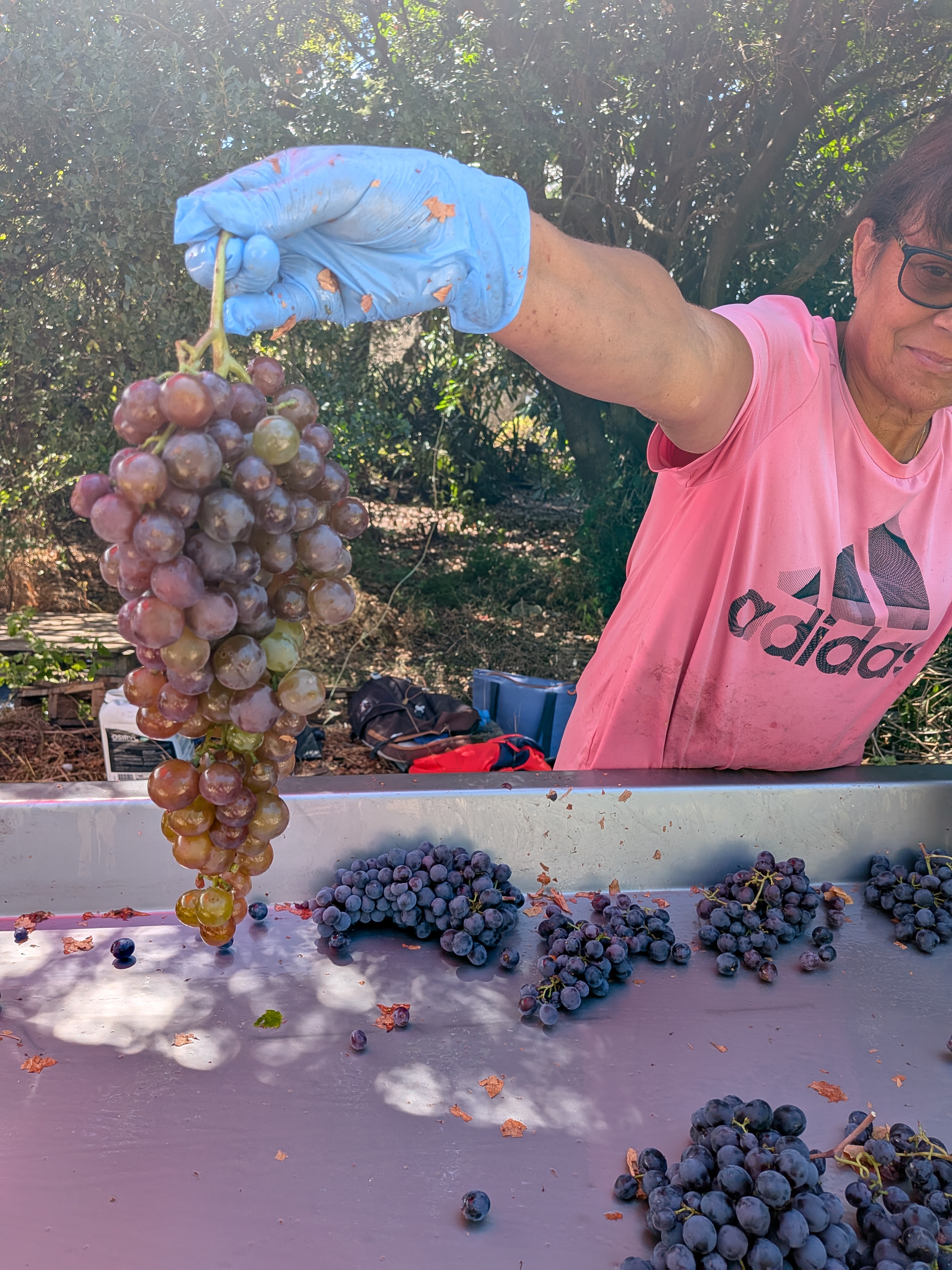
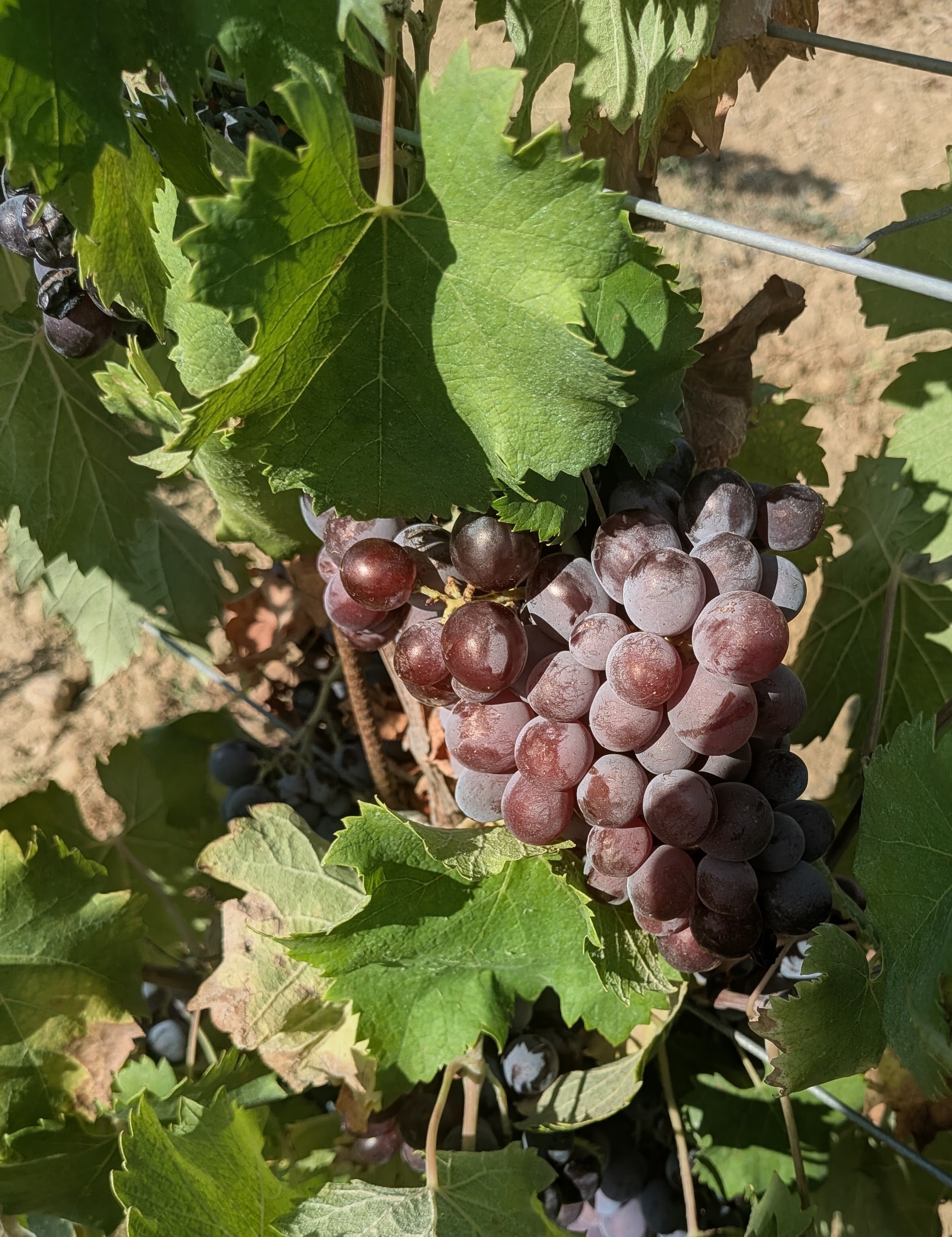
In the afternoon attention switched back to La Garrigue vineyard but this time for the Grenache from the south facing slope. This was bountiful and we filled the original tank and more. I also learned something new. The Grenache often looks varied in colour, even within one bunch from dark purple to greenish. Jeff explained that Grenache flowers at 2 or 3 different times in Spring and so when the grapes ripen they are at varying stages of ripeness. It is just the nature of the variety. Well, this crop will certainly provide good fruit for blending (Classe for example) and, hopefully, might make one of my favourite wines, Grenache Mise De Printemps, with its light, fresh and fruity character.

We are entering yet another heatwave in the Languedoc, the 8th or 9th of 2026 and temperatures of 36c or more make harvest hot and tiring work. Fortunately the good humour of the team, supplemented by another New York arrival, Aldo, make sure that we can get through the challenge and produce some good wines for you all to enjoy.


Leave a comment

Vendanges 26 – the Spanish influence

Two days for me on the 25th and 26th and contrasting ones too which makes life interesting. On Tuesday the sorting table was just inside the cellar because Jeff had decided to use the Syrah from the young plantation at La Garrigue to make a whole bunch, carbonic maceration wine. Therefore, rather than the grapes go through the destemmer they are sent directly into the tank after being sorted. Easier to use the old sorting table right next to the top of the tank than to send the bunches on a journey.

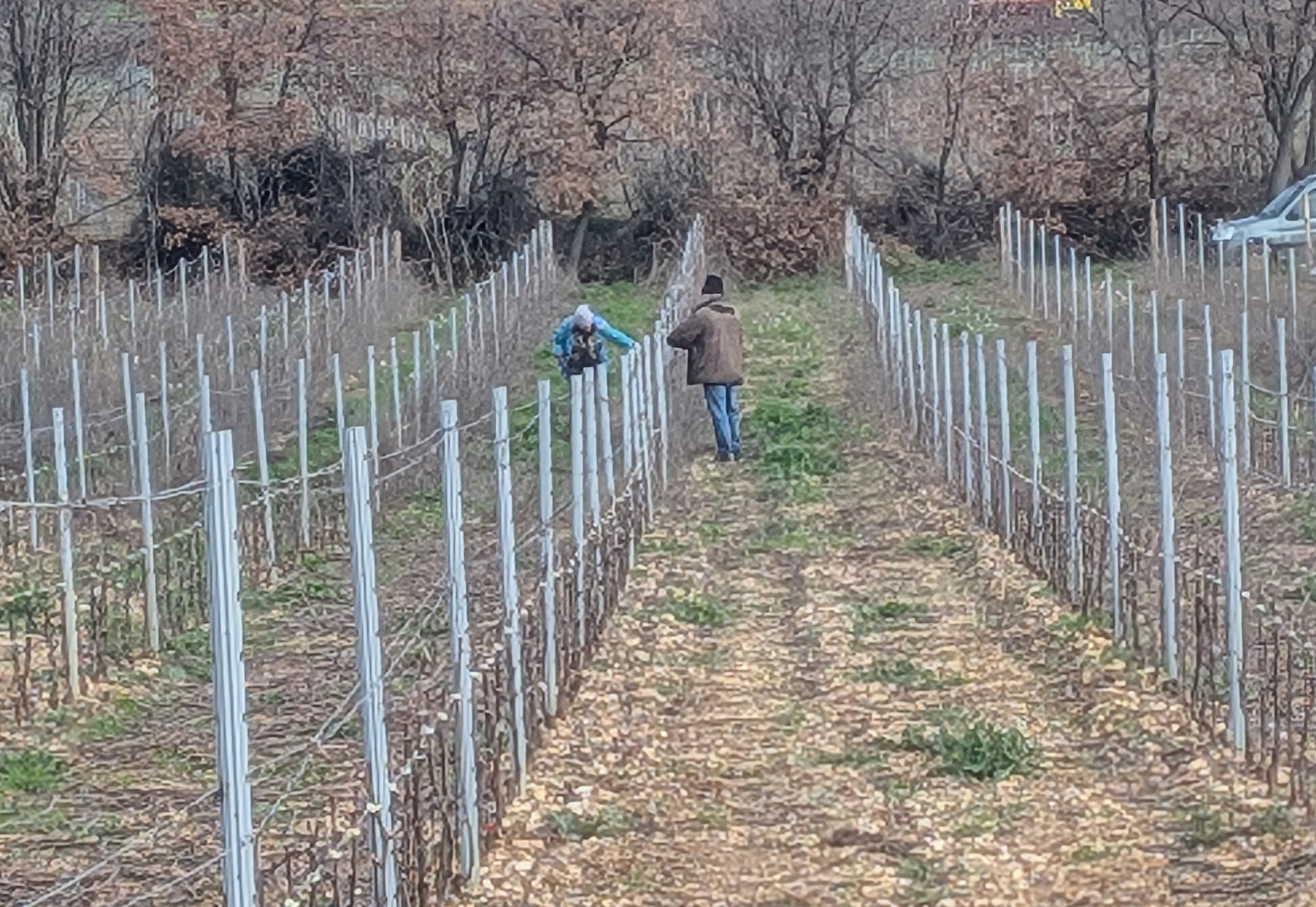
La Garrigue is the vineyard where the Older Syrah vines can go to make my favourite wine, La Vigne Haute but Jeff bought a neighbouring parcel a few years and planted some more Syrah. This plantation is now producing the fruit we used today, pictured here as Flora and Gils were pruning it.

The fruit was actually very good for young vine produce with some juicy bunches heading directly to the tank where they will ferment slowly in bunches before the juice is run off the skins, pulp and pips. Hopefully this will produce a light, fresh and fruity wine to be used as Jeff sees fit. Leaves and, unfortunately, earwigs were the main items to be disposed of before the bunches reached their destination. I hate earwigs!

Wednesday brought a return to the outdoors for sorting. The interesting thing about the day was the harvesting of the new wave of white grapes. In recent years Jeff recognised the change in climate and moved a significant proportion of production to white grapes. Whereas when I first visited around 90% of grapes were red now it about 65%. And, significantly, there has been a move to Spanish white grape varieties. The reasoning is straightforward, the ability of such grapes to cope with seemingly ever increasing temperatures.

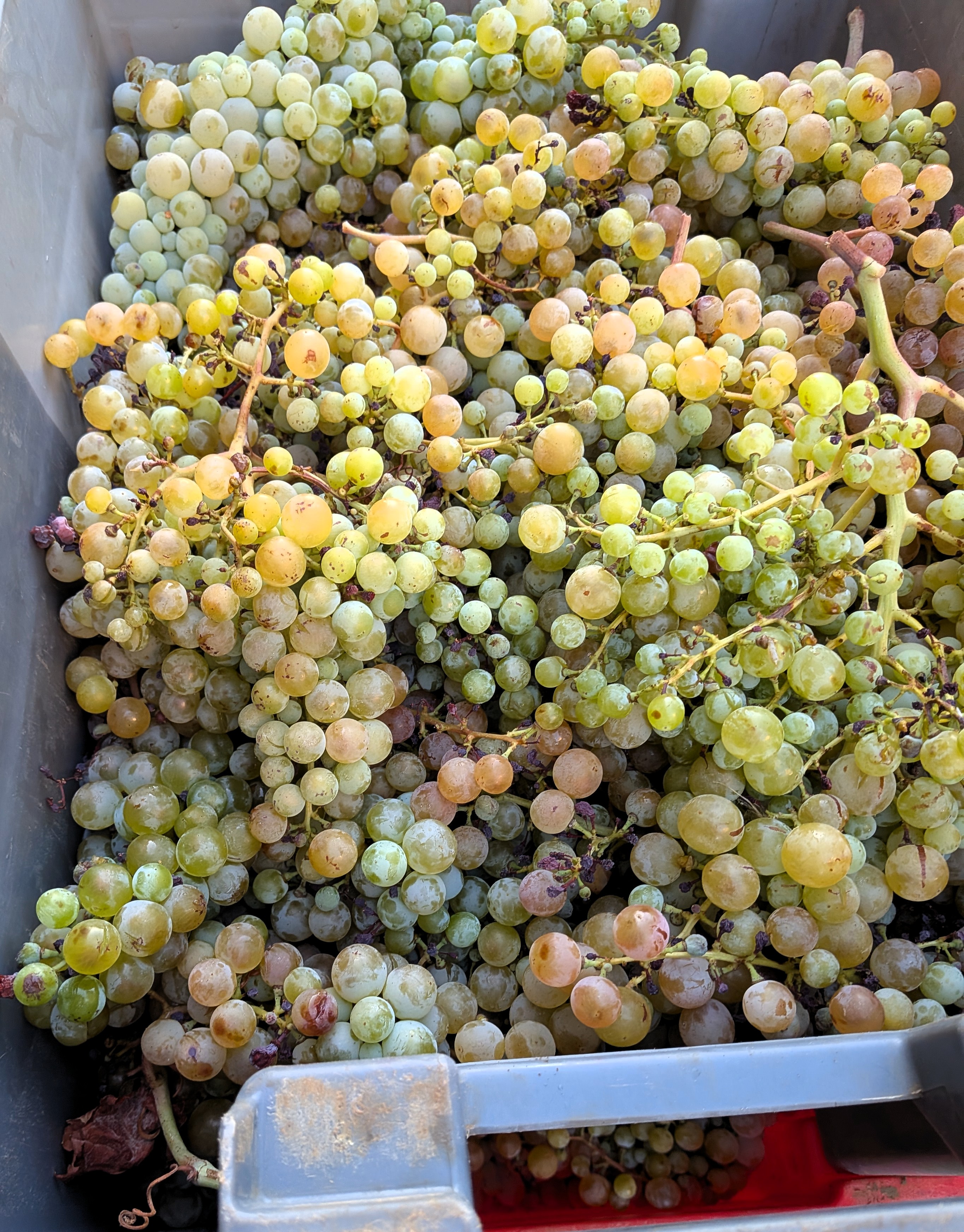
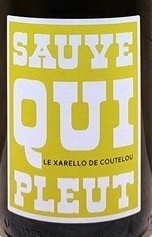
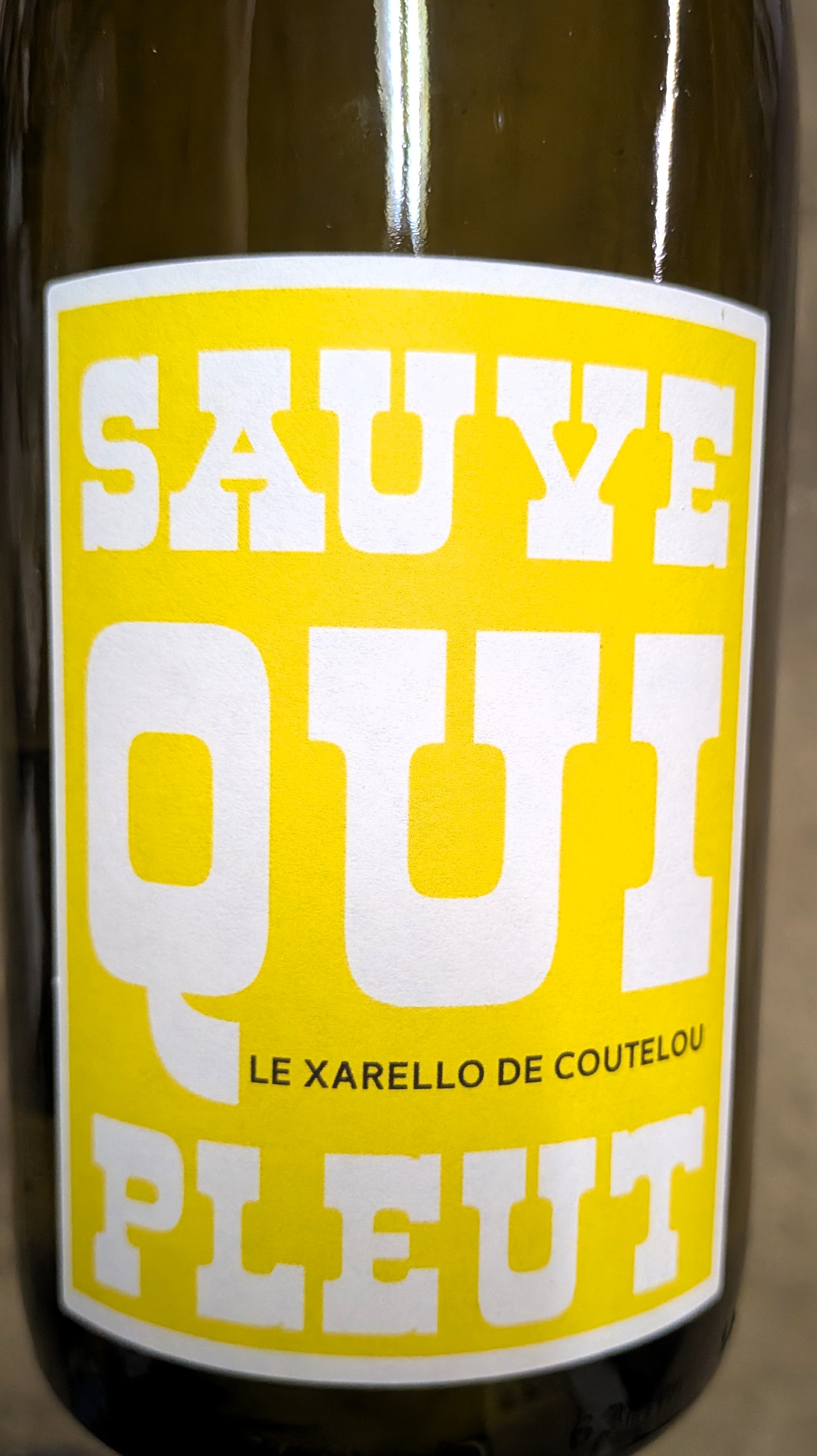
The first such variety I really noticed was Xarel-lo. Planted 5 or 6 years ago Xarel-lo has been making a cuvée called Sauve Qui Pleut, punning on the cry for those facing shipwreck, sauve qui peut. Xarel-lo is improving in quality every year, producing a fresh, fruity wine with distinct saline notes. The Xarel-lo grapes were in stunningly good shape when harvested on Wednesday.

A new plantation in Peilhan 3 years ago saw the planting of more Spanish varieties, namely Parellada and Malvasia de Sitges. The fresh tasting Parellada was pressed directly on the morning whilst the Malvasia was blended with Muscat because of its aromatic qualities.

It was good to welcome two new visitors to the cellars. Aaron works for Jeff’s UK importer Gergovie Wines and was here for a few days. Experienced from wineries in Sussex he worked hard and was a cheerful and welcome recruit. Connor works for Discovery Wines in New York and met Jeff when he did a tour of NYC last year. He has just arrived but is already throwing himself full into harvest. Good to welcome back Louis and his partner Caroline too. Louis worked with Jeff for a long stretch around covid time and he’s always good to talk to as well as being another hard working contributor to harvest.

Two long days but well worth it, some good fruit, indeed exceptional in the case of the Xarel-lo makes all the hard work worthwhile. Meanwhile Flora has been busy not just in the cellars but in producing social media content. Even I can’t spoil these, well not entirely.

Finally, for those animal lovers out there. Our real ‘patron’ and supervisor is still here keeping his eye on things. And by sorting carefully look what we rescued from going into tank with the Xarel-lo.


Leave a comment

Vendanges 26 – à l’ancien

Le patron leads the way

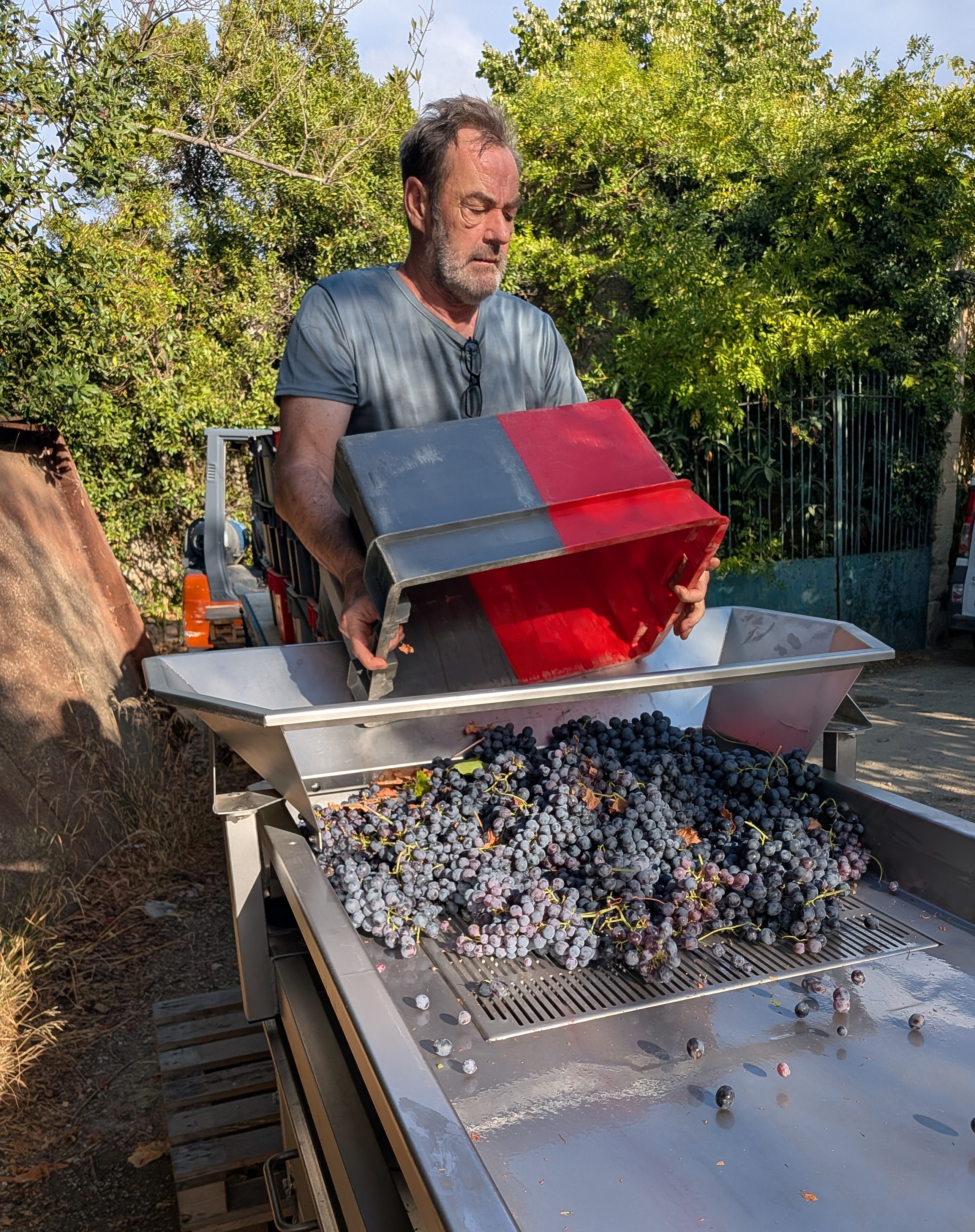
Cinsault, Aramon, Mauzac. Three of the grape varieties we harvested on Friday and Saturday. What they have in common is their juicy character. Despite the drought and heat of this summer they produced big bunches of full grapes, that is their nature. Aramon, of course, was the workhorse variety of old Languedoc known for making large quantities of low alcohol wine. Cinsault is thin skinned and has to be harvested at the right moment or it will become soft and disease prone. So, why did Jeff Coutelou choose to harvest these parcels first? He decided to do ‘vendanges à l’ancien’, old fashioned harvest.

The other main crops, Syrah, Grenache, Carignan are not so generous and they have responded to the weather by producing small berries. Jeff wanted to bring in a good supply of base wine from the juicy grapes which might be used to blend with these more frugal grapes to provide quantity as well as quality. By bringing them in early they should also add acidity. Since they will ferment soon they could also serve to kick start fermentation if there are any problems. The grapes are generally lacking acidity and have low nitrogen levels because of the heat and drought. Jeff has concerns about fermentation as a result.

Best of the Syrah from Segrairals

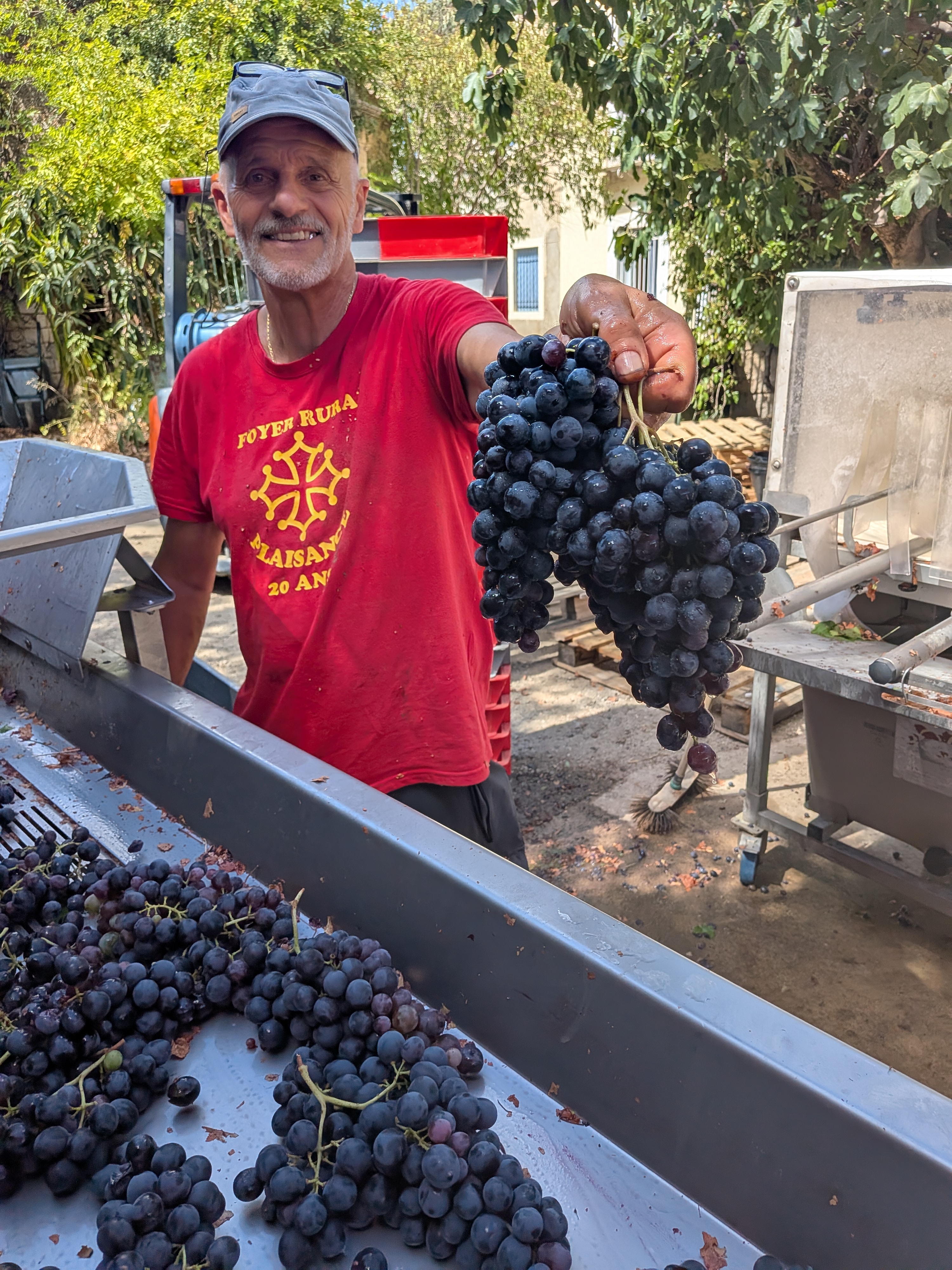
The team is generally experienced and familiar. Jeff’s niece, Flora, plays a growing role in the winery and is busy all day in the cellars, working on the wines. She is aided by Pièr who was here for last year’s harvest. He is the son of Loire vigneron Jean Christophe Garnier, providing good knowledge and enthusiasm. Gils has been working for Jeff for many years now. Jean Jacques and Marie who worked harvest last year are also back this year alongside me in my 13th year. We are joined this year by Clarence, son of Carole Andrieu from Clos Fantine, more experience, knowledge and youthful energy. Abdellah joined us on Saturday and we will receive new help from others in the coming week.

Two long days in high temperatures were a tough start but that base of good wine is in tank. Let’s hope for more in the coming days.


1 Comment

Vendanges 26

Preparations in full swing

Fair to say that it’s been a torrid summer across Europe with record overall temperatures, numerous heatwaves and wildfires. Clearly, prolonged drought is not good for vines or any plants and the Languedoc has suffered as much as anyone. Little or no rain for 4 or 5 months combined with high temperatures means that the vines begin to shut down to protect themselves at a time when they should be ripening their fruit, the grapes. Therefore, when I have contacted Jeff Coutelou through the summer period he has been somewhat at a loss to estimate when harvest might begin. Acidity, ripeness, vine health – all factors sent out of balance by the 2026 weather. Jeff has to weigh up which factors are most important as the normal balance was seemingly out of the question in this vintage.

Pruning (green harvest) of some bunches helps the vines to cope

I arrived on the 18th in the Languedoc for my thirteenth year of harvest, twelfth actual harvest because of missing the covid vintage. Jeff had put back the first picks by a week or so from what he originally thought because the vines had simply got stuck in the heat. When I went to the cellar on Wednesday 19th he informed me that he’d be picking Muscat today, the 19th. Given the 36c heat I said I’d wait another day to acclimatise and I will begin my work on Thursday with the reds from La Garrigue, Syrah and/or Grenache.

The new section of Peilhan with grapes ranging from white (left) to grey and red (right)

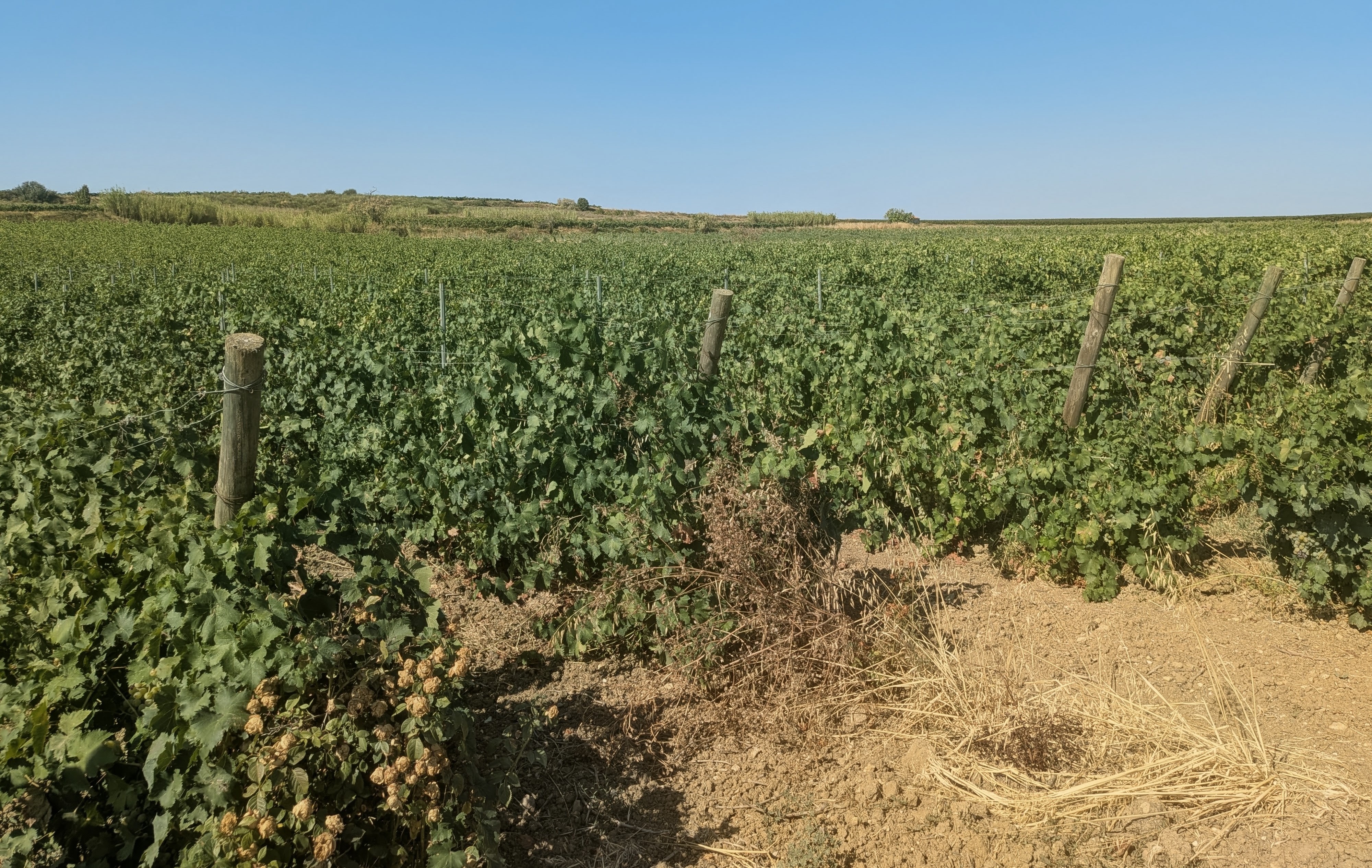
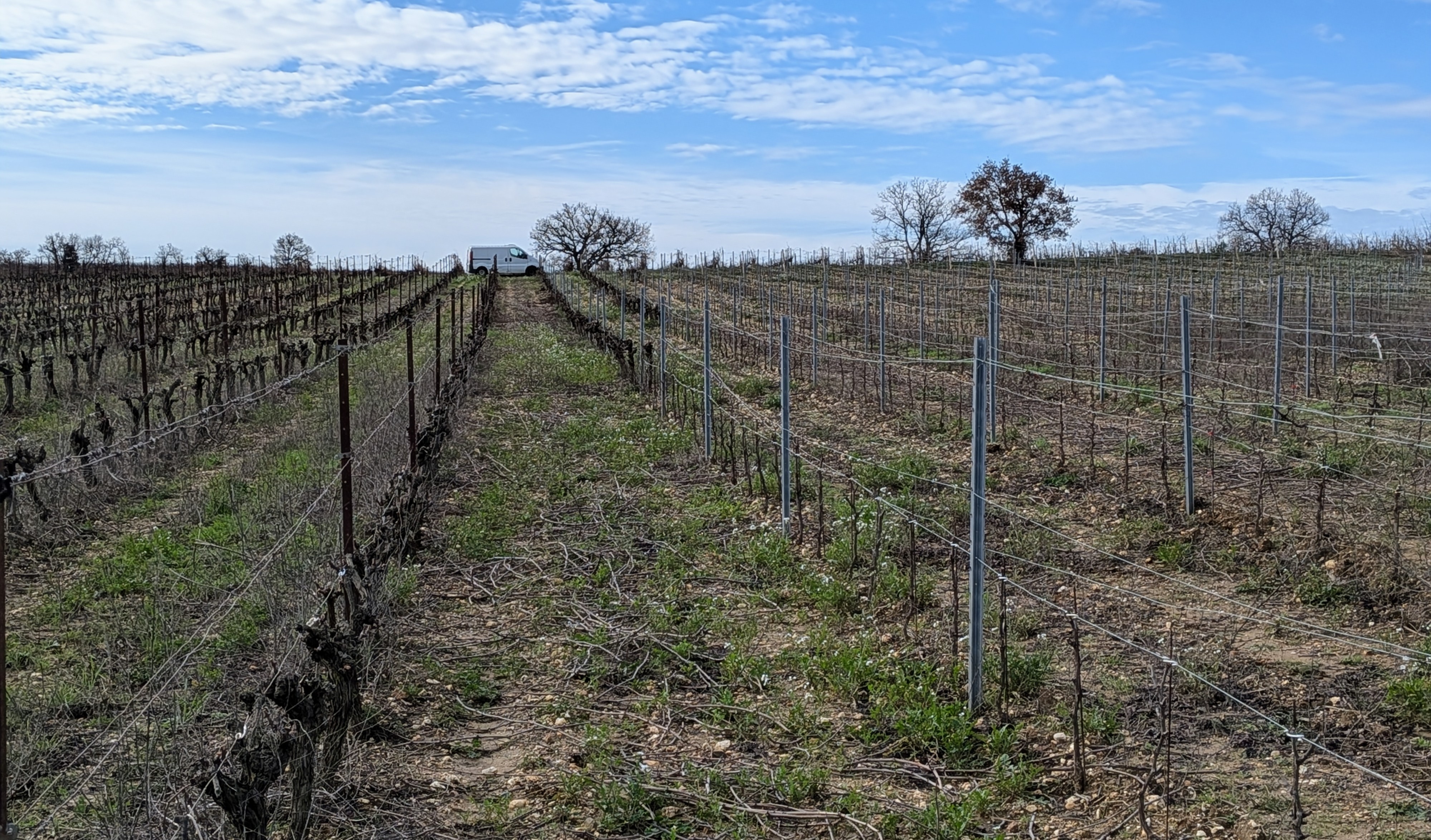
A quick tour of some vineyards reminded me of how much has changed since my first harvest in 2014 and earlier visits as a wine tourist. Driving to Peilhan I passed the Flower Power (Font D’Oulette) vineyard, now grubbed up and planted with wheat. Arriving at peilhan the first section, formerly home to Carignan, Castets and other red grapes is also now fallow. However, the next sections show the changes. Up on the terrace above the old red parcel the vines are now 10 years old, a rich mix from Morastel, Riveyrenc Noir and Gris, Piquepoul Noir and Gris. The new vineyard alongside planted with vines stretching from Spanish white grapes like Parellada and Malvasia to more Piquepoul Gris and on to red grapes like Oeillade and Lledoner Pelut which are old Languedoc varieties of Cinsault and Grenache. Then the Xarel-lo parcel above which thrives in the heat.

White, grey and red

In Rome the gobelet vines looked in good health, their age and sturdiness helping them to cope with the weather. Cinsault, Grenache Blanc and Gris and Muscats of various kinds. Still peaceful, still my favourite vineyard.

There has been a huge shift from red grapes to white and light reds, reflecting the climate and how Jeff can look after the vines as well as market shifts in the wider world. Other parcels have seen similar changes from 2104, Segrairals has had its Mourvedre removed, for example. As the vendanges begins I will try to reflect on the changes and what this vintage might produce. Wish us luck.


2 Comments

Reflections

In a world of uncertainty and unhappiness, moments of pleasure and joy feel all the more precious. They deserve to be appreciated in the moment and cherished in the memory. One such occasion came recently during a short stay in Nice.

I asked Jeff Coutelou to recommend a wine bar / restaurant in the city. His reply was clear and unequivocal, La Part Des Anges, 17 Rue Gubernatis.

Coutelou bottles everywhere

I would urge any wine loving visitor to Nice to go, the food was exceptional: fresh, full of flavour, great ingredients allowed to speak clearly for themselves. The cellar is a treasure trove, indeed it was selected as the best in France by Revue du Vin De France. Browsing the wine list online Ione entry leaped off the page: Domaine Des Miroirs, perhaps the most sought after and elusive unicorn producer in the natural wine world.

Back in 2016 at The Real Wine Fair I was very fortunate to attend a tasting of the Miroirs range which was amazing. Every bottle was pure joy; clean, pure, perfectly balanced between fruit and freshness. I am sometimes asked to name the best wines I have ever tasted and the Miroirs ‘Sonorité Du Vent 2013’ is always my choice for white wine. Pure Chardonnay it was ethereal, subtle yet full, mineral yet rounded – a wine in perfect harmony.

Sonorité Du Vent 2013

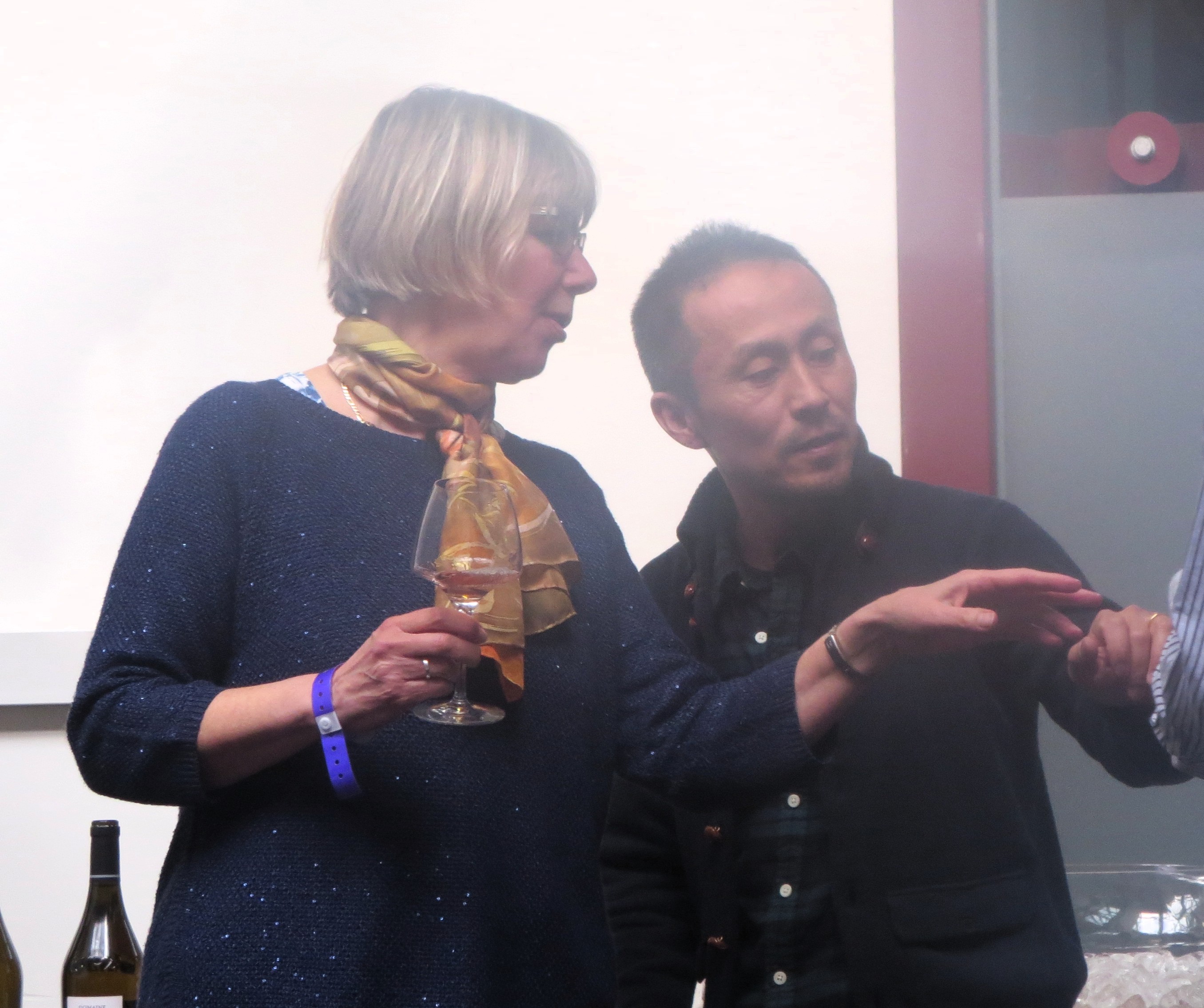
I remember winemaker Kenjiro Kagami, who runs the domaine with his wife Mayumi, as shy, smiling and somewhat bemused by all the plaudits on the day. His wines spoke for him. Unfortunately for me those wines had already begun to be praised far and wide. With just 4ha of vines and huge, global demand it became almost impossible to get hold of a bottle, any bottle, of Miroirs wine. Prices soared past 500€ on grey markets while Kagami himself sadly receives only a fraction of that.

Kenjiro Kagami in 2016 and with Jura wine expert Wink Lorch

Seeing bottles on the LPDA wine list was a surprise but so too was the price, at well below those grey market prices. On my first visit I mentioned this whilst admiring the shelves stocked with so many bottles I would love to try. To my astonishment Olivier said that that occasionally he was able to source a bottle and made a call. No doubt my association with Jeff opened that door. When I returned three days later I was still doubtful but there it was waiting for me.

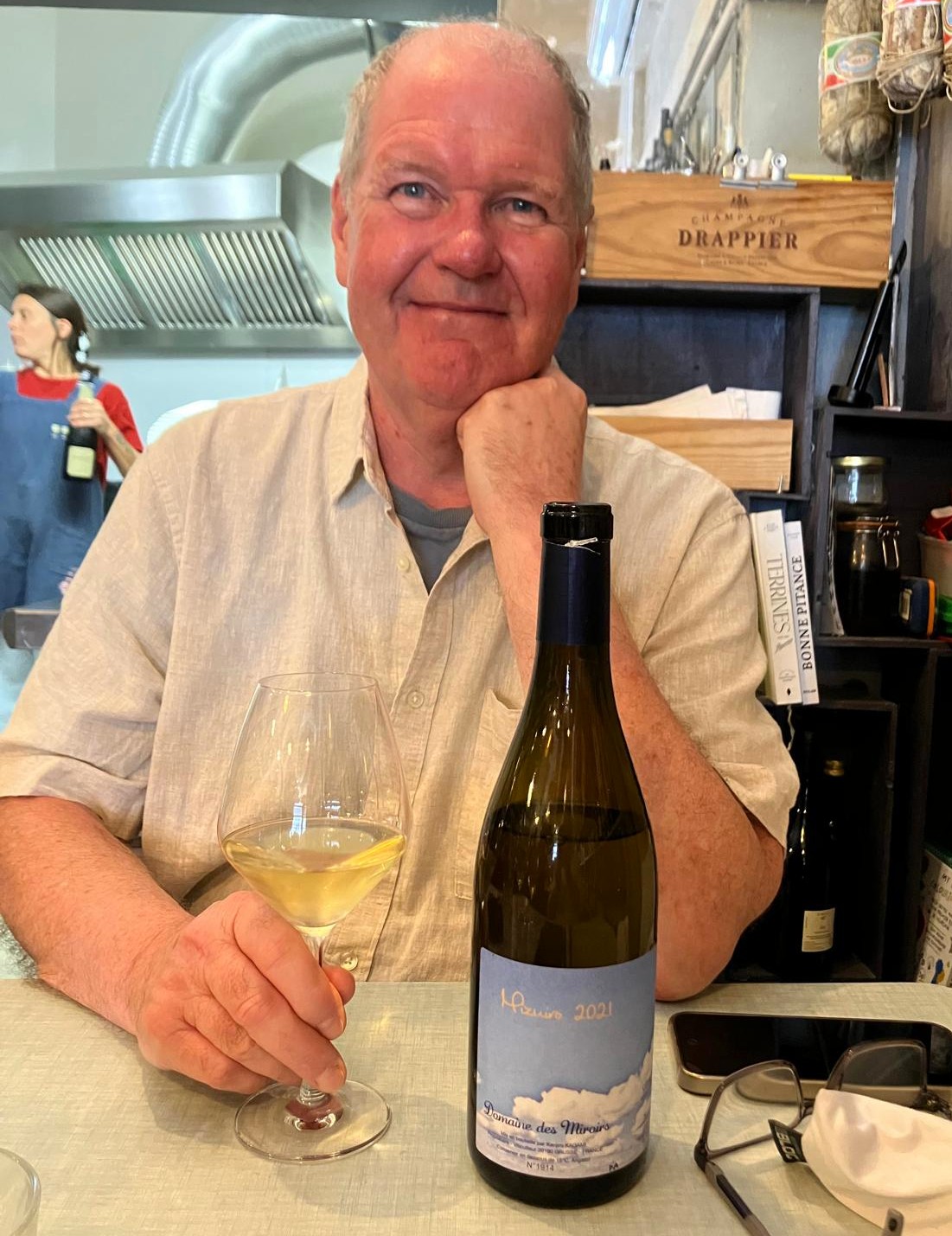
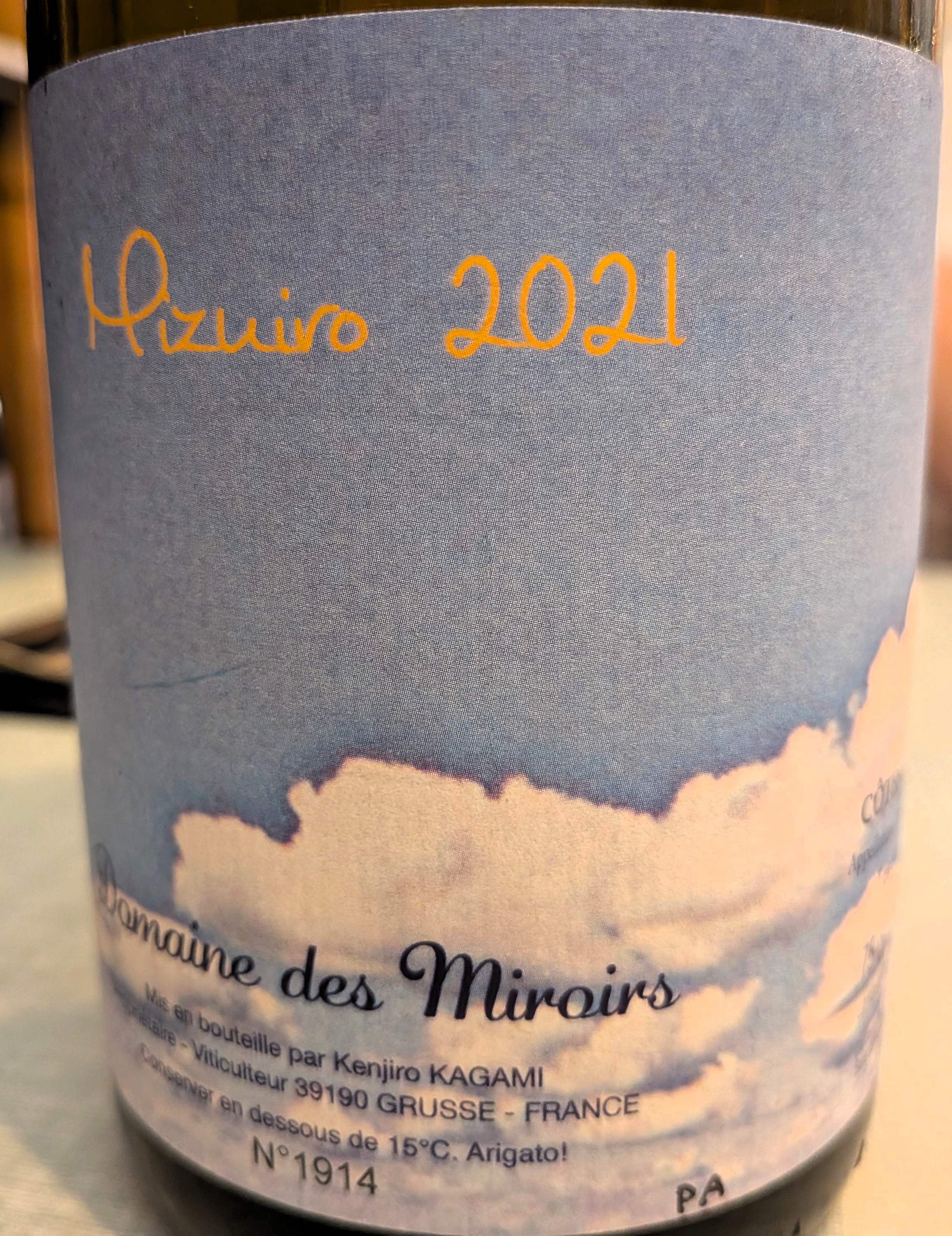
Not the AOC Côtes Du Jura Sonorité du Vent but Mizuiro Les Saugettes 2021, a Vin De France. This comes from the highest of the domaine’s Chardonnay vineyards rather than the lower slopes of the AOC vineyard. The grapes are fermented in old French oak, aged 14 months on lees with gentle bâtonnage, building complexity through that quiet, careful élevage.

Mizuiro* Les Saugettes 2021

The wine itself was electric, tingling on the tongue with lime and spice, cleansing the palate, lingering long after swallowing. Thrilling. Perhaps not quite the concentration of Sonorité perhaps being from those higher vineyards, but still one of the finer white wines I can recall. I’m aware that I wanted the wine to be good, my expectations were sky-high, ten years of hope will do that – but this wine met them and then surpassed them. Conscious bias or not, it was a great wine.

My thanks to Olivier, Benjamin and all the team at La Part Des Anges, and to the Kagamis, for allowing me to complete a quest a decade in the making.

*Mizuiro means clear blue


1 Comment

Winter but a warm welcome

Since landing back in the Languedoc I’ve heard little else from locals but how wet it has been over the winter. The wettest in 25 years seems to be the common consent. Much needed in many ways, the region has suffered from numerous droughts in the 15 years or so that I have lived in and visited there. The water table will finally be restored, so, hopefully, whatever heat arrives later in 2026 the vines will still have access to water.

Older Syrah to the left, new plantation to the right

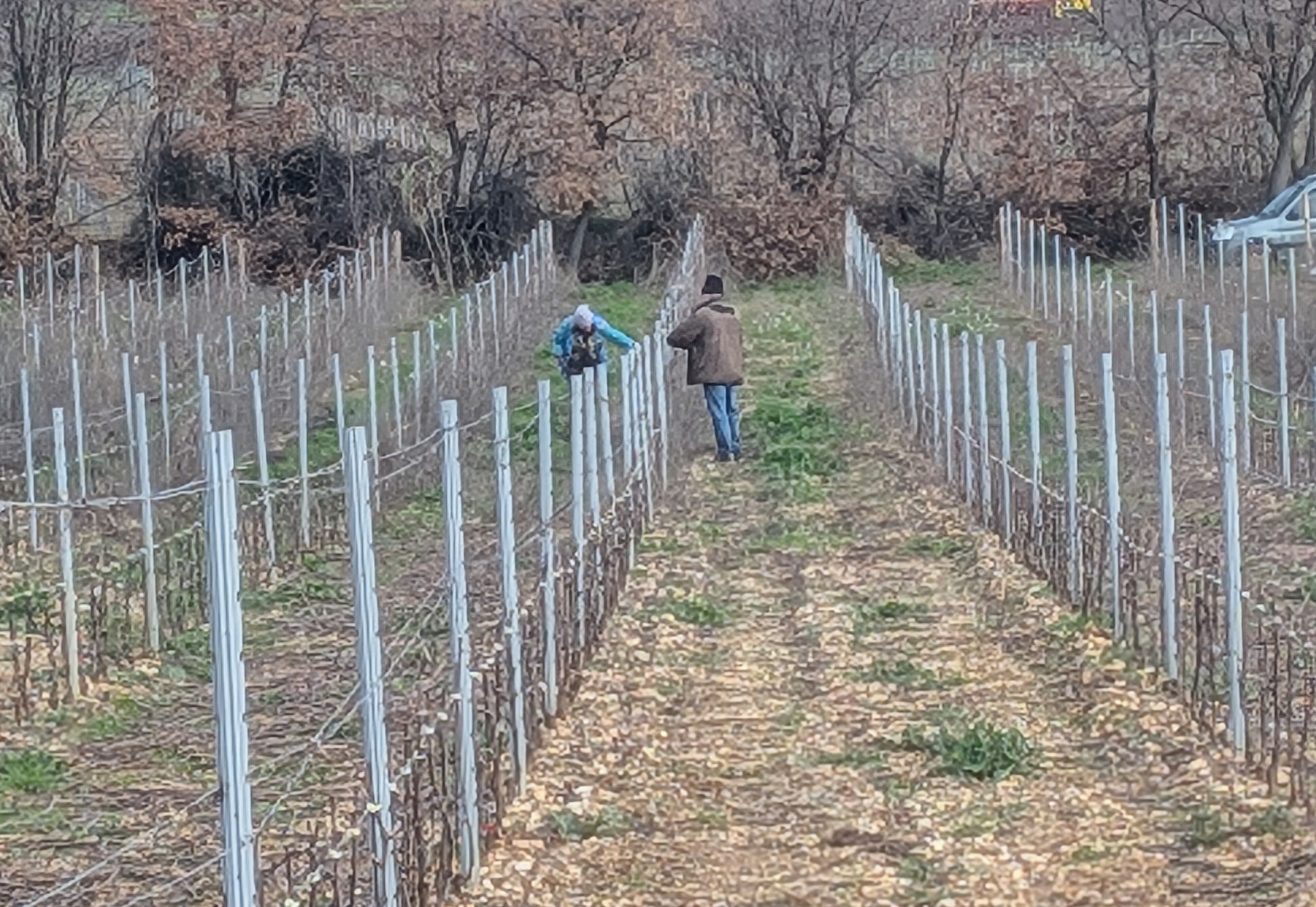
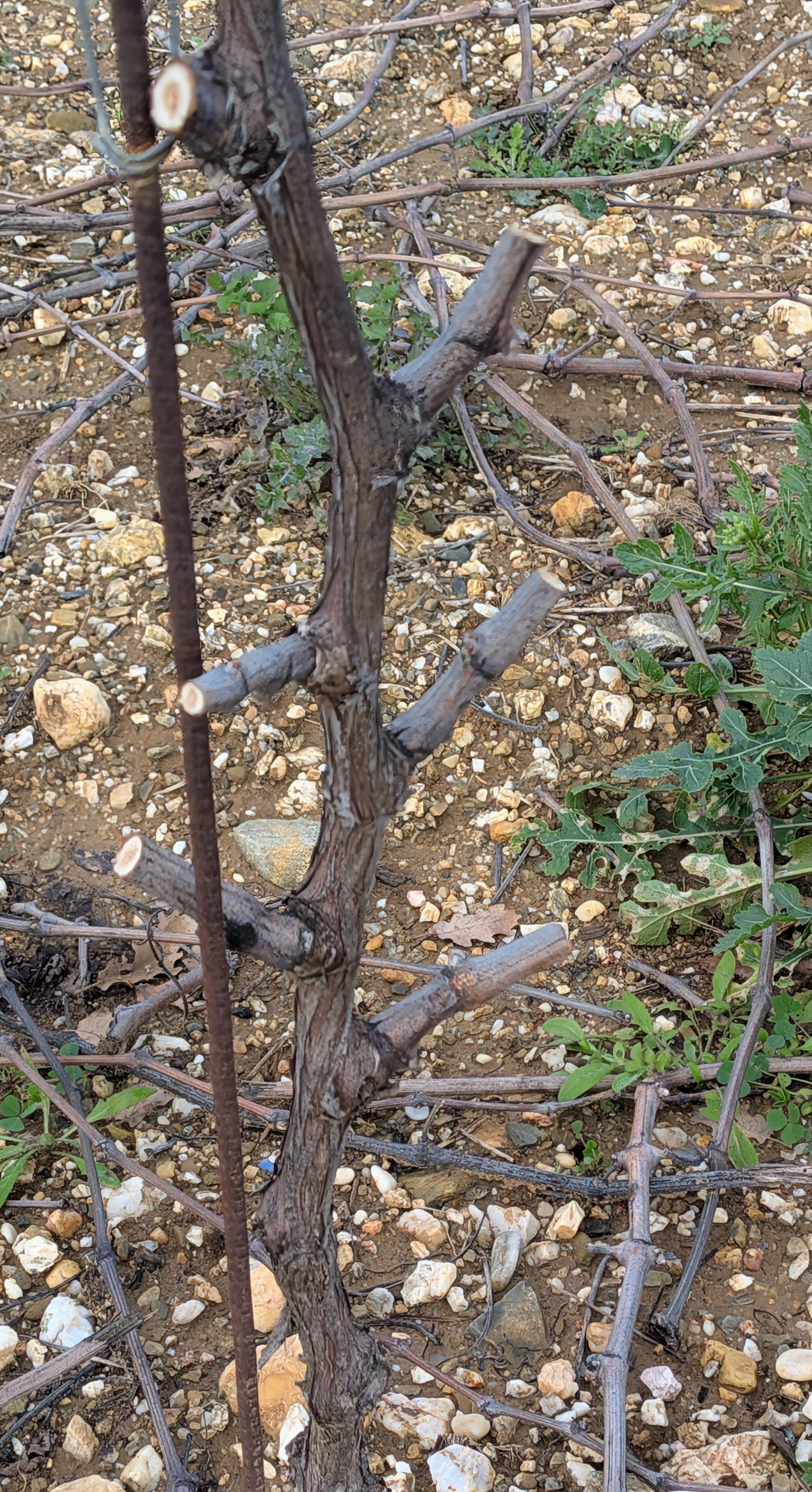
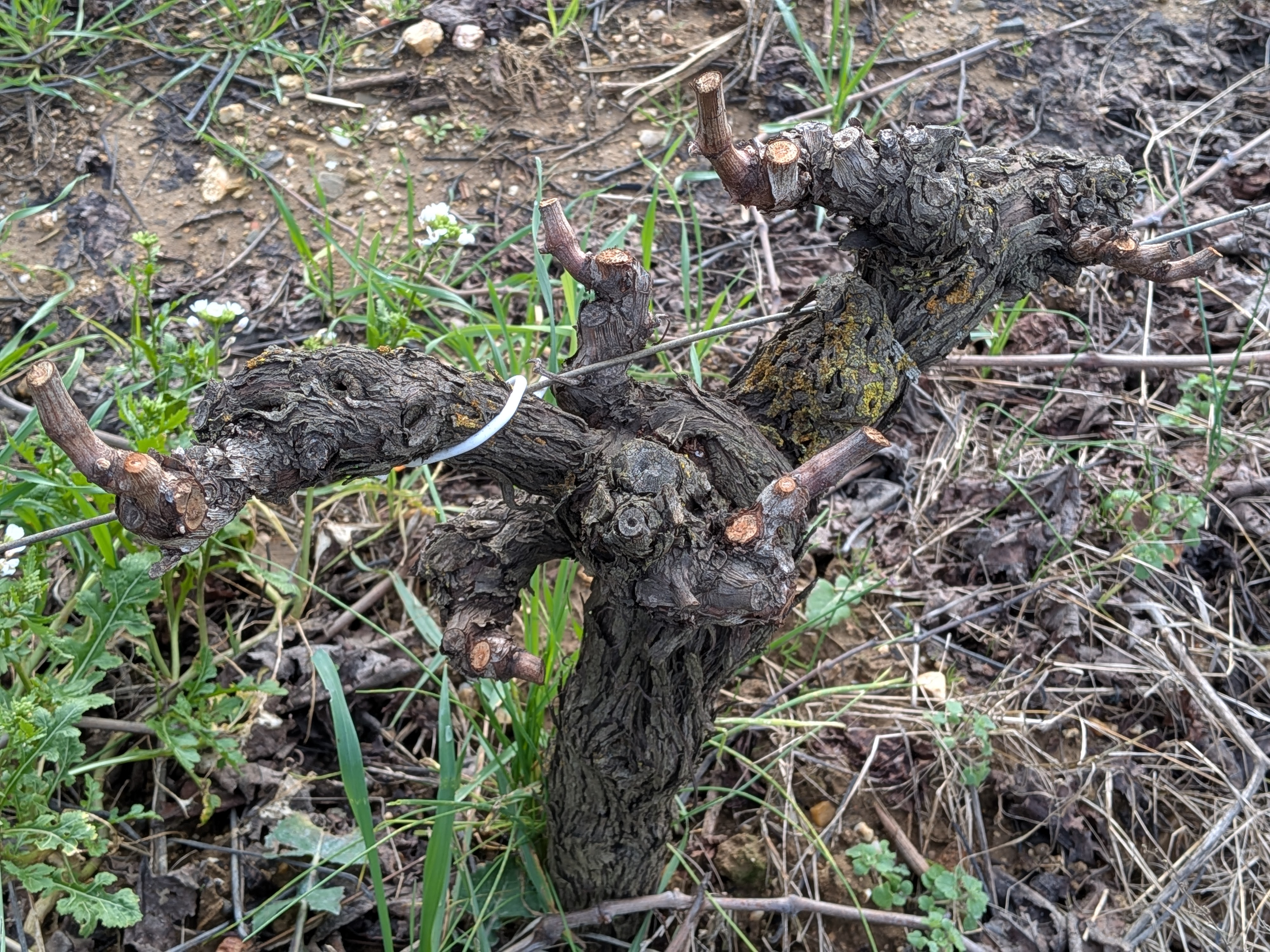
After a brief chat with Jeff Coutelou on Thursday I went out into La Garrigue vineyard to see Flora and Gilles who were busy pruning the new plantation of Syrah. All good at first but, after popping down to the bottom of the vineyard to see the ditch which is currently a stream, the walk back up left me sinking into mud and shoes being pulled off feet as the soaked earth claimed them. Anyway it was good to see everyone and enjoy being back amongst the dormant vines, some sporting their new cuts. The contrast was transparent between the young plantation and older Syrah vines of La Garrigue which, in good vintages, make my favourite wine, La Vigne Haute.

Flora, left, and Gilles busy at work
Young vine pruned
Older Syrah vine pruned
It got worse!

The following day Jeff invited me over to taste through the wines in tank from 2025 as he was expecting a visit from the owners of New York City wine bar Horse With No Name. Cam and Christine with their 3 month old son duly arrived. They stock a good few of Jeff’s wines and, following his recent visit to the city, interest is high in Mas Coutelou there (and in this blog I am happy to report).

We started upstairs with the whites wines from stainless steel and concrete egg and again it became clear to me that the whites are the emerging stars of the domaine. Best of the lot was the free run Clairette, the juice which ran straight from the grapes before pressing. So complex with fruit, freshness and joy. That typical, welcome note of bitterness to refresh the palate too. It was interesting to contrast with the Clairette which had been pressed with more structure and tannin, good but not reaching the heights of that free run wine. The Xarel-lo was also lovely though quantities are way down in its second year of production after mildew ravaged the vines last year. Macabeu was good including from the egg (Macaboeuf) and the other big hit was TSCA, made from Terret Blanc, Servant, Clairette and Aramon planted in Segrairals vineyard. The Servant adds such an aromatic quality and there’s abundant fruit and acidity.

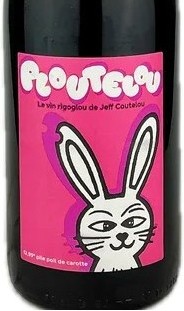
Down to the ground floor and red wines. My favourite was the wine which will be Ploutelou with its Cinsault and especially Aramon Noir. It is so juicy and fruit driven that you have to like it, a mix of delicious Beaujolais and more serious Jura Ploussard. The Grenache was also on song and, to a little bit of Jeff’s frustration, the Carignan. This plot, the Rec D’Oulette vineyard, produces some great wines, such as Flambadou 2016, but these are so often followed by vintages where the vines suffer from mildew or other problems requiring a lot of work to help them. Jeff had decided to grub up this vineyard (as I mentioned in the Carte Des Voeux report) but so good was the wine from last year that he has given it another year’s grace in the hope that a corner has been turned. Fingers crossed.

All in all it does appear that the 2025 vintage will be a superior one, the wines have lovely balance and depth as well as simple fruit pleasure. A very enjoyable and rewarding tasting. Jeff was driving up the following day to La Dive, the celebrated tasting in the Loire, and hopefully some good sales of the 2024 to clear room for the 25s when they are ready to bottle. Meanwhile I was just glad to be back with my friend (and Icare of course) in one of my favourite places, muddy shoes or no.

Icare, now 14 years old


3 Comments

Carte Des Voeux 2026

The tradition continues. Every year Jeff Coutelou publishes his review of the previous year and reports on the state of play for his Languedoc domaine. This year’s has a sombre air, including the colours, reflecting the parlous economics of wine production in the last few years. When a celebrated and successful domaine such as Jeff’s is operating in the red then we should know that the wine world is in trouble. More puritanical health advice, abstemious trends amongst the young and uncertainty in world finances all contribute, exacerbated by a teetotal world leader imposing tariffs on French wine. The consequences are worrying for French artisans (other nations too).

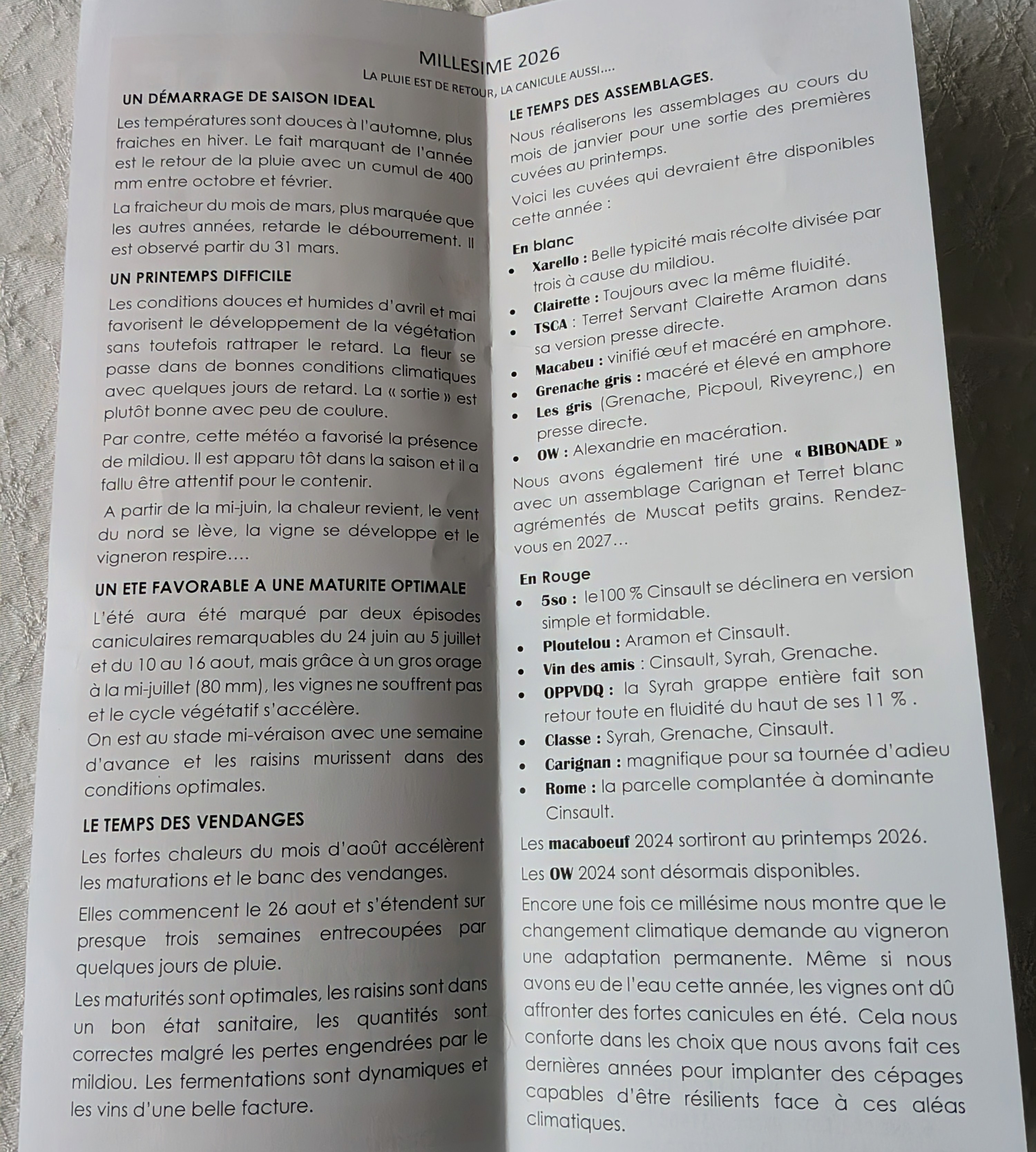
As usual Jeff begins his review of the 2025 vintage with reports on the weather. There was healthy rainfall over the 24-25 winter with 400mm refreshing the water table. A colder than usual March meant that vine growth was delayed, budding as late as March 31st. April and May were mild and damp encouraging vegetation growth without catching up the earlier delays. Flowering took place in favourable conditions, no damage from winds (coulure) but downy mildew appeared as mild and damp conditions are its ideal. Mid June brought warmth and a north wind, allowing Jeff to breathe more easily as this is good for the vine and combats mildiou. Summer brought two heatwaves and a storm providing 80mm of welcome rain so as harvest approached everything was a week in advance and a final heatwave brought it even further forward.

Vendanges began on August 26th and lasted three weeks interspersed by a few days of rain. Ripeness was optimal, the grapes healthy and quantities good despite the earlier losses from mildew. Fermentations were quick off the mark and everything is set for a really good vintage. Blending is happening in January and the following wines should be available.

Fermentation
Xarel-lo

Whites

  • Xarello – unfortunately the 2nd vintage was badly hit by mildew and production down to a third of 2024 but what remains is good
  • Clairette – looking good with real typicity
  • TSCA – Terret, Servant, Clairette and Aramon Blanc from Segrairals vineyard, direct press
  • Macabeu – two versions, one aged in concrete egg, the other in amphora
  • Grenache Gris – some skin contact and aged in amphora
  • Les Gris – Grenache Gris, Picpoul Gris and Riveyrenc Gris, all direct press
  • OW – Muscat D’Alexandrie, skin contact
  • Bibonade – made from Carignan and Terret Blanc with some Muscat à Petits Grains, ready in 2027.
Rome, August 2025

Reds

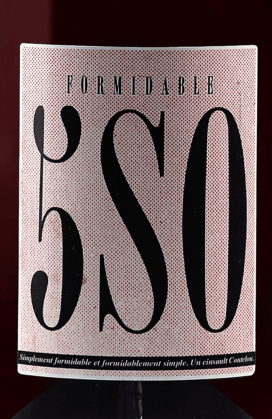
  • 5SO – pure Cinsault and will arrive in two versions, Formidable and Simple
  • Ploutelou – (my recent favourite), Aramon and Cinsault
  • Vin Des Amis – Cinsault, Syrah and Grenache
  • OPPVDQ – whole bunch Syrah, light at 11% abv, a cuvée making its return
  • Classe – Syrah, Grenache and Cinsault
  • Carignan – a triumph this year, its last vintage!
  • Rome – single vineyard complantation, mainly Cinsault (my favourite vineyard)

There will also be the 2024 cuvées of Macaboeuf and OW.

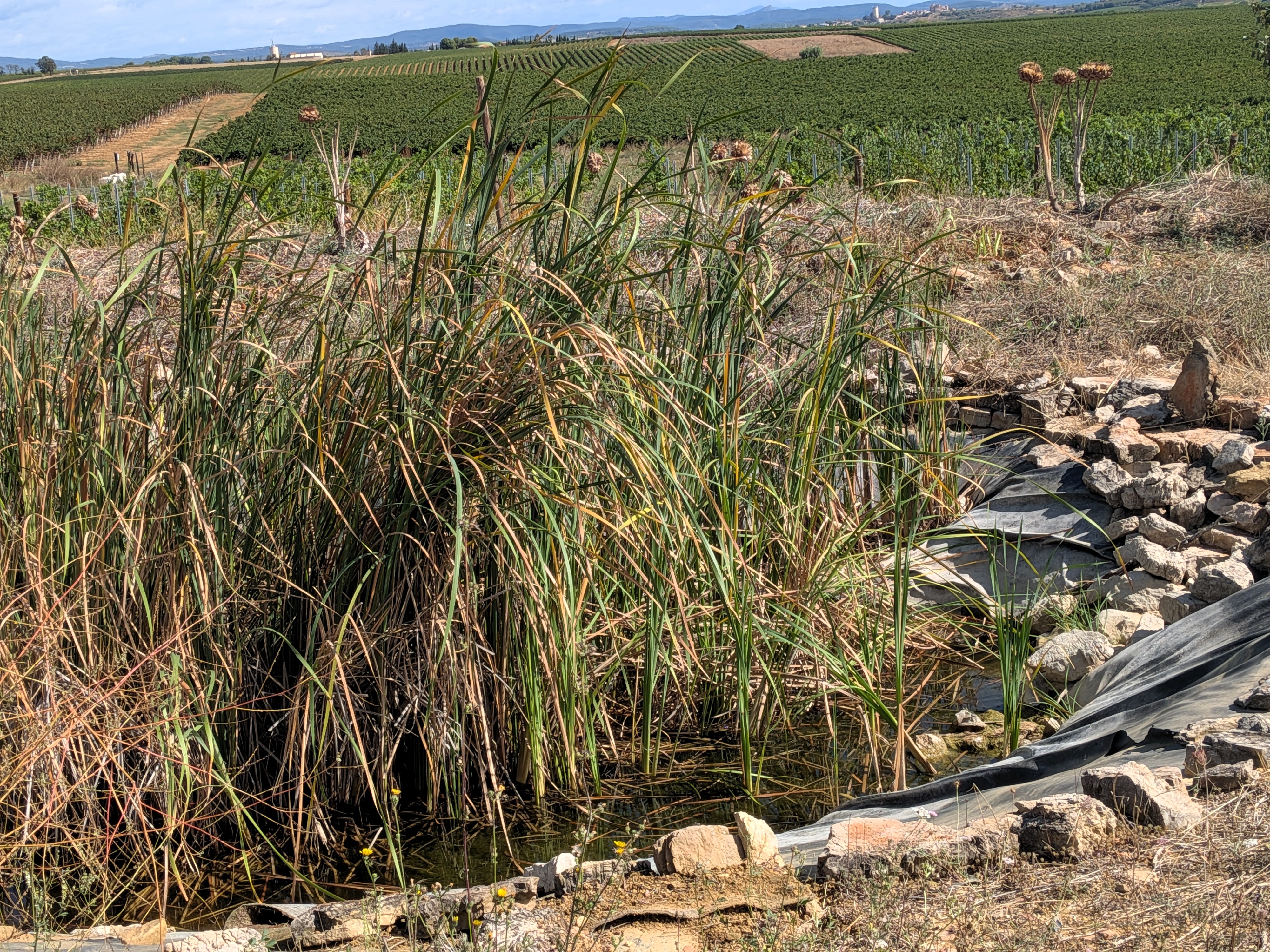
Jeff notes that he is thankful that his plans and work to adapt vines for climate chaos are working out. The heatwaves of 2025, even in a year with good rainfall, stressed traditional varieties and he is confident that the new plantings are more capable of flourishing under such pressure. In 10 years he has replanted 6 hectares (almost 50% of the vineyards) and now has more than 30 varieties in which he has great faith. To encourage bio diversity this has been combined with the planting of hedgerows and trees, the creation of an animal reserve and the planting of 15 varieties of olive trees (more than 750 new trees since 2007). Indeed Jeff has produced commercially an olive oil for the first time (previously it was reserved for restaurants).

The animal reservoir and reserve, August 25

Jeff concludes by wishing everyone a happy new year and a wish that somehow 2026 will bring happiness and … profitability. Let’s wish him the same!


2 Comments

Festive fun (mostly)

The Festive season is always a time to open some good bottles and share with family and friends. I wanted to share some of the successes because they deserve praise. And.. one bottle which was fine but ultimately a little disappointing.

Let’s start with Jeff Coutelou of course. A number of bottles were opened but one stood out, Rome 2023. This is mainly Cinsault from old gobelet vines in my favourite vineyard, the eponymous Rome. There are other varieties too, all three colours of Grenache, Muscat of various kinds too with the addition of white grapes such as Servant and Clairette from other vineyards. This has always been good, lots of clean, red fruit with nice structure but a little bit of time has brought it all into harmony, a real sweet spot. In the UK Gergovie are selling Rome in magnums which would be even better.

A few kilometres up the road is another favourite estate, Mas Des Capitelles. They work biodynamically and make full red wines largely based on Carignan and Grenache and they age the wines for a few years before they are released. Crescendo 2019 is made up of Mourvèdre, old Carignan and some Grenache. One of those bottles which changed with every glass, practically every mouthful. Dark fruits, tannins and balance. Lovely.

One more red though much lighter in nature. I have become increasingly fond of light reds and Jean-Christophe Garnier’s Les Nouettes 2024 fits that bill perfectly at just 10.5% abv. Pale in colour like a Gamay or Pinot Noir this is from the Anjou with a 50-50 split of Grolleau and Pineau D’Aunis. Spicy, herby and red fruits it was another bottle to reveal new features as the bottle disappeared.

Two other wines to add to the hit list, both white. Sylvain Pataille is a much admired producer from Marsannay in Burgundy who works biodynamically with minimal sulphur. This Marsannay 2020 was made with Chardonnay from five vineyards including Clos Du Roy, aged for 18 months in barrel (one third new). The result is exactly what you’d hope for from a good quality Burgundy – citrus and peach fruit with a light nutty note and a lovely salty, dry finish. Lovely.

Possibly my favourite wine was from Lucy Margaux based in the Basket Range of the Adelaide Hills. I was fortunate enough to visit the winery and meet Anton van Klopper in 2024 and was hugely impressed. I was able to buy a bottle of Le Sauvignon Sensuel 2022 here in the UK and it was superb. There’s so much going on in the wine; freshness, zesty fruits, a salty minerality. It was vibrant, refreshing and delicious. Such a great wine, what a producer. I love the hand made labels.

I don’t usually include negativity in these reports but I thought it was worth mentioning a wine which was perfectly good but just a bit dull and disappointing. It was also the most expensive bottle in my cellar, money doesn’t always buy success. Henschke Edelstone Shiraz 2004 was bought a few years ago at a much lighter price than the approximately £120 cost new now. It was very nice, classic blackcurrant, mint and dark fruits, good tannins even at twenty years old. It just lacked excitement, it didn’t develop or add nuance. I can’t fault it but I’d take any of the other bottles mentioned first and together they cost about the same as this one.

Santa kindly brought me a copy of Pascaline Lepeltier’s fantastic ‘One Thousand Vines’, probably the most authoritative wine book I have read. Plus some nice new glasses from IKEA, cheap but very good especially at concentrating aromas. Of course a few nice bottles arrived too including some interesting sherry. So, we reach 2026 and I shall be heading down to the Languedoc later this month for a catch up and will bring you the news. I hope that 2026 brings happiness and health no matter how worrying the state of the world around us.